


Another week, another edition of The Pass. Thank you again to everyone who’s reached out with your thoughts and feedback so far. I’m so glad to see it resonating. If you’re new here, The Pass is currently a six-week experiment, where I send a weekly email on Tuesdays, looking at current culture through the lens of what’s happening in and around restaurants. We’re currently on week three and will decide at the end of these six weeks whether it becomes a permanent feature.
It feels like we’ve blinked and somehow we’re already counting down to Christmas, which is always the most indulgent time of year. This year my husband and I are heading back to New York to spend Christmas with my family (my nephews first Christmas! I can’t wait), so I’ve been getting an early start on making the most of London’s festive season before we go. Last week that included a Christmas preview dinner at Adam Byatt’s Fulham Pier restaurant Constance, and a festive dinner at Dean Street Townhouse in Soho. Both were delicious, but two Christmas dinners in the second week of November, must be some type of record.
In this week’s edition of The Pass…
Of Note…
As the backlash against influencers grows, what purpose do negative restaurant reviews actually serve?
In Other News…
AI is making people act weird in restaurants, Wednesday is the new Thursday, the Public House Group takes on a six storey townhouse in Mayfair, and an Italian restaurant where nothing is edible.
On My Plate…
The team behind Kudu returns to its Peckham roots with Braai Bird, a more casual neighbourhood restaurant centred around wood-fired chicken.
Of Note…
One story in dining worth a closer look, and the bigger questions it raises.
The backlash against influencers is getting louder. This weekend, The Guardian reported on small businesses pushing back against influencers, from requests for complimentary products and services to negative experiences shared with thousands of followers. Meanwhile, on Instagram, @daadisnacks has been calling out questionable influencer behaviour, including creators asking restaurants for free meals and then publicly criticising them (here and here).
It’s a conversation that started this summer, with Vittles dedicating its third issue to the growing influence of social media creators in the food world and what that means for traditional restaurant criticism (a must-read, if you haven’t already).
I think influencers can do a lot of good for restaurants, especially independents, a positive review can introduce a restaurant to an entirely new audience and bring people through the door. But equally a negative review can be detrimental and the Guardian piece got me thinking about what purpose do negative restaurant reviews actually serve?
Social media has opened up a world previously dominated by newspaper critics and guidebook inspectors. Today, anyone with a smartphone can share their opinion with hundreds or thousands of people. But having the ability to publicly criticise a restaurant doesn’t necessarily mean we should.
I appreciate that criticism can help diners make informed decisions, hold restaurants accountable and encourage improvements. But if the intention for providing criticism is genuinely to help a restaurant improve, that feedback could be shared directly. Increasingly, it feels like negative reviews on social media are more concerned with entertaining an audience instead of offering anything constructive, which is much harder to justify.
In a recent interview Jay Rayner describes his changed approach to negative critique to “punch up, not down”. He said he’s comfortable criticising expensive, established restaurants that fail to deliver but questions the value of publicly criticising a struggling independent.
There’s nothing inherently wrong with negative criticism but I do wonder whether the people publishing these reviews on social media fully appreciate the responsibility that comes with having an audience. Especially when a harsh review is shared without much context or consideration, it can have real consequences for a small independent restaurant.
In Other News…
The stories shaping conversation in dining and worth passing along.
AI is changing the way people act in restaurants. At New York’s Crevette, a table considered one of the worst in the restaurant has become its most requested after going viral for its photogenic backdrop. Meanwhile, restaurant operators are reporting an increase in AI-generated complaints, unreliable bookings made through AI agents and customers paying an AI bot for a reservation believe they’re entitled to special treatment from the restaurant.
The Public House Group’s pub domination continues. Its latest acquisition is a Grade II-listed, six-storey townhouse at 8 Carlos Place in Mayfair, formerly the flagship store of fashion designer Roland Mouret. The building has stood empty since 2021, and I’m very curious to see what the group has planned for a space of this scale.
Is Wednesday the new Thursday? According to new data from Square, Wednesday spending across UK food and drink businesses has risen 31% over the past five years, with bars, clubs and lounges seeing a 40% increase. Nearly half (47%) of under-35s say they’re going out more on Wednesdays than they were two years ago, with smaller crowds and easier reservations among the attractions.
The battle over hospitality VAT is heating up. The Treasury has rejected calls to reduce VAT for pubs, restaurants and hotels, estimating that a cut from 20% to 10% would cost £11 billion annually. Meanwhile, campaign group Hospitality Voices is planning a fresh ban on MPs who haven’t publicly backed hospitality VAT relief. Set to begin in March 2027, the campaign is calling for a reduced 13% rate for smaller hospitality businesses and has the backing of chefs including Tommy Banks and Aktar Islam.
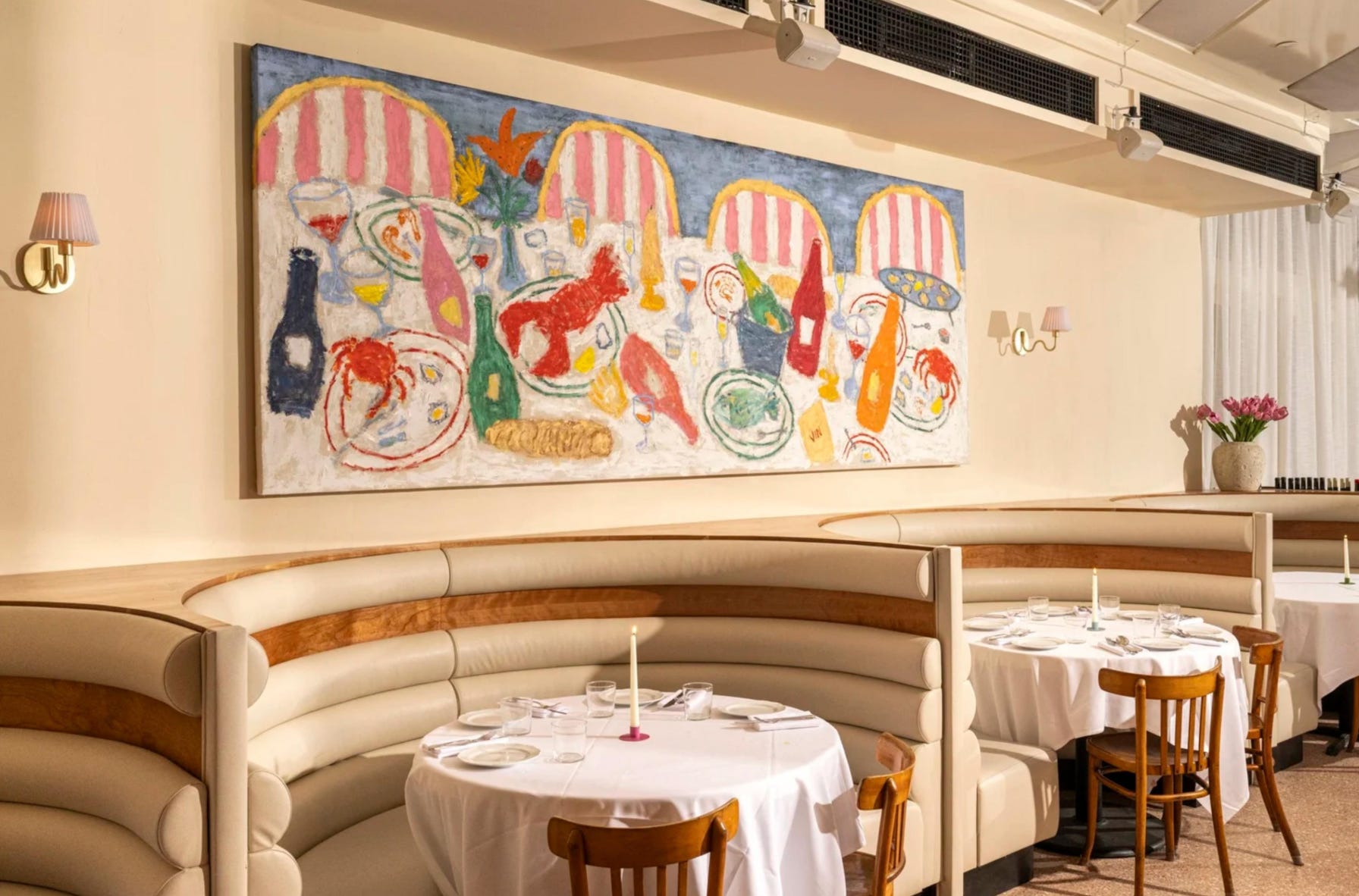
An Italian restaurant where nothing is edible. British textile artist Kate Jenkins has transformed Soho’s Air Contemporary Gallery into Kate’s Knitalian, a fully knitted Italian restaurant and deli. Think crocheted spaghetti, ravioli, salami, tins of sardines and even bottles of Chianti, all painstakingly recreated in wool. The exhibition is free to visit and runs until 5 December.
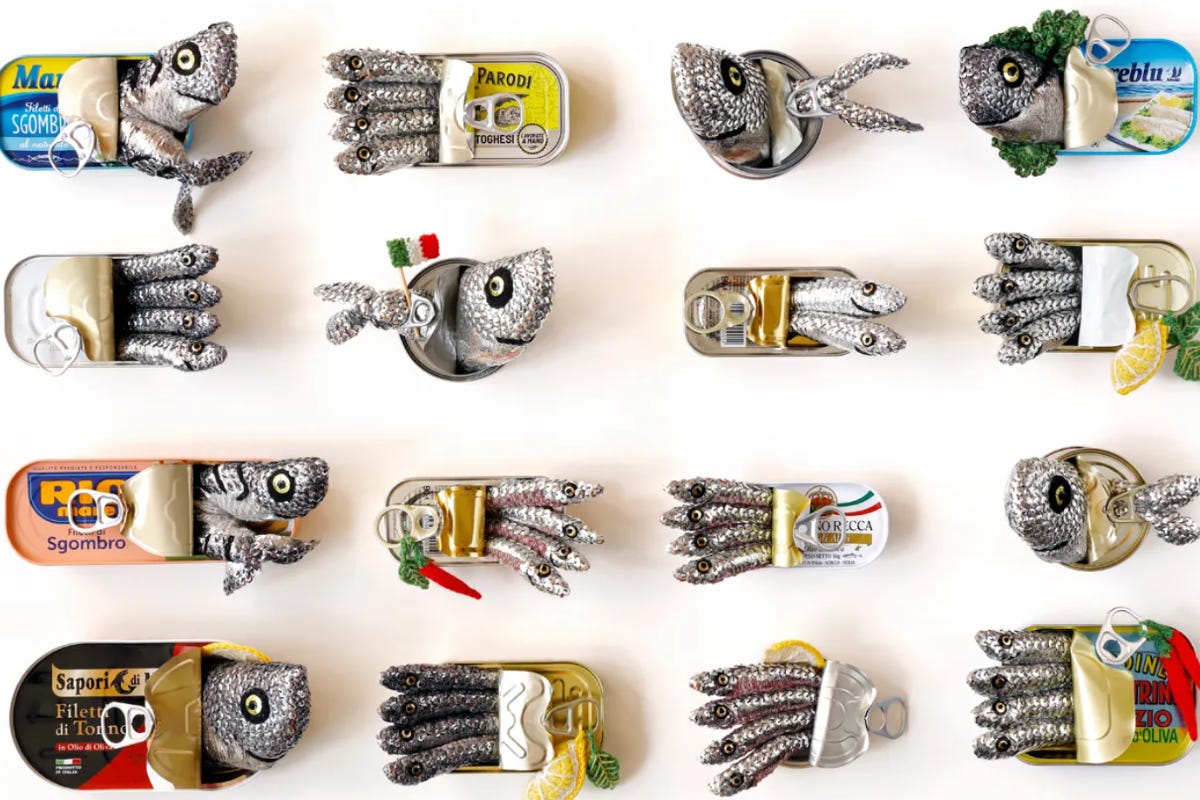
Kate Jenkins’s crocheted take on tinned sardines.
On My Plate…
A restaurant that deserves a place on your radar. Not a full review, but somewhere I’ve eaten recently that’s worth knowing about.

It takes a lot to get me to Peckham on a Monday night, but when Amy Corbin and Patrick Williams, the team behind Kudu, open a new spot in the former Kudu Grill space, you go. Braai Bird is the new sister restaurant to Kudu, with a much more casual feel and a menu where almost everything is cooked over a traditional South African braai. Standouts included the braai chicken (obviously), the cornbread (phenomenal) and the braai fries. For sauces, we went with the green zhug and Cape Malay.
Braai Bird opens this Saturday, 21st November, and you can already book a table. Well worth the trip to Peckham!
Worth knowing…
New openings, pop ups and what’s happening around London. This isn’t a round up of every new opening, just the ones worth knowing.
Just opened:
B Penhale, Smithfield | 16 November
The team behind Camille has opened a second restaurant, celebrating British and Irish cooking in the former Club Gascon space.
Coming soon:
Los Primos, Borough Yards | November
The team behind Barrafina is opening a walk-in-only Spanish beer and tapas bar, with £2.50 beers and nothing on the food menu over £10.
The Poet, Smithfield | 30 November
The team behind Sune is opening a pub and dining room beside Smithfield Market, with former Aulis chef Charlie Tayler in the kitchen.
Mirrors, ICA | January 2027
A new restaurant and wine bar from the people behind Hector’s, Planque and Hill & Szrok, taking over the former Rochelle Canteen space at the ICA.


Love the idea of “punching up” rather than “punching down,” brings the Ratatouille quote to mind:
“In many ways, the work of a critic is easy. We risk very little, yet enjoy a position over those who offer up their work and their selves to our judgment. We thrive on negative criticism, which is fun to write and to read. But the bitter truth we critics must face is that, in the grand scheme of things, the average piece of junk is probably more meaningful than our criticism designating it so.”
The word/concept ‘influencer’ for some reason gets included in the same sentence as marketing. For the most part the only marketing is the promotion of the ‘influencers’ tiny ego, and does not involve any service to measure the impact of their promotional activities on behalf of the establishment. That we now live in a world where some arsehole can walk into a restaurant demanding a meal under threat of a bad review is yet another disgraceful aspect of the internet/social media exploitation of the vulnerable that is funnelling our hard earned (for some) money into creating wealth for a few in exchange for no value.
We await the backlash when a restauranter loses their business and takes their own life as a result of these self promoting *****s. ….. but lets not compare it to imilar sad stories about losing Michelin stars