


Last week I had the pleasure of meeting Chris Watson, a former Michelin inspector who now lives in Bangkok, where he and his wife run a consulting business helping restaurants and hotels, from the mid-market to the high end, find commercial success.
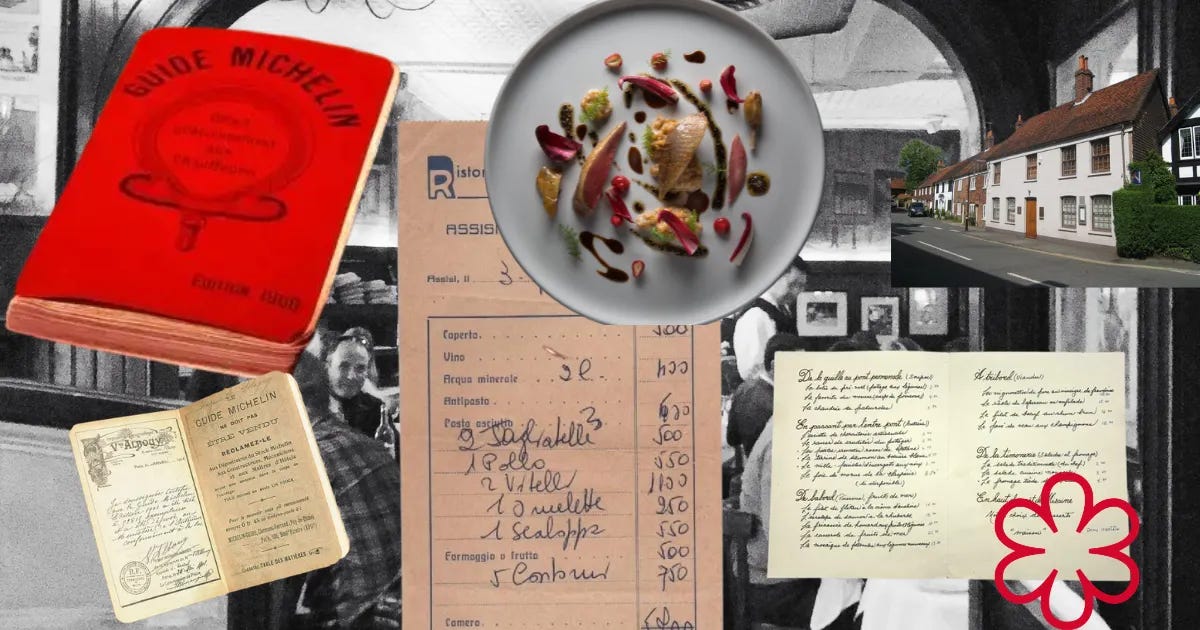
From the moment we got on the call, his passion for food was obvious. As part of his introduction, he told me about a new ice cream shop he’d checked out in Bangkok earlier that day. He wasn’t sure it deserved the online buzz it was getting, but the first thing he said was that spots like this matter because they let people experience something special without a Michelin price tag attached. I knew I was in good company.
Our conversation centred on his nearly five years as an inspector, and it was riveting, demystifying a lot of what I’d always wondered about how the guide actually works from the inside. We covered everything from the night three inspectors unknowingly turned up to the same 25-seat restaurant, to how the decision to award a star is actually made.
This is one of my favourite conversations I’ve had for TFT so far.
Over to Chris.

You are a former Michelin inspector, covering the UK and Europe, how does someone actually get that job?
I’m very fortunate to have worked for Michelin in a role so few people get to do, and I still feel very loyal and supportive of the guide.
I have a degree in hotel management and worked in hospitality, in the kitchen at the Savoy and at The American Bar, before applying for the Michelin inspector role. I didn’t get it the first time. Six months later, Michelin reached back out. The process was extremely rigorous.
People assume Michelin hires for a refined palate, but that’s not it. They’re actually looking for a neutral palate, one they can mould to match inspectors around the globe. The expectation is that after training, you rate a restaurant consistently with everyone else. A 1-star in Tokyo should be consistent with a 1-star in London.
The food scene today is sophisticated, open Instagram and you’ll find no shortage of amateur critics with strong opinions. But Michelin doesn’t hire people who are opinionated, or who’ve already eaten at a lot of two- or three-star restaurants. The average age of a new inspector is late 20s to early 30s, people who aren’t particularly affluent or able to dine at that level yet. Michelin isn’t really looking for a trained palate, they’re looking for a blank one it can shape, someone who is passionate about food.
Your first 9-months, you were shadowing other inspectors before you were let loose on your own. What’s the one thing about judging a plate that you had to actually learn, that isn’t something you could ever pick up just from being a good eater?
The delta between a 1-star restaurant and a 2-star restaurant is quite distinguishable. What’s much harder to differentiate is the difference between a 2-star and a 3-star, and that’s something that only comes with practice. My first nine months as an inspector were all about collecting data. It’s the consistent volume of restaurants, seeing enough of them back to back, that trains you to make that distinction.
A good eater experiences a meal in isolation. What you’re taught to do as an inspector is hold it against a body of comparisons: this visit against your last visit to the same restaurant, and against every other 2 and 3 star meal you’ve had that year. You’re tracking how a menu has evolved, whether a dish that impressed you eighteen months ago is still being executed at that level, whether the kitchen has gotten complacent or sharper. That comparative memory isn’t something you’re born with. It’s built meal by meal, and the only way to train it is by visiting a high volume of 2-star and 3-star restaurants.
The role was famously anonymous, was that ever actually tested? Did you ever suspect a restaurant had worked out who you were?
Oh yeah, especially if you were solo dining. In London, inspectors would team up as much as possible, but outside London it was harder, and I’d often find myself alone in Scotland or the north of England. At the top end of the market, they certainly suspected, but they were professional enough not to ask.
One year, the guide was considering a star for a particular restaurant, and several of us were independently allocated to evaluate it. I walked into the dining room, which sat 25, and spotted an inspector at one table, and another inspector at a different table. That night, unbeknownst to the restaurant, they were serving three inspectors at three separate tables.
What people don’t always realise is that at the end of a meal, an inspector would reveal themselves to the staff. If there were two of us dining together, one would leave and one would stay behind to speak with the chef and learn more about the kitchen. We collected this information directly for the guide. It wasn’t always easy to get real time with them if the restaurant was busy and you didn’t want to draw attention to yourself, so I’d often go back the next morning at 10am for a proper conversation instead.
It was always funny revisiting a restaurant the following year, especially one where I’d had a long conversation with the chef after revealing myself at the end of the meal. At the top end, they were sophisticated enough to recognise me on sight the second time round, but they’d never say anything.
What was it like revealing yourself to the chef?
I was younger and less confident back then, and chefs are not known for being understated. Occasionally they could be very direct. “How is your meal?” “Why haven’t I gotten a star?” But I was incredibly fortunate to meet people like Pierre Koffmann, who was an absolute gentleman. You become more confident over time about what you can and can’t say, but you always give them the respect they undoubtedly deserve, and you’re bound by a code of conduct throughout.
Everyone assumes being a Michelin inspector is a dream job. Were there downsides you didn’t expect?
Plenty, it still is very much a job. You’re eating out for lunch and dinner, every day of the week, sometimes two dinners a night. You’re away Monday to Friday travelling around the country, and you spend some weekends alone in the country too, it’s a solitary existence. And you can’t really talk to anyone about what you actually do.
Only about 30 percent of what you do is star related, the other 70 percent is paperwork.
And after a long week of eating out at that level, when you get home on a Friday night, the last thing you want is something complicated. You want fish and chips, a burger, a quick Indian takeaway, something completely undemanding.
Eventually you start repeating yourself. You’ve travelled the length of the UK and Ireland, done a bit overseas too, and the same faces and rooms start coming around again. It’s not unpleasant exactly, people recognise you, especially at the top end of the market, but that repetition, and the isolation underneath it, was definitely the most difficult part of the role.
How is the decision to award a star actually made?
The decision to award a star is never one person’s call. It’s based on multiple visits from different inspectors, and it requires consensus, which is genuinely difficult to reach. Your score or conclusion has to match the words you actually use, if you describe a meal as wonderful, that has to be reflected in the score, and it has to hold up as an average across those multiple visits. The editor of the guide makes the final call, and Michelin is usually very conservative. If two inspectors come back with split opinions, the star doesn’t get awarded.
What’s the real difference between a 1-star, 2-star and a 3-star experience, not the guidebook language, but what you’re actually tasting and feeling as the diner?
There’s very little difference in what’s actually on the plate between a 2-star and a 3-star restaurant. If you follow football, 1-star is the Premier League, 2-star is the Champions League, and 3-star is the World Cup team. The real distinction at the 3-star level is consistency over years. A restaurant rarely earns 3 stars unless it’s been operating at a high standard for a long time.
1-star and 2-star restaurants don’t need to be luxurious. Interiors can be modest, the focus stays on the food. At 3-star, everything else comes into the equation too: the room, the service, the drinks program. It has to be excellent every single day, for years, not just on the plate but in the whole experience around it.
Michelin’s official line is that stars are about food alone, is that actually true in practice, or does service and atmosphere factor in more than they let on?
Officially, yes, food comes first. But you can’t properly rate a restaurant at 2 or 3 stars without accounting for everything around the food too, the wine list, the pacing of service, whether the team can cater to each table specifically. None of that is written into the guidebook language, but it inevitably does shape the score.
Where the official line does hold up is that a restaurant doesn’t need to be dressed up to earn a star. What actually matters is whether everything on offer, the food, the list, the service, feels coherent and justifies what’s being charged. So Michelin isn’t lying when it says food comes first, it’s just that once you’re eating at that level, food doesn’t really exist in isolation.
Tourism boards now openly fund Michelin’s expansion into new cities. Does that funding relationship compromise the guide’s credibility today?
It doesn’t make the guide less credible. Michelin has built a genuinely successful brand, and it’s entitled to make money from that. Like any business expansion, there have been a few hiccups along the way. When Michelin first expanded into Japan, for instance, there were no Japanese inspectors on staff, and you have to ask how you can properly judge Japanese food without them. But those growing pains got sorted out over time.
Tourism board funding enables Michelin to expand into new regions it might not otherwise reach. But that funding doesn’t change the standard restaurants are held to. Michelin still applies the same rigorous evaluation it always has, regardless of who’s paying for the expansion.
In an age where every meal gets photographed and reviewed instantly, how has Michelin managed to keep its anonymity intact?
Michelin has managed to hold onto something most institutions have lost in the social media age, a genuine sense of mystique…that’s remarkable when you think about it. Every diner now has a platform, everyone photographs their plate, and yet nobody really knows who the inspectors are or when they’re coming. That opacity is actually one of Michelin’s greatest assets, and I don’t think it’s an accident that they’ve protected it so carefully whilst everything else about food criticism has become transparent, instant, and personal.
With so many other rankings out there now, like the World’s 50 Best or Gault & Millau, does Michelin still carry more weight?
Gault & Millau and the World’s 50 Best are both respected, and they matter in their own right. But when a chef gets a call about their rating, it’s not the 50 Best list they’re thinking about first. It’s the stars. That’s true whether you’re in Tokyo, Paris, or New York. Nothing else has built the same weight, the same instantly legible signal, in the way Michelin has over more than a century.
Is there anything you’d change about how Michelin operates today, if you could?
Honestly, I wouldn’t change much. I’d want them to hold onto that mystery, the anonymity, and keep being slow to award stars. There have only been a handful of exceptions in the last 20 years, cases where a star was given faster than usual, and Michelin took criticism for it. That restraint is exactly what protects the credibility of the whole thing.
What dining trends are you finding genuinely interesting right now?
I’m a traditional guy, so I’ll give you the more skeptical answer first. Restaurants have to be creative, they have to teach me something new, but the trend toward ever-longer tasting menus isn’t the way to do that. I’ve been to some of the most talked-about restaurants in the world recently, and a few of them, for all the acclaim, feel a little formulaic to me.
I’ve also started to wonder about the commercial sustainability of the whole ultra-high-concept model. I went back to the Fat Duck a couple of years ago and it was truly awesome, but it left me asking how sustainable that kind of restaurant actually is. I think the three-star places, Mirazur in Menton, Le Louis XV Alain Ducasse in Monte Carlo, Plénitude in Paris, will always exist in some form, because of what they represent institutionally. I’m less confident about the tier below that.
Now that you’re no longer working for the Michelin guide, do you still find yourself checking restaurants when you eat out?
Completely, and I don’t think that ever goes away. You find yourself subconsciously checking a restaurant the moment you walk in. When someone goes above and beyond, you notice, and you think about it long after the meal. Equally, when you have a genuinely bad experience, it stays with you in the same way.
One last question, rather than your all-time favourite restaurant, if someone asked you where to eat once, this year, where would you send them?
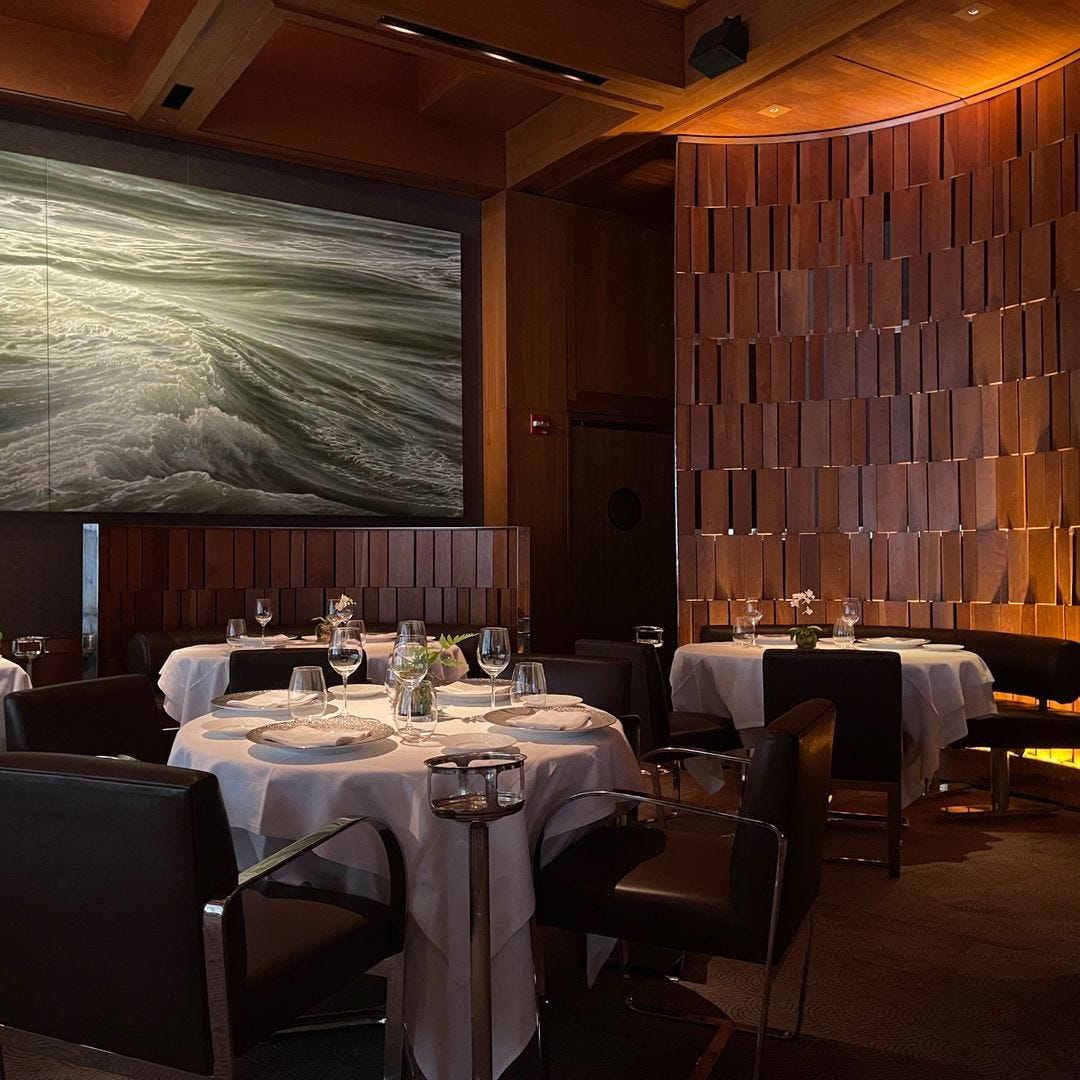
Le Bernardin in New York. The lunch menu is great value for a 3-star kitchen, it’s the same room and precision for a fraction of dinner pricing whilst running 200+ covers a service without a dropped ball. It’s an extraordinary 3-star experience.


A fascinating read, and well done to you. What was going through your mind while you were conducting the interview?
Bravo on the scoop! A hugely insightful read, in particular this snippet: "If two inspectors come back with split opinions, the star doesn’t get awarded." I'll link into your interview in my newsletter tomorrow.