


Today I’m introducing The Pass, a new series I’m trialling over the next six weeks. Think of it as a weekly look at the more interesting things happening in and around restaurants, from unexpected creative collaborations and industry intrigue to the people and ideas influencing how we eat.
Why now? Table for Two is about to turn six months old, and I’ve been thinking about how to share more of the timely stories I come across. The Pass is an opportunity to explore those stories, connect a few dots and hopefully spark some interesting conversations. I’m trialling it for six weeks, so I’d love to hear what you think and whether you’d like to see it become a permanent fixture
Most of the stories will come from London for now, but the ideas behind them travel internationally, and hopefully will make you look at your own city’s dining scene a little differently, whether that’s London or somewhere else.
For the next six weeks The Pass will land in your inbox every Tuesday morning. Don’t worry, the Friday newsletter isn’t going anywhere and you can still expect Friday to be a larger feature covering interviews with people doing interesting things in dining, predictions and the occasional deep dive.
Ultimately, I hope each Tuesday & Friday newsletter leaves you with a fresh perspective, something you didn’t know before, and a conversation worth having over dinner.
In this week’s edition of The Pass…
Of Note…
How does one of the world’s best restaurants fall 53 places on The Best Restaurants list in two years?
Pass It On…
Listening bars, London hospitality exodus, controversial dress codes and the art world’s most coveted dinner invitations.
On My Plate…
A beloved candlelit neighbourhood restaurant made for the colder London evenings.
Of Note…
One story in dining worth a closer look, and the bigger questions it raises.
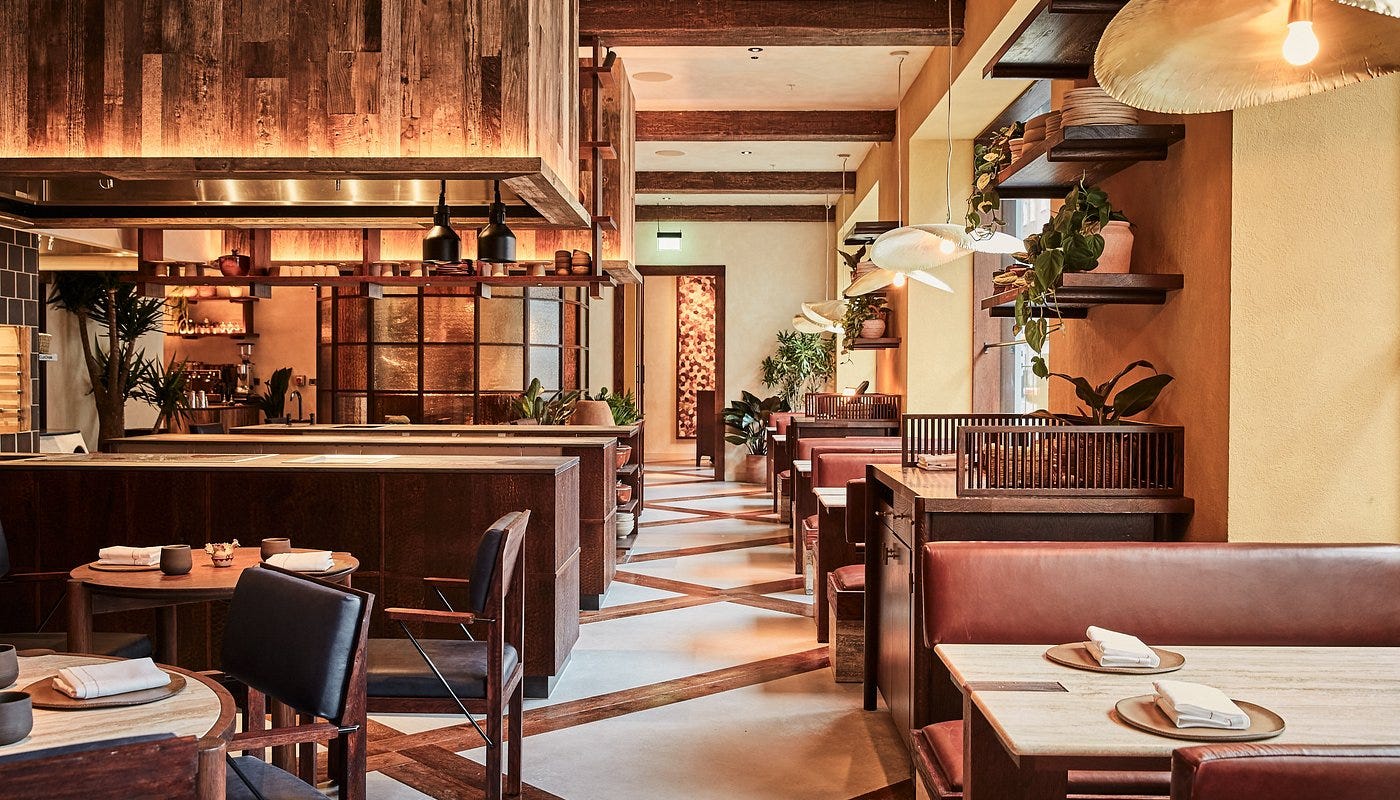
How does a restaurant fall 53 places on The 50 Best Restaurants list in two years? In 2024, London’s KOL was ranked #17 on The 50 Best Restaurants List, last week it landed at #70, having slipped to #49 in 2025.
But the way The 50 Best Restaurants are chosen raises an interesting question: are voters rewarding the world’s best restaurants or the ones they want to visit?
Unlike Michelin, The 50 Best Restaurants has no fixed judging criteria. Instead, the more than 1,100 international judges each nominate ten restaurants they’ve eaten in the previous 18 months, with a quarter of the judging panel changing annually.
This means restaurants aren't just competing on the quality of their cooking; they're competing for a place on the itineraries of international diners, many who’ve already eaten there.
When KOL opened in 2020, its approach to Mexican cooking with predominantly British ingredients was novel. Five years later, that concept is familiar, so for someone travelling to London with a handful of reservations to make, is KOL still an essential visit, or does somewhere new feel more exciting?
Of course there are restaurants such as Asador Etxebarri and Quintonil who’ve stayed near the top for years, proving that a restaurant doesn’t have to be new to remain on the list.
KOL’s fall doesn’t necessarily mean it’s become a worse restaurant. But it raises an interesting question: when the idea that once made a restaurant stand out becomes familiar, how does a restaurant remain internationally relevant?
The 51-100 Best Restaurants list was released last week, ahead of The 50 Best Restaurants award ceremony which takes place in Lima this Wednesday, 4th November.
Pass It On…
The stories shaping conversation in dining and worth passing along.
Why is the new London pasta bar Adelia ditching service charge when hospitality is already under so much pressure? When Morchella and Perilla experimented with service inclusive pricing, both reversed course as operating costs rose. So what’s Adelia seeing that others haven’t? Is removing the additional 12.5% a clever way to appeal to cost-conscious diners, or will higher menu prices offset the difference? Staff will reportedly receive a higher base wage with card tips on top, but I’m curious to see whether this model is financially sustainable in today’s climate?
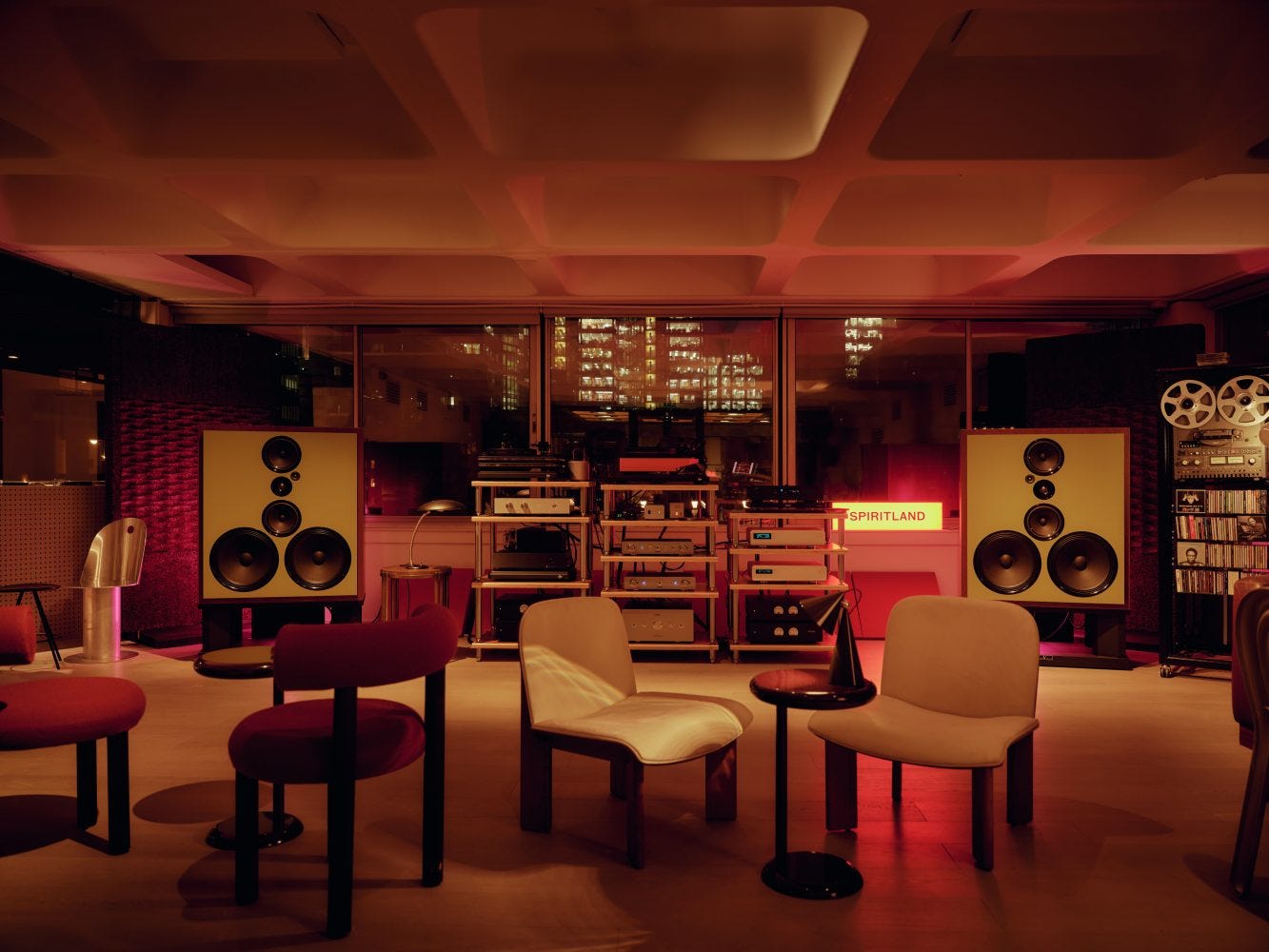
In an era when almost every song ever recorded is available on demand, the growing popularity of Japanese listening bars says a lot about our appetite for shared cultural experiences and musical discovery away from our screens. Three music focused hospitality spaces have opened since September: Cassette, a French bistro where music is central to the experience; Moga, a Japanese listening bar in Chelsea and Spiritland’s nine-month residency at the Barbican. Music is increasingly becoming part of the main attraction, rather than simply the backdrop to a night out.
Is London becoming a launchpad for restaurateurs to build their empires overseas? London has been a city where chefs establish their reputation for decades, but increasingly top chefs are looking abroad to scale their businesses, where operating conditions are more favourable. Meanwhile, last week’s Budget offered little relief, leaving hospitality VAT unchanged despite widespread industry campaigning. Restaurants are part of what makes London such an exciting city and it’s very frustrating to see the industry’s concerns continue to go unanswered. There’s nothing wrong with British restaurants succeeding internationally but I’m worried about what happens when London becomes somewhere a chef goes to establish their reputation, and build their business elsewhere. If you love eating out this should concern you too, and if you don’t already, I recommend following Tom Kerridge who’s been leading the charge on VATs the Problem.
On a lighter note, British chef Daniel Calvert is getting some heat for restricting denim at his Tokyo restaurant “to prevent colour transfer” onto the furniture. I don’t know why there’s so much outrage, this dining room looks very beige and I’m sure those chairs would be a nightmare to clean. The dress code also restricts diners from wearing “strong fragrance,” which again, perfectly reasonable, but what had to happen to merit these restrictions in the first place?
Dinner parties are becoming the art world’s most valuable invitation. During last week’s Art Basel Paris, creative culinary studio We Are Ona collaborated with artist Rirkrit Tiravanija and chef Dalad Kambhu on a contemporary restaurant where guests dined around sculptural communal tables. For galleries an invitation to a dinner offers collectors something that money alone can’t buy: access to artists, influential guest and a coveted social circle.
On My Plate…
A restaurant that deserves a place on your radar. Not a full review, but somewhere I've eaten recently that’s worth knowing about.
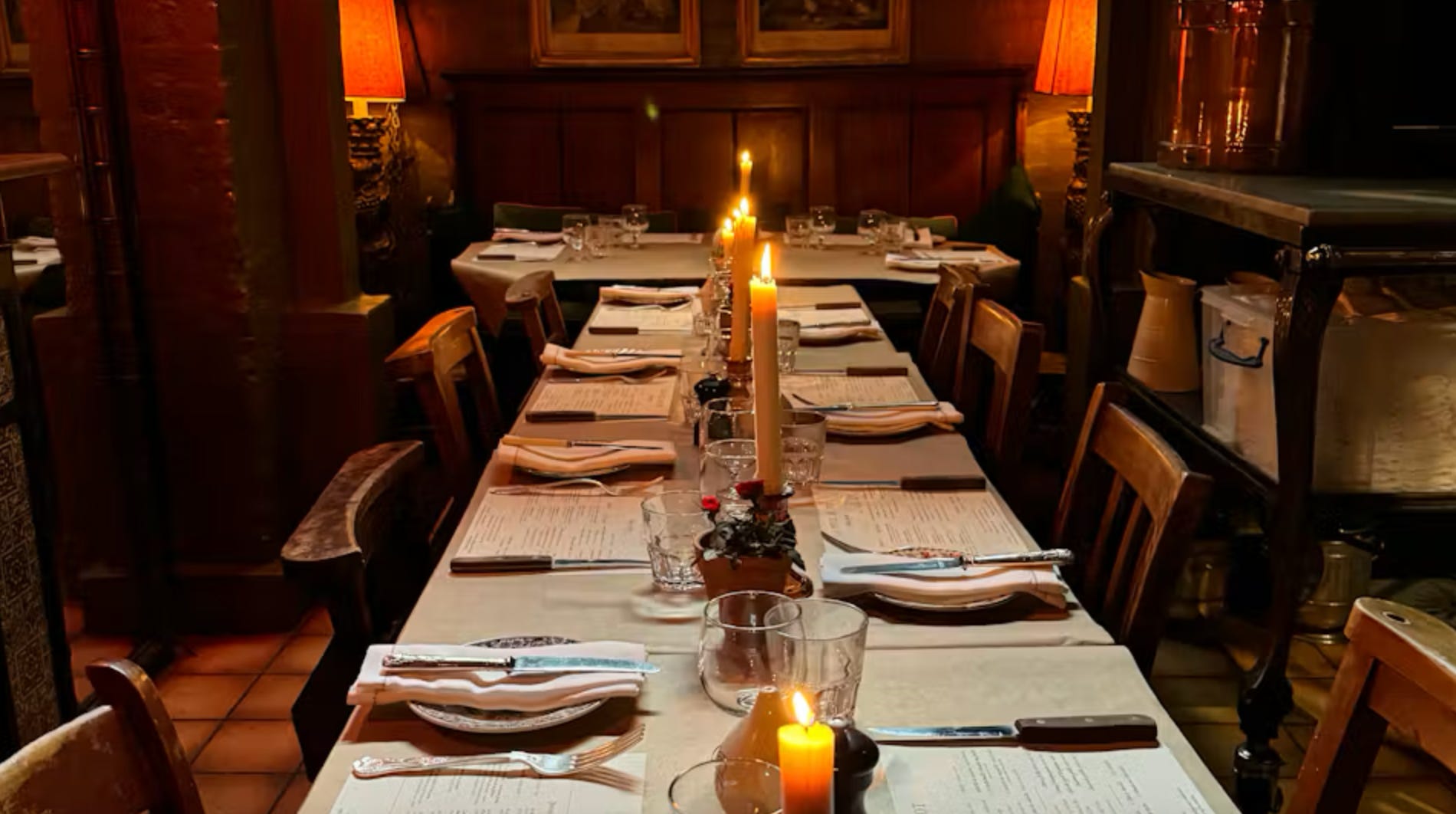
La Poule au Pot is a cosy neighbourhood restaurant made for a winter date night. Now that the sun sets before 5pm, we’ve officially entered the time of year where all I want to eat is warming, comforting food that’s probably a little too indulgent.
Last week my best friend Ally and I booked tickets to see Gary Starr’s absurdist solo comedy show Classic Penguins (hilarious, but completely unhinged), and decided to have dinner beforehand at La Poule Au Pot on Orange Square.
The restaurant has been open since the 1960s, surviving the turbulence of fickle food trends, a neighbourhood transformation, more than a dozen prime ministers, a global pandemic and a shrinking French clientele post Brexit. And somehow this was my first time visiting.
Very little has changed about the menu or interiors in the past six decades, but neither feels dated. It’s candlelit and intimate with the atmosphere of a neighbourhood restaurant rather than tucked into one of London’s most expensive postcodes.
What to order: The French onion soup and the beef bourguignon. The perfect combination for a cold London evening.


50 Best is a popularity contest driven by PR exposure. The more a restaurant spends on entertaining who they deem to be voters, the higher it will rank. So perhaps KOL is not investing as much in PR as it did in its heyday? Ironically, KOL is also an abbreviation for key opinion leader, the 50 Best voter demographic 😂
Love this new format!
And yes as a FooDiva said, being on the top 50 is connecting to having more journalists, assumingely voters and opinion makers in the industry coming to your place (restaurant, bar, hotel) and if you don't have the funding it's hard to do it. So these shifts (and also first spots) are highly fluctuating mostly for this reasons.
Or you got the voters in but they had better experiences elsewhere? Or sth else.
I like the lists and accolades (and stars) but still not going all in just with them when searching for a place to eat.