


In the summer, when the heat in Delhi became unbearable, wealthy families would retreat to the cooler hills of northern India. There, in the grand houses of places like Dalhousie, they entertained guests over elaborate dinners, far from the heat and commotion of the city.
It was this world that Sam Hosker was asked to imagine when he began designing the first Ambassadors Clubhouse location in Mayfair - and later, their second location in New York. The restaurant takes its inspiration from the grandfather of the Sethi siblings, founders of JKS Restaurants, and the dinner parties he might have hosted in the mountains of northern India.
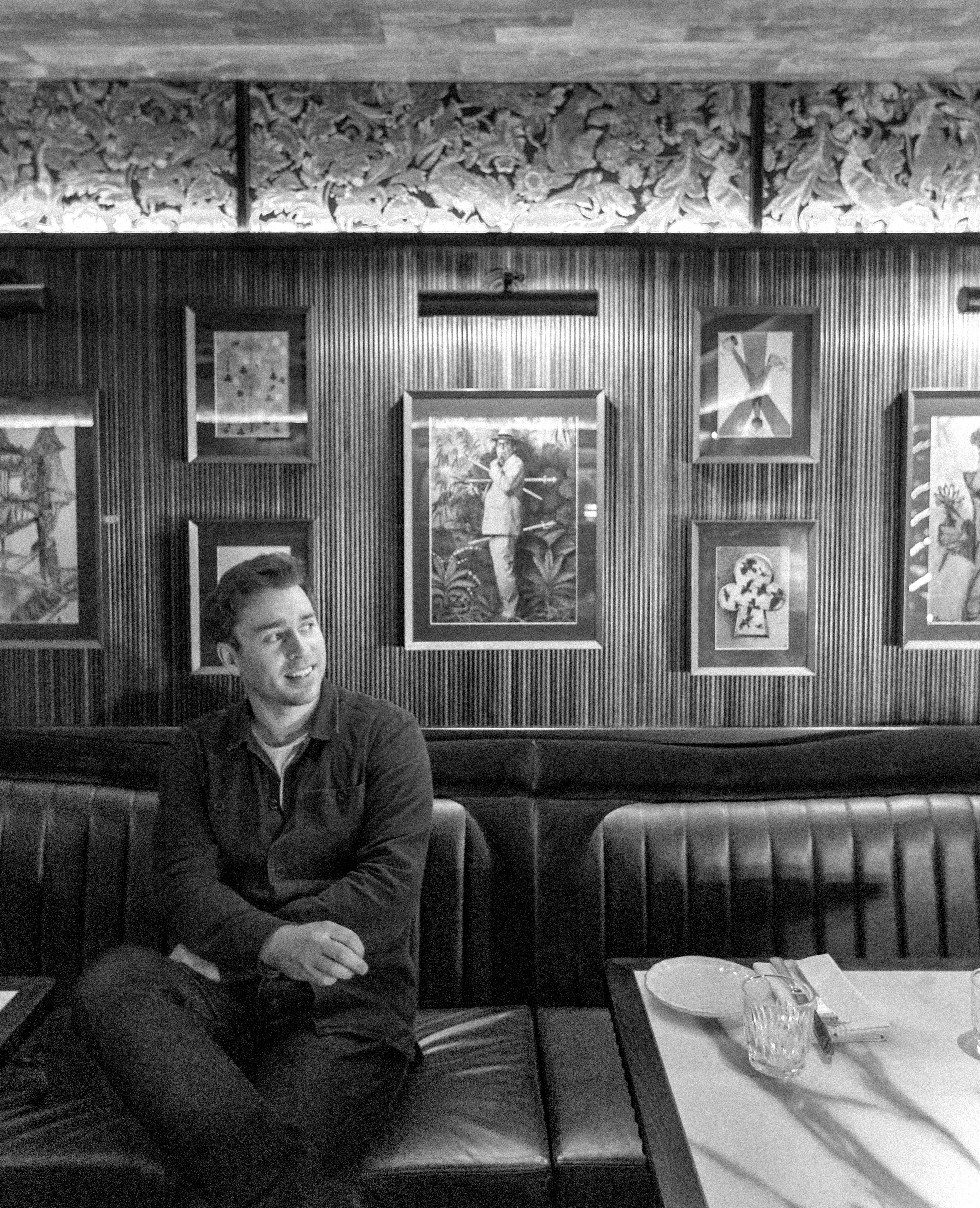
To bring that world to life, Sam, founder of North End Design, drew on historic architecture, decorative traditions and an eclectic mix of influences, from Venetian glasswork to Miami Art Deco. The result, is a restaurant that feels steeped in history, despite being just two years old.
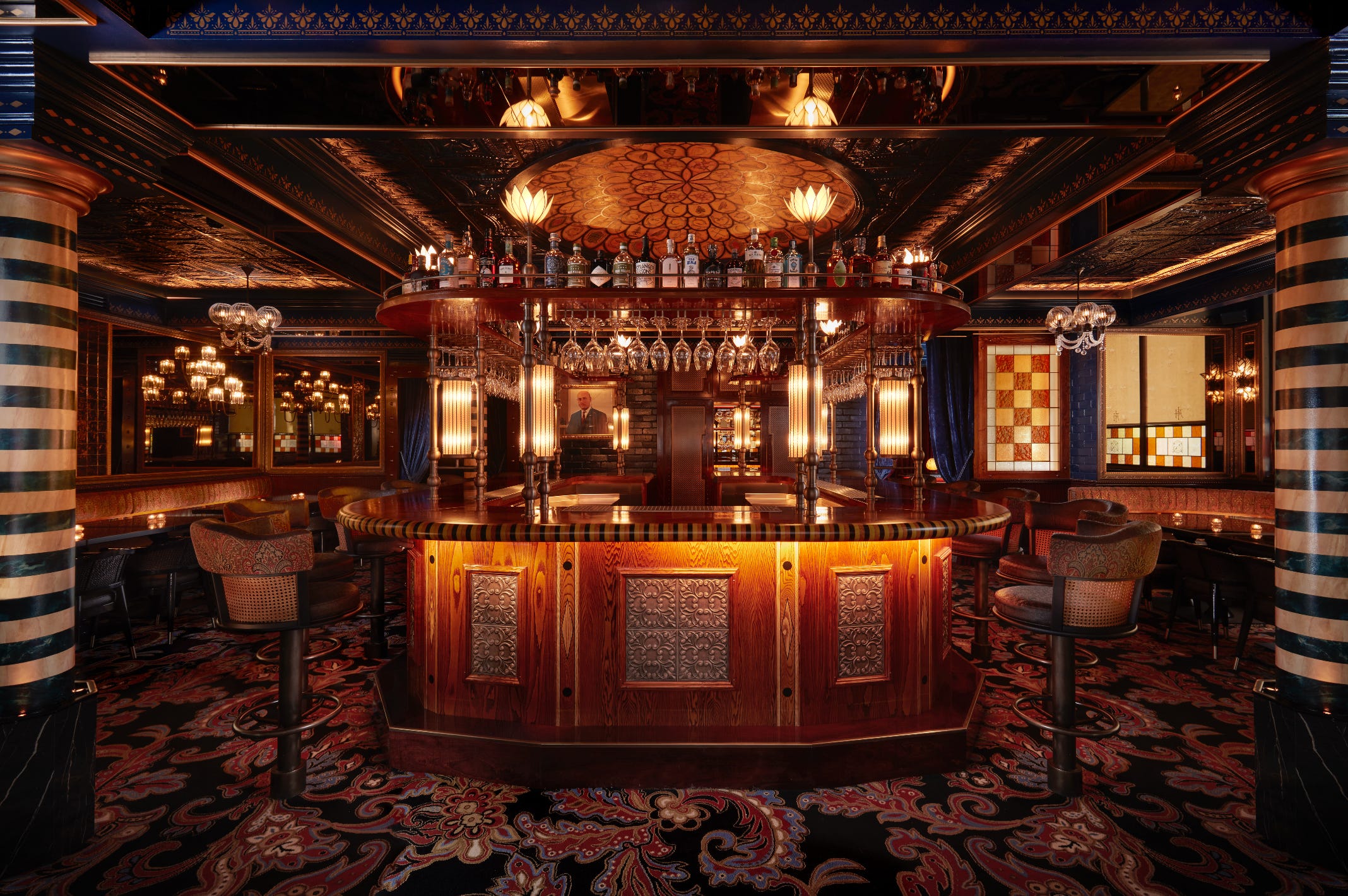
Ambassadors Clubhouse has become one of the hardest reservations to secure in London and New York, and having eaten there, it’s easy to see why. The food is sensational, but the room is something else entirely. You walk in off the streets of Mayfair and suddenly feel a long way from London. I was curious to know how Sam and his team created a room that transports its guests.
We spoke about the stories behind Ambassadors Clubhouse, the psychology of restaurant design, and the details that shape our experience of a dining room without us ever noticing.
TFT: Before there were fabrics, furniture or lighting, what was the story you were trying to tell with Ambassadors Clubhouse?
SH: With all restaurants from JKS, we always start by developing the story before getting into the design itself. For Ambassadors Clubhouse, the inspiration came from the ambassador, the owners’ grandfather, and the grand houses in the northern hills of India where he might have entertained guests.
We started the process by imagining what his home would have looked like, the people who would have visited and the kind of dinner parties he might have hosted. We wanted to capture the character and atmosphere of those places, instead of recreating one particular house.
That became the starting point for the design, giving us a story to build around while leaving plenty of room for our own interpretation.
TFT: Where did you pull visual inspiration from, and how did those references shape the design of Ambassadors Clubhouse?
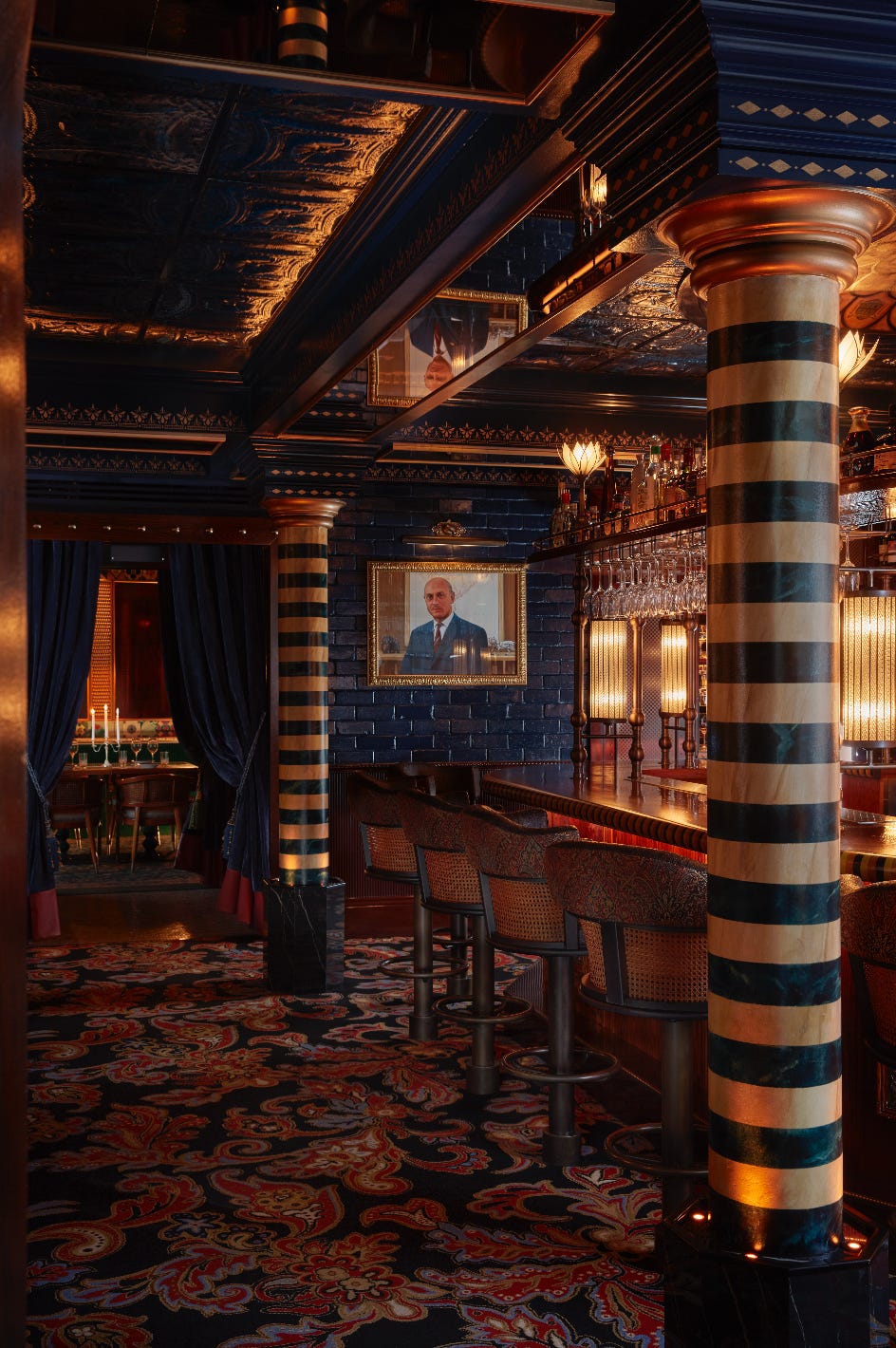
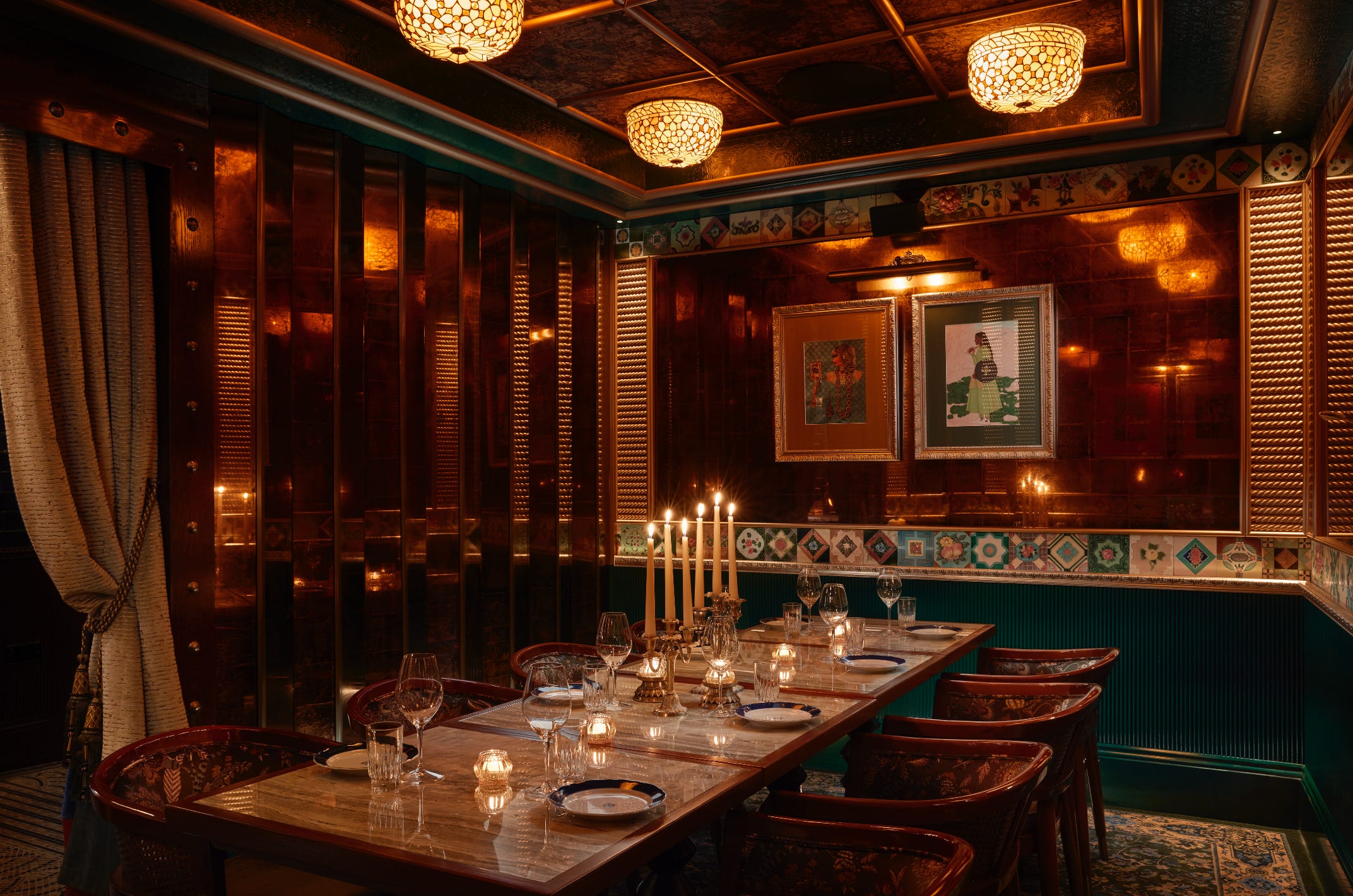
SH: We spent quite a bit of time researching the architecture as well as the craftsmanship of the region. One of the buildings we pulled inspiration from was Umer Hayat Mahal in Pakistan, which has some extraordinary decorative detailing.
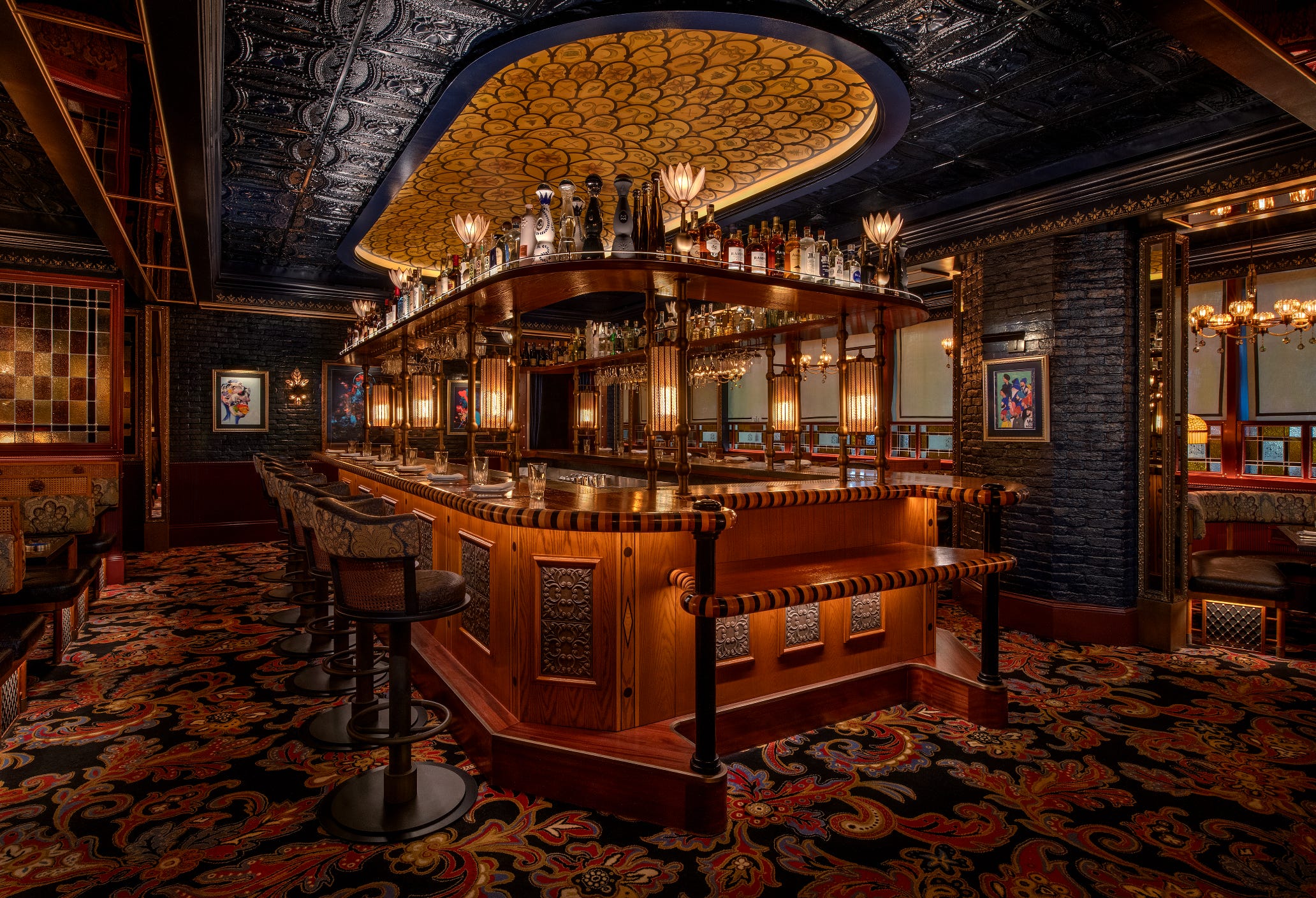
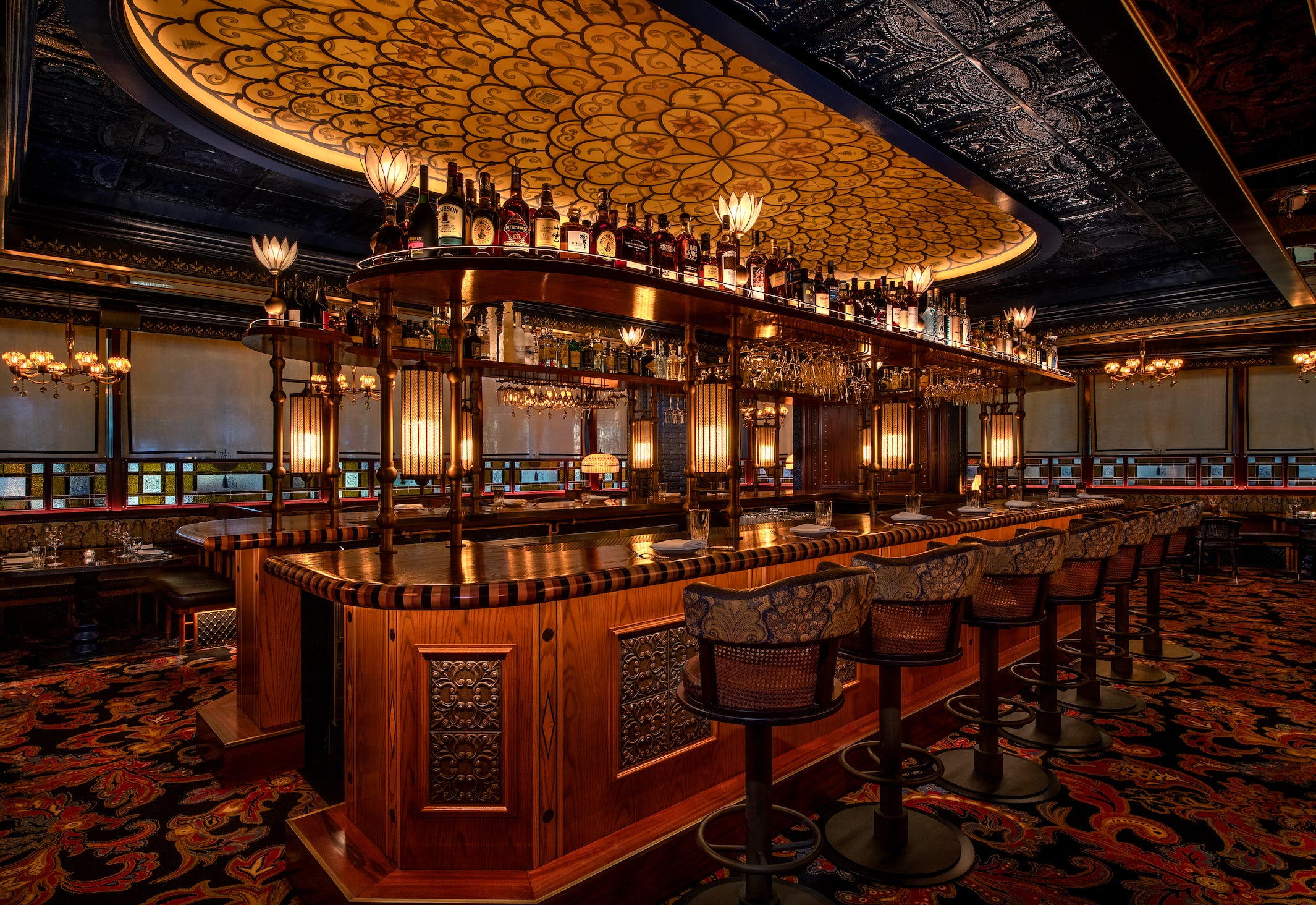
We also studied the historic tombs at Uch Sharif in Punjab, particularly the use of stripes and patterns throughout the architecture. You can see that influence in the striped detailing on the columns and around the bar at Ambassadors.
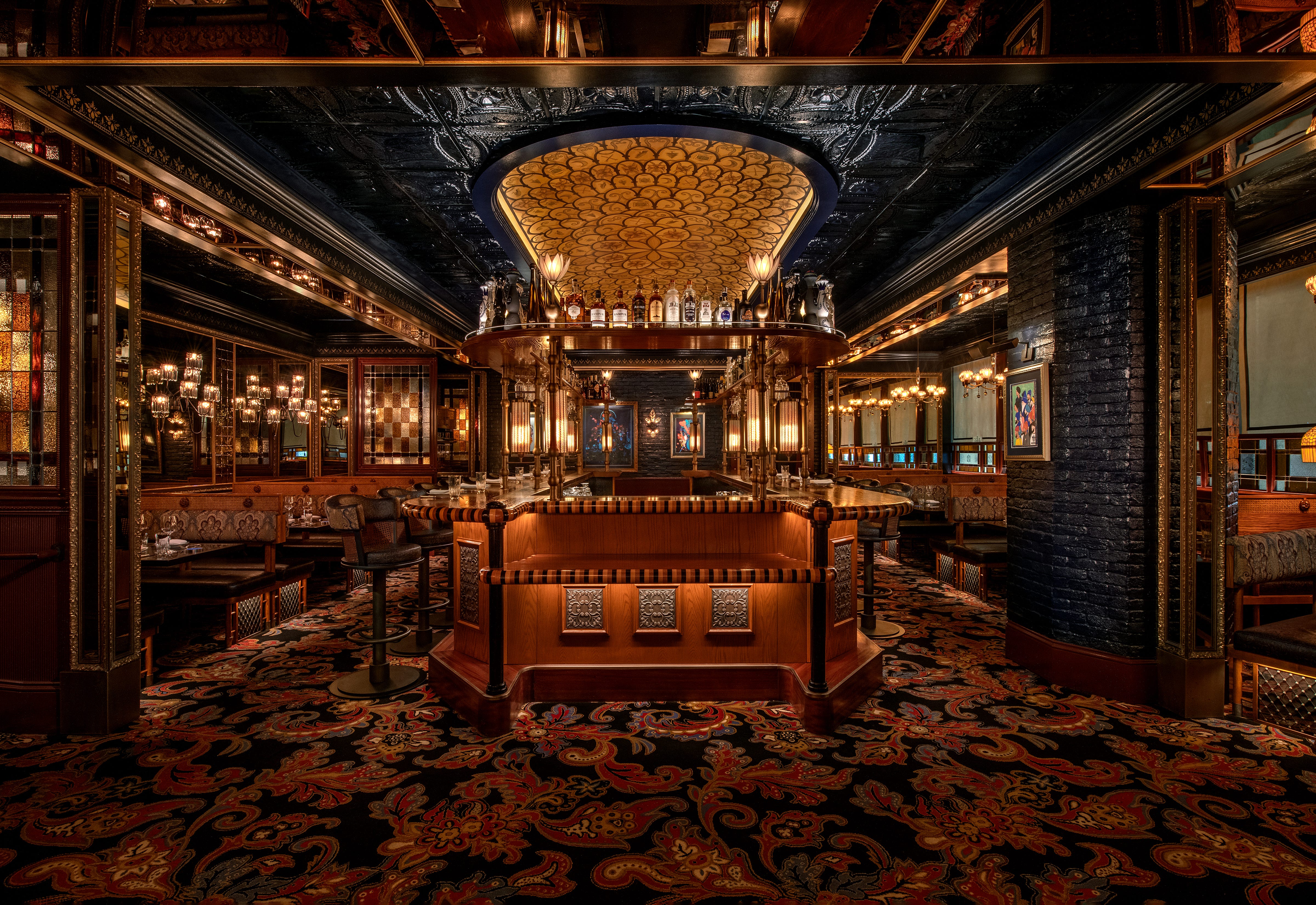
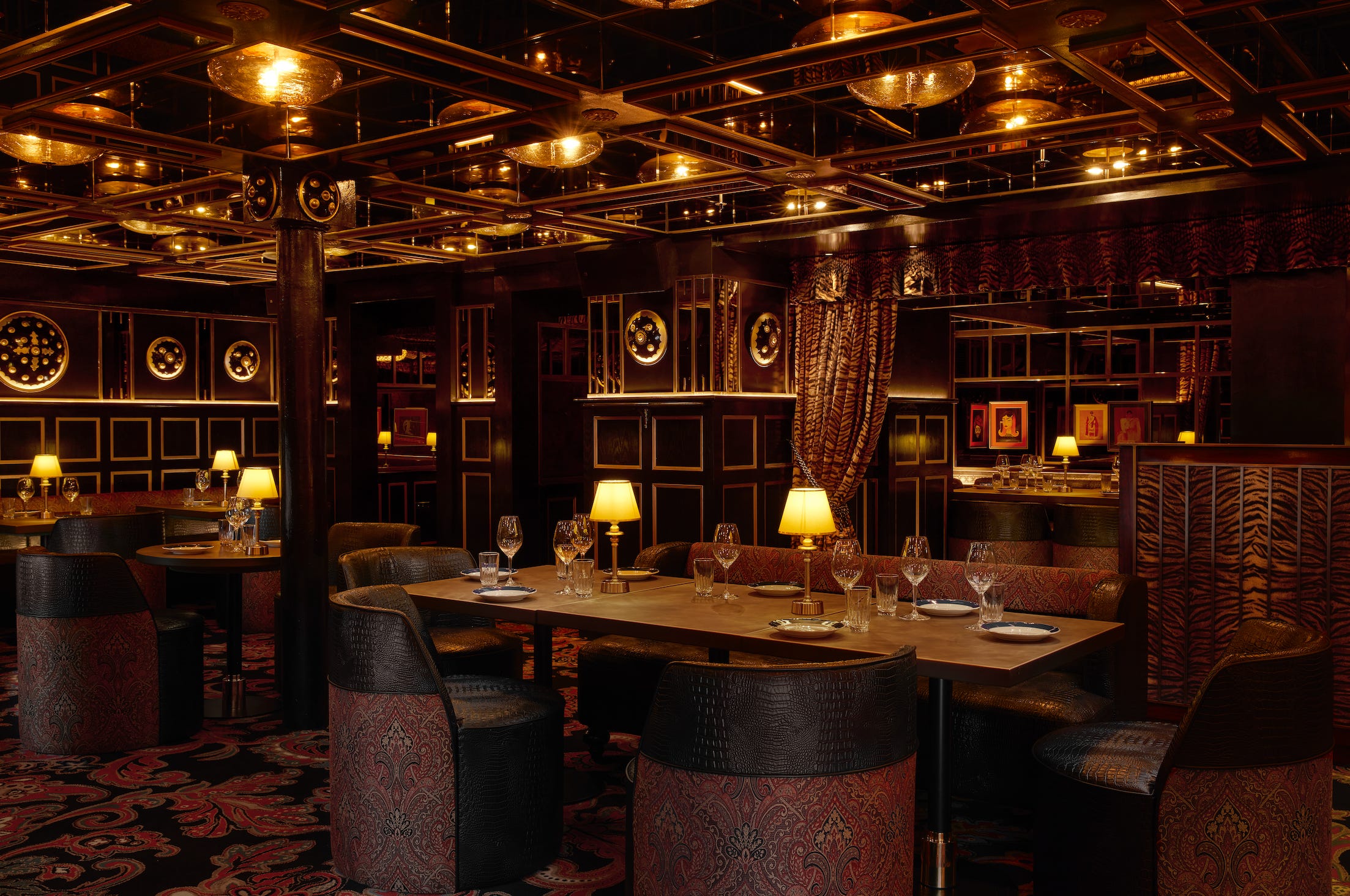
Another reference point were traditional family crests, military references, birds and botanical motifs. The lotus leaf and plants native to India, for example, inspired some of the decorative pendant lighting.
The challenge was taking all those references and translating them into something that felt authentic without becoming too literal. When designing a space like this, a lot of care goes into keeping it from feeling like Disneyland. We wanted the history and craftsmanship to come through in the design, but for Ambassadors to have an identity of its own.
TFT: Ambassadors feels as though it has a history, rather than having been designed all at once. How do you create that sense of a place having existed before the diner arrives?
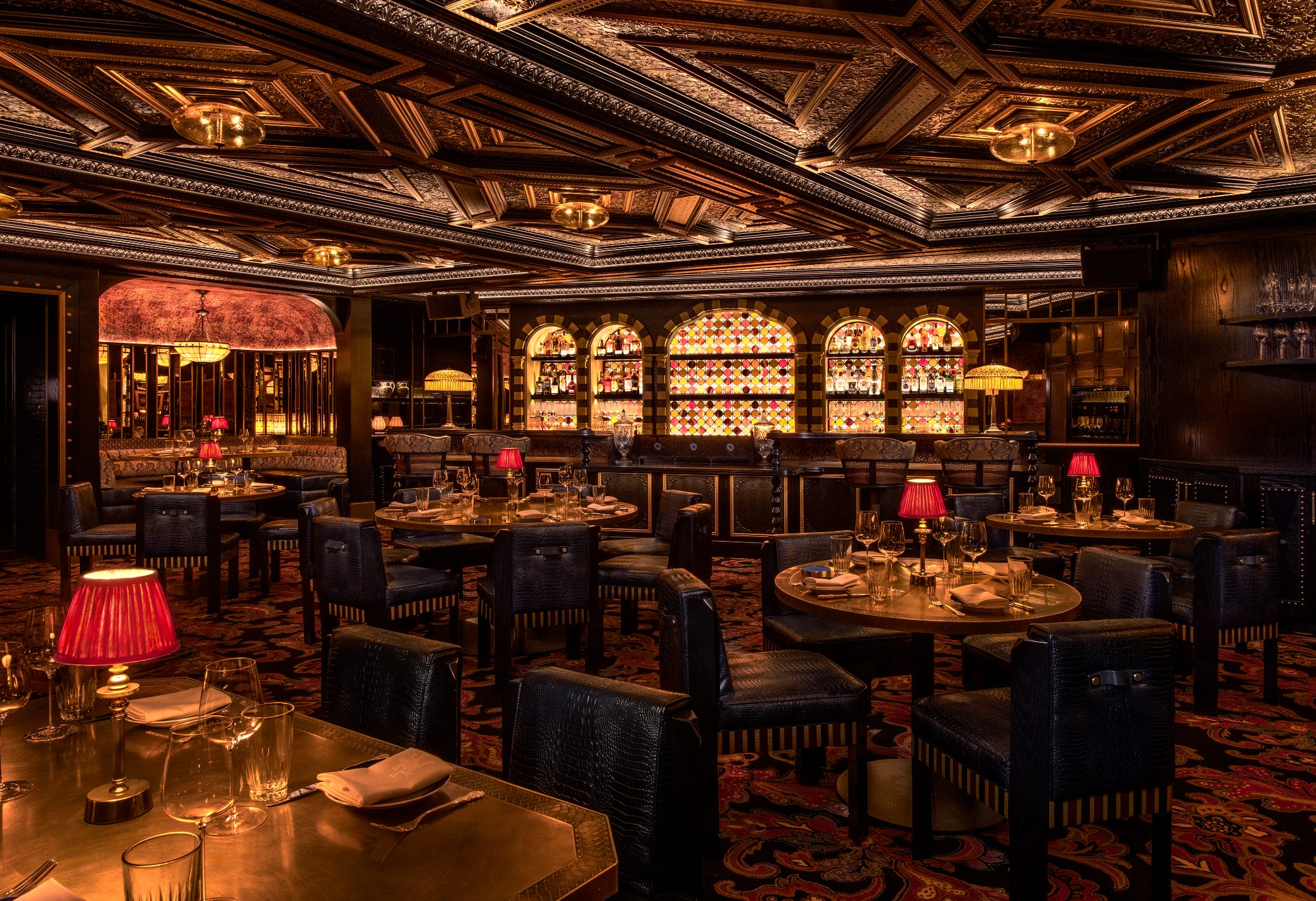
SH: A lot of it comes down to the materials and how they’re finished. We went through six or seven rounds of sampling for some of the materials at Ambassadors, experimenting with different levels of gloss, textures and finishes to get them right.
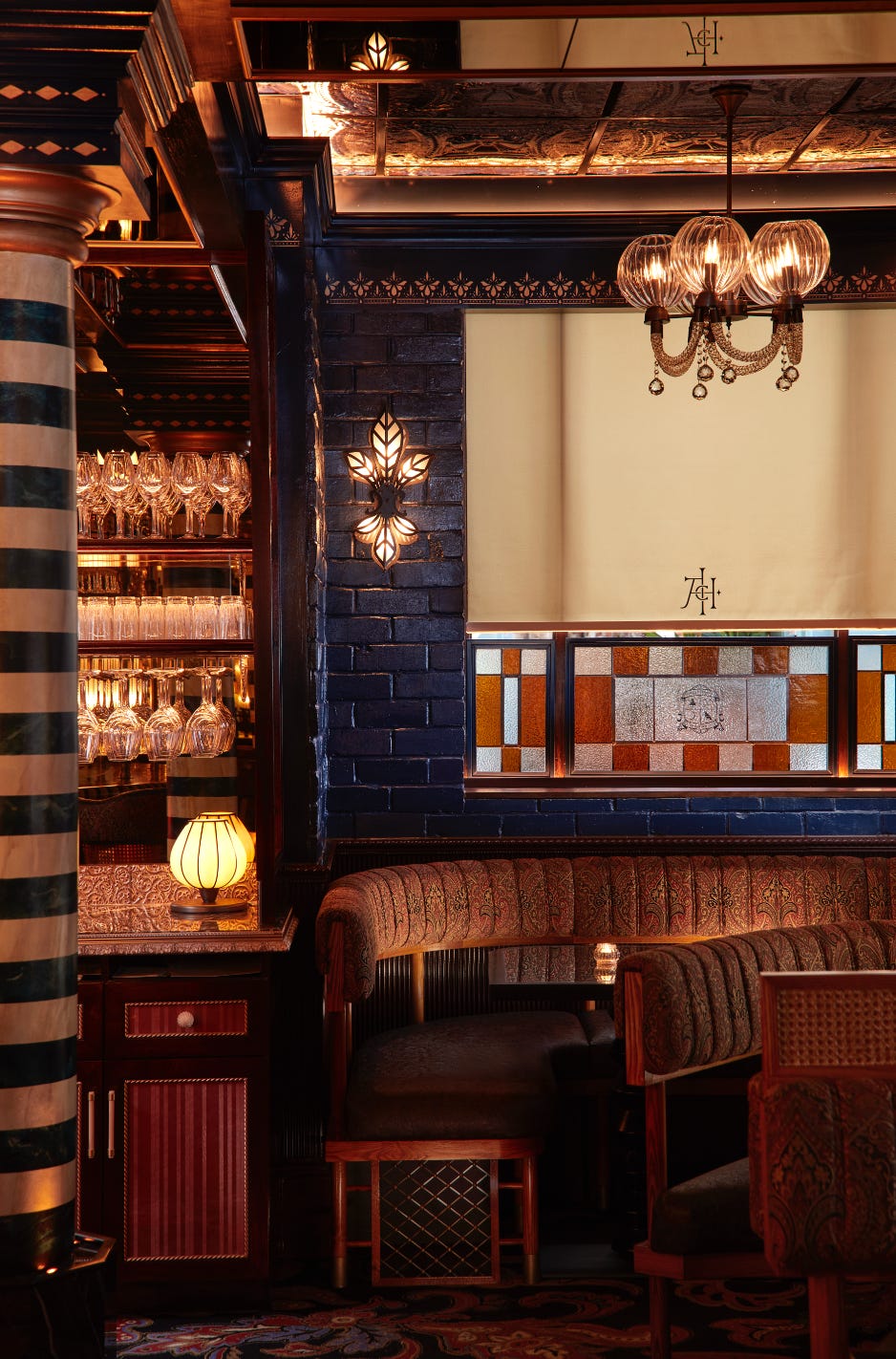
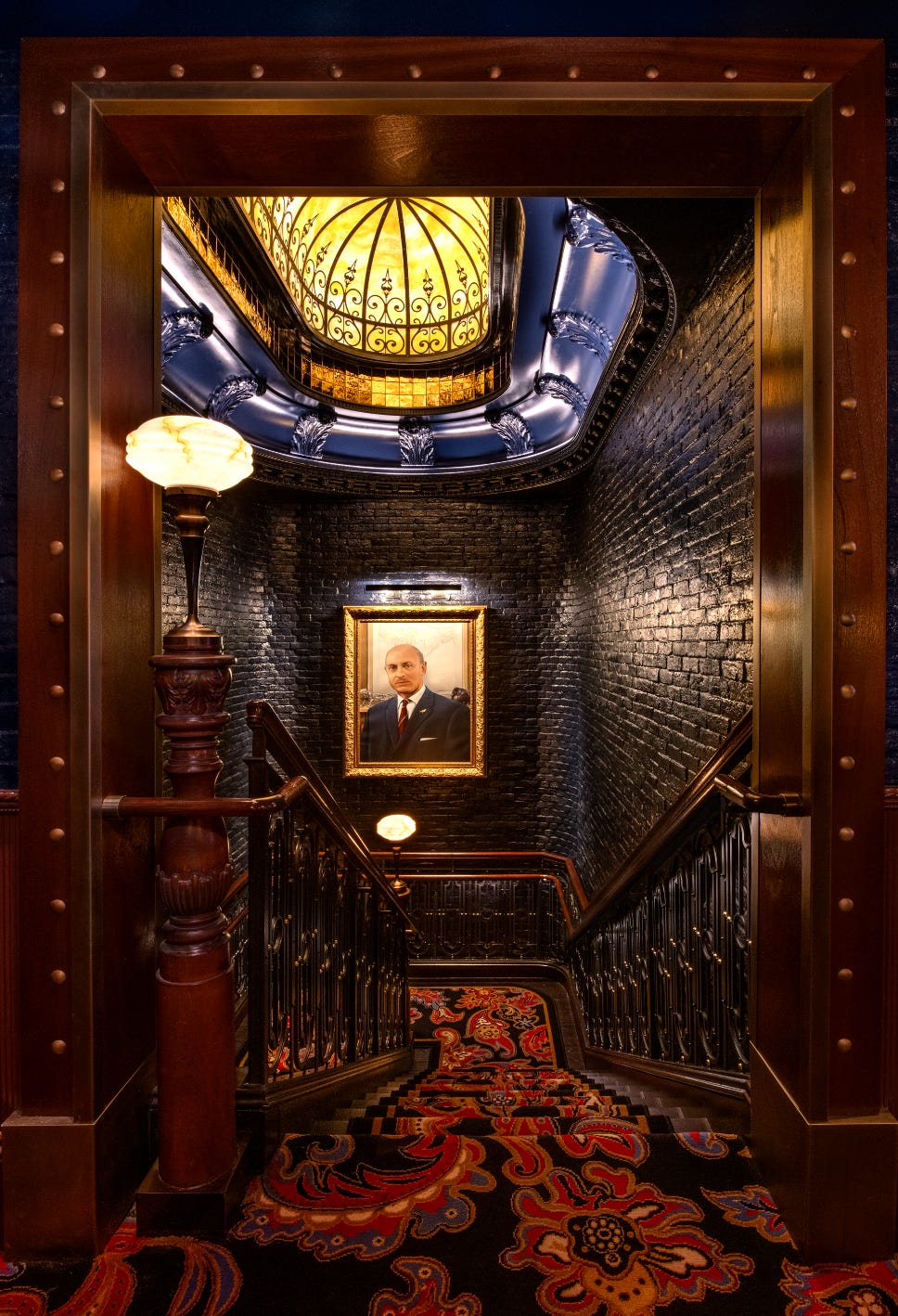
We wanted the space to have a sense of age and character, so we looked at how materials develop a patina over time. That influenced everything from the darker chocolate and caramel tones of the timber to the roughness of the brickwork and the tin-tiled ceiling.
The original concept was actually much rougher, almost like a tavern. We had quite a few discussions about how that would work in Mayfair compared with somewhere like Soho. As the design developed, some of those elements became more refined. The brickwork, for example, was painted a deep blue, which changed the character of the room considerably.
But we retained enough of those original textures and finishes to give the space that slightly worn-in feeling. It’s really about finding a balance between something that feels luxurious, and somewhere that has a bit of history and character to it.
TFT: You mentioned that you were also inspired by Venetian glasswork and Miami Art Deco, both which are unexpected sources for Ambassador’s. How do you pull from these different influences and still make a room feel coherent?
SH: We draw inspiration from all sorts of places. I go to art and design fairs every year, and there are always beautiful pieces of furniture and decorative objects that spark ideas.
For Ambassador’s, Murano glasswork, Gaudi’s architecture in Barcelona and Miami Art Deco design were a few of our many sources of inspiration.
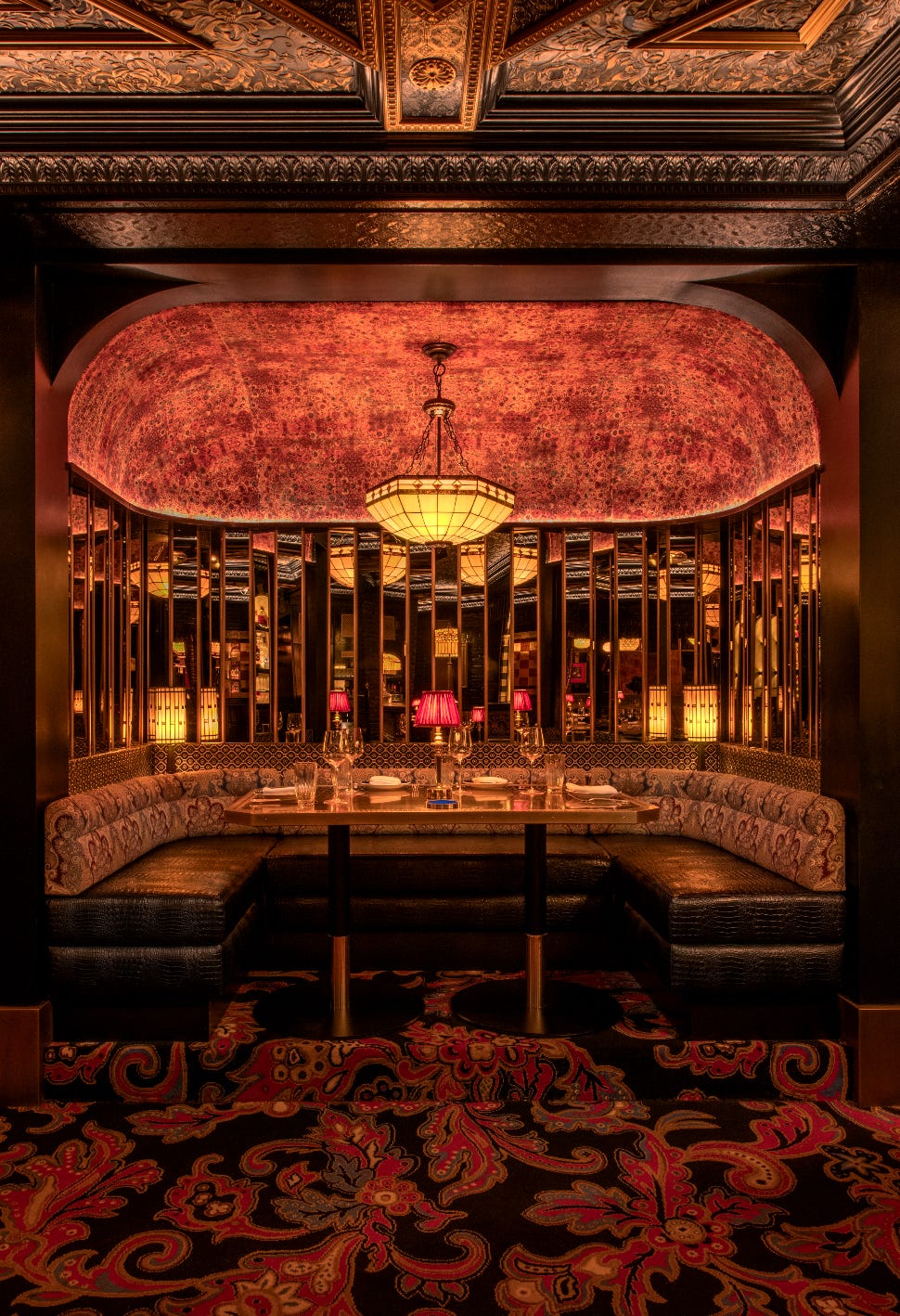
We take those references and develop them into details within the restaurant, whether that’s a piece of joinery, a decorative feature or the shape of a chair. Some of the seating at Ambassadors draws on traditional furniture designs, but we’ve given it a more contemporary, club-like feel, with elements of mid-century design mixed in.
That contrast is really important because when everything is ornate or references the same period, the room can start to feel overly themed. Bringing in simpler or more contemporary elements can balance the decorative ones, and makes the space feel more natural as though it’s evolved over time.
TFT: What became non-negotiable for you as the design developed?
SH: The island bar on the ground floor was one of the most important decisions. Originally, we discussed positioning the bar near the entrance, but we ultimately decided to put it in the centre of the restaurant, which changed how the whole room worked.
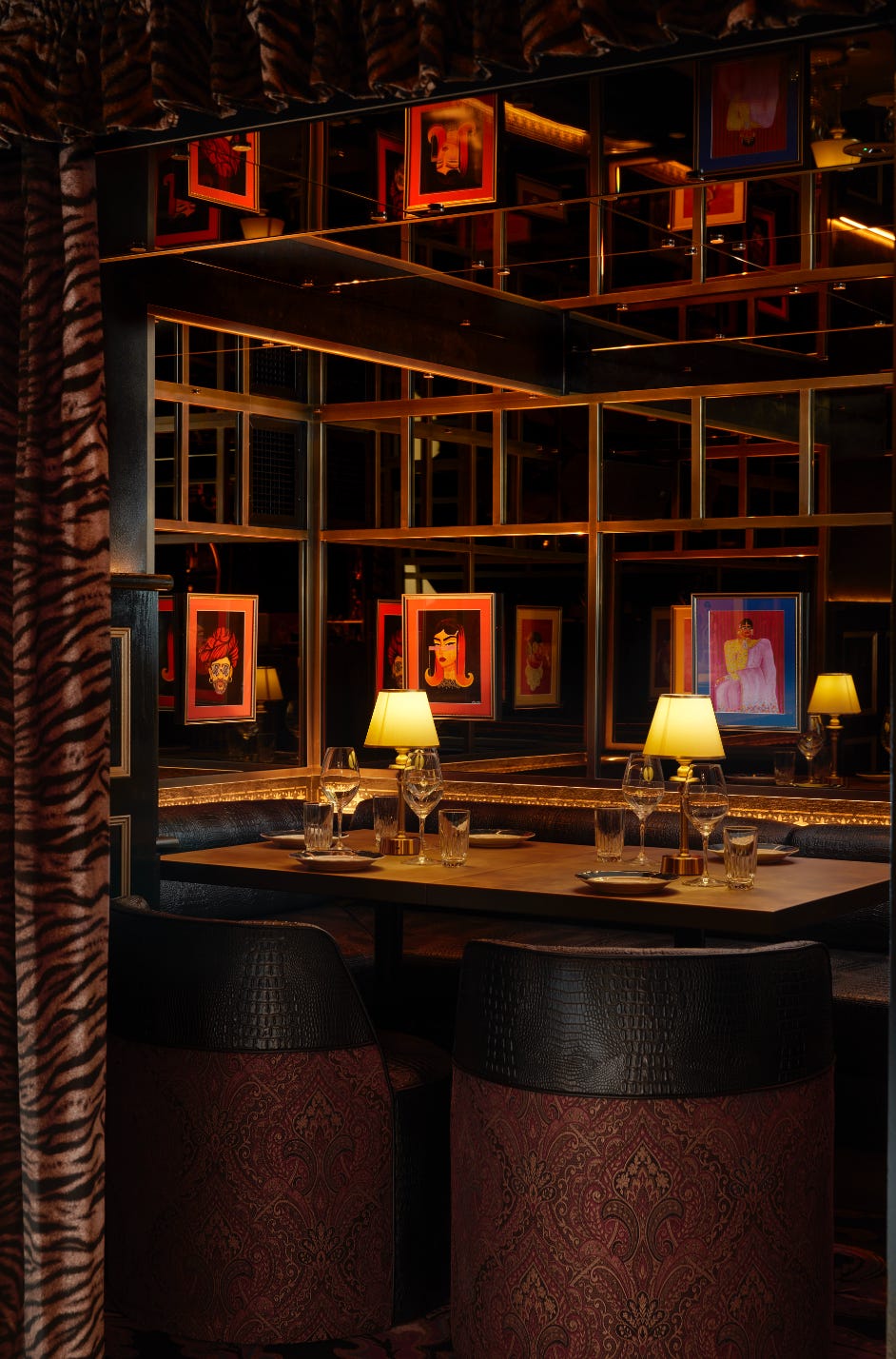
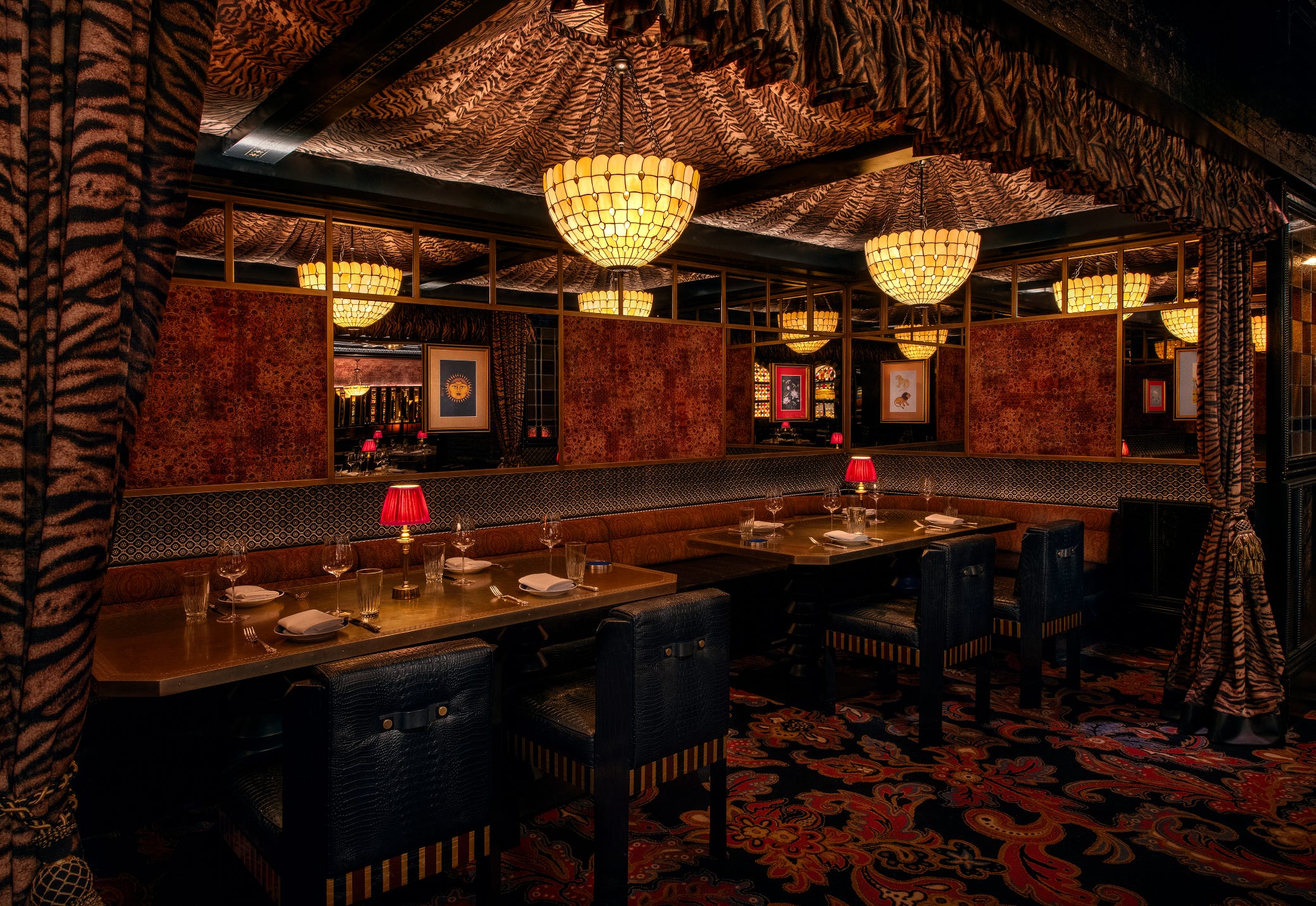
Having the bar in the middle allowed us to create four or five different areas around it. You get the theatre and energy of the bar, but the tables still feel quite private. We also used mirrors to open up views across the restaurant, so even when you’re sitting in one of the more intimate areas, you can still see what’s happening elsewhere.
A lot of thought went into how the different areas work together; we wanted people to feel like they had their own space, without losing the sense of being part of a lively restaurant.
TFT: How much do you think about how people will behave in a room when you’re designing a restaurant?
SH: It’s a big part of the planning process from the very beginning. Generally, you want larger groups towards the centre of the restaurant, where there’s more activity, while tables for two tend to work better around the edges, where they can have a bit more privacy.
We also put a lot of thought behind what people would be able to see from their seats. For example, we didn’t want diners facing towards a wall or looking out of the restaurant.
Nobody wants to sit next to a busy corridor with people constantly passing on their way to the bathroom, so we also need to consider how people will move through the dining room. There are lots of little decisions like that which can make a real difference to how comfortable people feel, even if they don’t necessarily notice them.
TFT: You mentioned that some of the most important details in a restaurant are things diners might never consciously notice; what are some things you pay particular attention to?
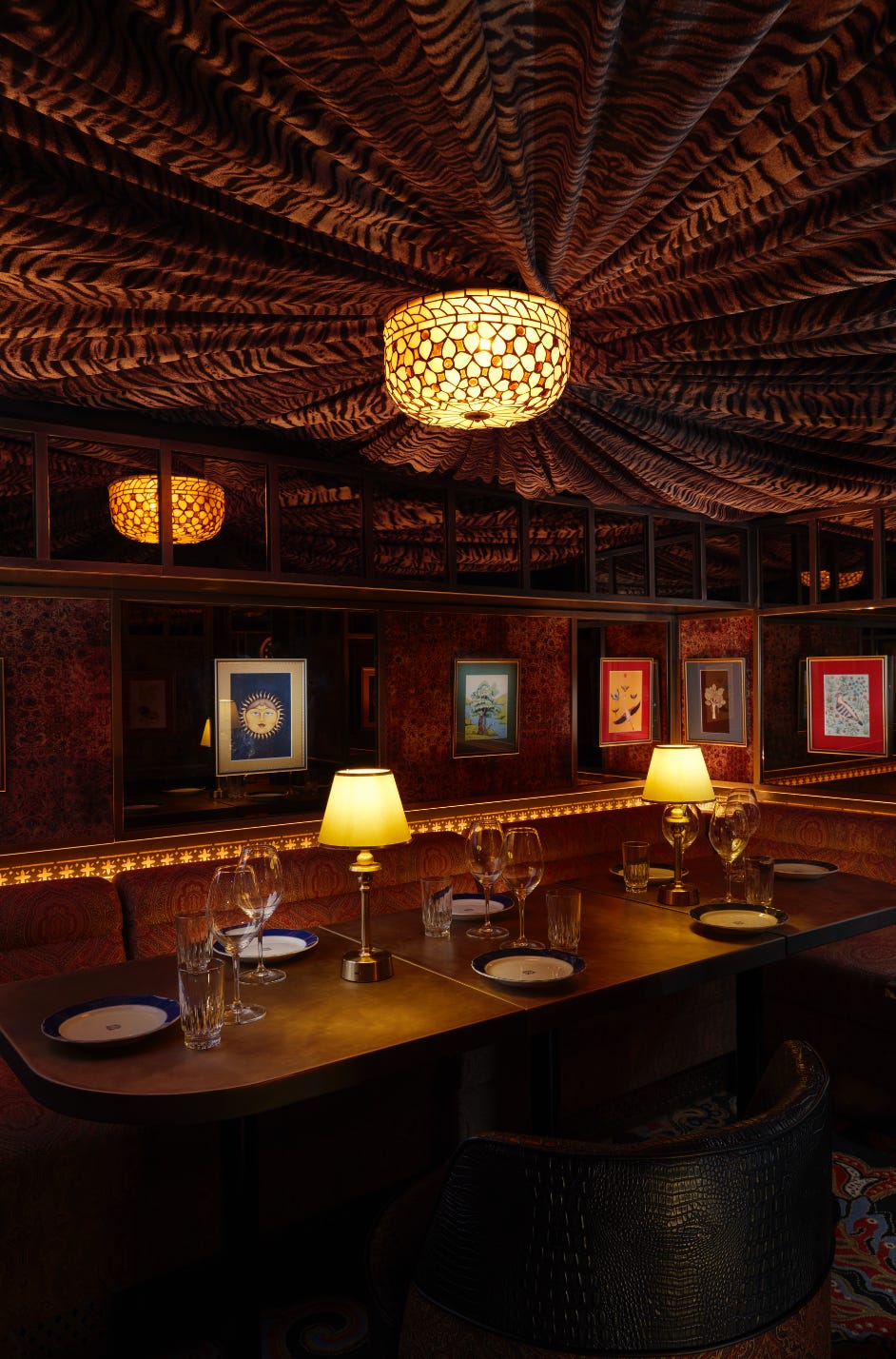
SH: Lighting is incredibly important. A guest might walk into a restaurant and immediately feel that something isn’t quite right, without necessarily knowing why. Sometimes it’s because the lighting is too cold or has a blue tone which makes the room feel uncomfortable. Usually we’ll remove spotlights altogether because we want the lighting to feel much more natural.
At Ambassadors, we wanted people to feel as though they’d stepped out of Mayfair and into another world for the evening. It’s almost like walking through the wardrobe in Narnia, you want people to leave whatever is happening outside behind them.
But it’s not just the lighting. The things people physically come into contact with are just as important. This is everything from the texture of the carpet, the finish of a table, even the edges of the furniture. If you’re moving around a relatively tight space, you don’t want to catch yourself on a sharp corner.
I sometimes compare it to opening an Apple product. There’s so much thought that goes into the experience, right down to how the packaging feels when you open it. We try to apply that same attention to detail in restaurants. Guests might not notice every individual decision, but they all contribute to feeling you get being in the space.
TFT: How does the dining experience influence the decisions you make as a designer?
SH: The food certainly influences our design, particularly when it comes to the size of the tables. At Ambassadors, much of the menu is designed for sharing, and if you come as a group of six, you can order a much wider selection of dishes and try more of the menu.
That means the tables need to be large enough to accommodate all those plates, but you don’t want them to be so big that people struggle to have a conversation across them. We have constant discussions about table dimensions, sometimes debating differences of just 50 millimetres, because they can make a real difference to the dining experience.
From an operator’s perspective, you want guests to stay and order another drink and enjoy their evening, so it’s really important they’re comfortable, and the design has to accommodate that.
TFT: Was there anything you originally loved in the design that you eventually had to let go of because it wasn’t right for the restaurant?
SH: You have to be quite ruthless sometimes. You might have an idea that you really love, but as the project develops, you realise it isn’t quite right. Or you find yourself £800,000 over budget and have to work out where you can make savings without losing the original design.
At Ambassadors, we’d originally incorporated quite a lot of LED lighting into the scheme. At one point, there was a discussion about whether we’d taken it too far and whether it was starting to feel more like a strip club than the atmosphere we were trying to create, so we took it out.
You can spend months looking at drawings, samples, visualisations, but it’s really only when everything starts coming together that you really know how the room is going to feel. One big milestone is when the lighting goes on for the first time and you can finally see how everything comes together. The restaurant might still be three or four months out from opening, but that’s often the first time you can tell if the design is actually working.
TFT: Is there a difference between designing a restaurant that looks beautiful and one that people actually enjoy spending time in?
SH: Absolutely, you see some incredible restaurants in design awards, and when you look at the photographs, the spaces are beautiful. But that doesn’t necessarily mean they work well for the people dining there.
Our starting point is for a room we’re designing to work for the operator and for the guests. Of course we’re always going to incorporate beautiful details, but we need everything to serve a purpose beyond just looking good in photographs.
We love beautiful details as much as anyone, but everything needs to serve a purpose, it can’t just be about how the restaurant looks in photographs. I think some designers can get caught up in designing for awards rather than thinking about the people who will actually use the space.
We’ve worked with many of our clients for seven or eight years, and those relationships are really important. When you understand how somebody operates their restaurant, you can challenge each other and arrive at better ideas. Ultimately, you want to create somewhere people enjoy being, not just somewhere that wins design awards.
TFT: After spending an evening at one of the restaurants you’ve designed, what do you hope people remember from their night?
SH: When people first walk in you want them to have that sense of arriving somewhere special. But it’s also important the entire experience lives up to that first impression.
One of the things I love about working in hospitality is being able to go back and enjoy the spaces we’ve created. In other areas of design, you don’t always get that opportunity. With restaurants, I can bring friends and family along, sit down for dinner and see people enjoying the space.
I remember bringing friends to Ambassadors and having dinner upstairs. We ended up staying late into the evening, enjoying the food, the atmosphere and the service. It’s really satisfying to experience the restaurant as a guest after spending so much time working on it. That’s ultimately what all the design work is for.
To explore more of Sam’s work, visit North End Design or connect with him on LinkedIn. And if you haven’t yet experienced Ambassadors Clubhouse for yourself, I can’t recommend it enough. You can book a table here.


I really enjoyed this article, seeing how the psychology of the dining experience is factored into all these design elements. Definitely on my list for next time I am in London!