


A quick note: This may be clipped in your inbox. For the best reading experience, read it in the Substack app or browser.
Even for the most enthusiastic diner, keeping up with every new opening in London would be a time-consuming and expensive feat. But one of the great privileges of living in, or spending time in, a city like London is having some of the world’s best restaurants on your doorstep.
In a season with an unusually high number of new openings, I’ve found myself thinking less about what’s new and more about what will last. Which of the restaurants that have opened in the past five years will still matter in thirty? And which will come to define the way London eats?
St. John, The River Café, The Eagle and Moro are all places we now refer to as institutions. But what actually makes a restaurant an institution?
They’ve all been open for decades, sure, but age alone doesn’t create an institution, and neither does a Michelin star. What these four restaurants share is something more interesting: six qualities that have helped embed them into the fabric of London’s dining culture.
So what happens when we apply those same six qualities to restaurants that‘ve opened in the past five years? Which have the makings of London’s next great institutions?
The DNA of an institution
Looking at St. John, The River Café, The Eagle and Moro, six common attributes emerge. They help explain why certain restaurants become more than simply places to eat, and begin to shape the culture around them.
IDEA - The restaurant introduces a distinctive point of view through its cooking.
AUTHORSHIP - There is an identifiable person or partnership whose taste defines it.
IDENTITY - It has its own recognisable culinary, visual and hospitality language.
COMMUNITY - It creates a community that feels emotionally invested in the restaurant.
CONVICTION - Trends come and go, but the restaurant follows its own worldview rather than the market.
DESCENDANTS - Its people, ideas or aesthetic begin appearing elsewhere.
Longevity matters, of course and only time can tell whether a restaurant will become an institution, but these six qualities give us some clues about which ones might get there.
The institutions of the future
For this list, I’ve focused on restaurants that’ve opened in the past five years but have had at least some time to demonstrate the qualities above. As much as I’d love to include some of London’s most exciting openings from this year, it’s simply too early to tell. A restaurant needs time to establish its identity, build a loyal following and show that it can stay true to its original vision.
Not all six attributes will be evident yet, particularly descendants, which can take years to emerge. But these are the restaurants I think have the best shot of becoming institutions.
01.The Devonshire - Opened 2023
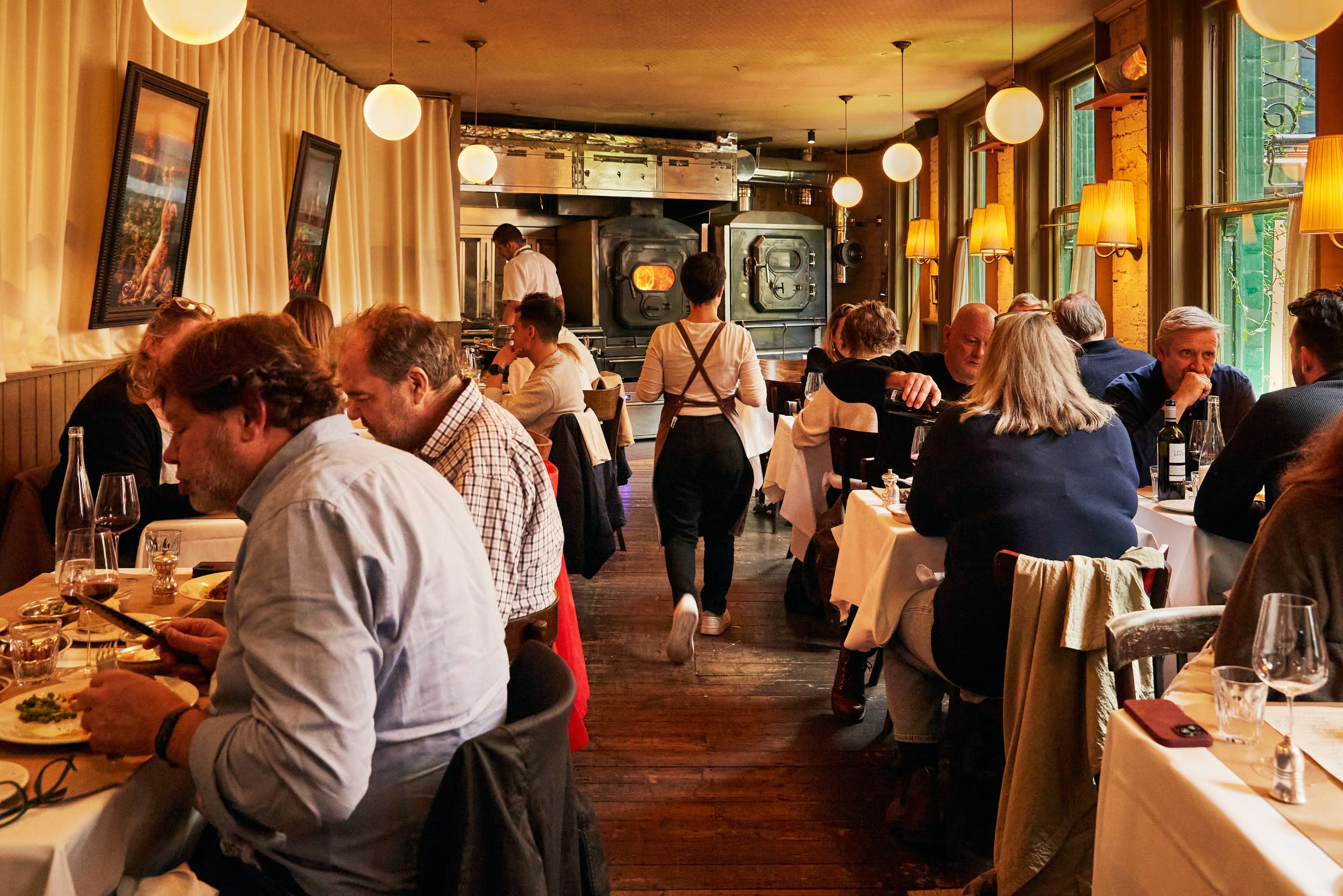
The Devonshire has achieved something quite rare in less than three years: it’s become one of London’s most sought-after pubs but somehow feels as though it’s been part of Soho forever. When Oisín Rogers, Charlie Carroll and Ashley Palmer-Watts opened it in 2023, they set out to do the familiar things exceptionally well, from the Guinness poured downstairs to the produce and cooking upstairs. The formula has clearly worked. The Devonshire has been named Gastropub of the Year at the National Restaurant Awards three years running, in 2024, 2025 and 2026.
The institution test:
IDEA - A traditional London pub treated with the ambition, sourcing and culinary precision of a serious restaurant.
AUTHORSHIP - Oisín Rogers brings the hospitality, Charlie Carroll the expertise in beef and sourcing, and Ashley Palmer-Watts the cooking.
IDENTITY - Guinness, wood-panelled interiors, an open-fire grill, British produce and an atmosphere deliberately rooted in pub tradition.
COMMUNITY - The packed downstairs bar, consistently sought-after restaurant and over flowing terrace suggest it has become as much a social destination as a dining one.
CONVICTION - Its identity is built around doing traditional things exceptionally well, rather than constantly introducing something new.
DESCENDANTS - The weakest claim for now. It’s too early to credit The Devonshire with a new generation of pubs, although its success could encourage others to invest in the format.
02.Dorian - Opened 2022
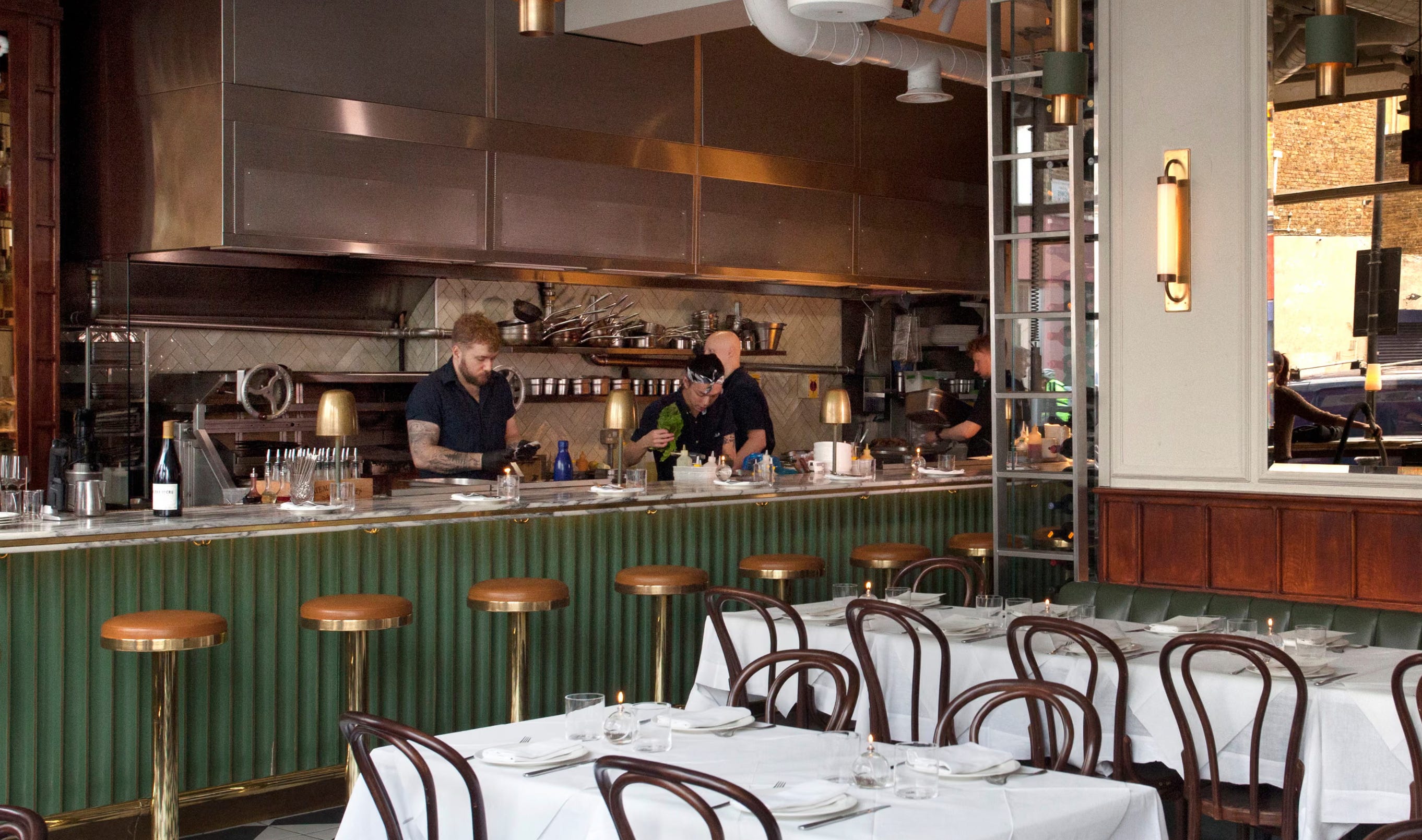
Dorian opened in 2022 by Chris D’Sylva, who described it as an “anti-Notting Hill restaurant.” He wanted to create a neighbourhood bistro people would return to regularly, but with cooking that could compete with London’s best fine dining restaurants. In just four years Dorian has built a loyal following, earned a Michelin star, and even more interestingly, has already influenced a new wave of London bistros that combine ambitious cooking with a relaxed approach to dining.
The institution test:
IDEA - Bringing fine dining level cooking to a neighbourhood bistro, without the formality of a tasting menu
AUTHORSHIP - Chris D’Sylva’s passion for exceptional produce and Max Coen’s original approach to the cooking helped establish the restaurant’s reputation.
IDENTITY - Green banquettes, an open kitchen, a wood-fired grill and a packed, lively dining room.
COMMUNITY - What started as a neighbourhood bistro now attracts everyone from local regulars to chefs and diners travelling across London for a table.
CONVICTION - Exceptional ingredients, ambitious cooking and an informal atmosphere have remained central to Dorian, even as its reputation has grown.
DESCENDANTS - Dorian is already being discussed as an influence on London’s new wave of ambitious neighbourhood bistros.
03.Sessions Art Club - Opened 2021
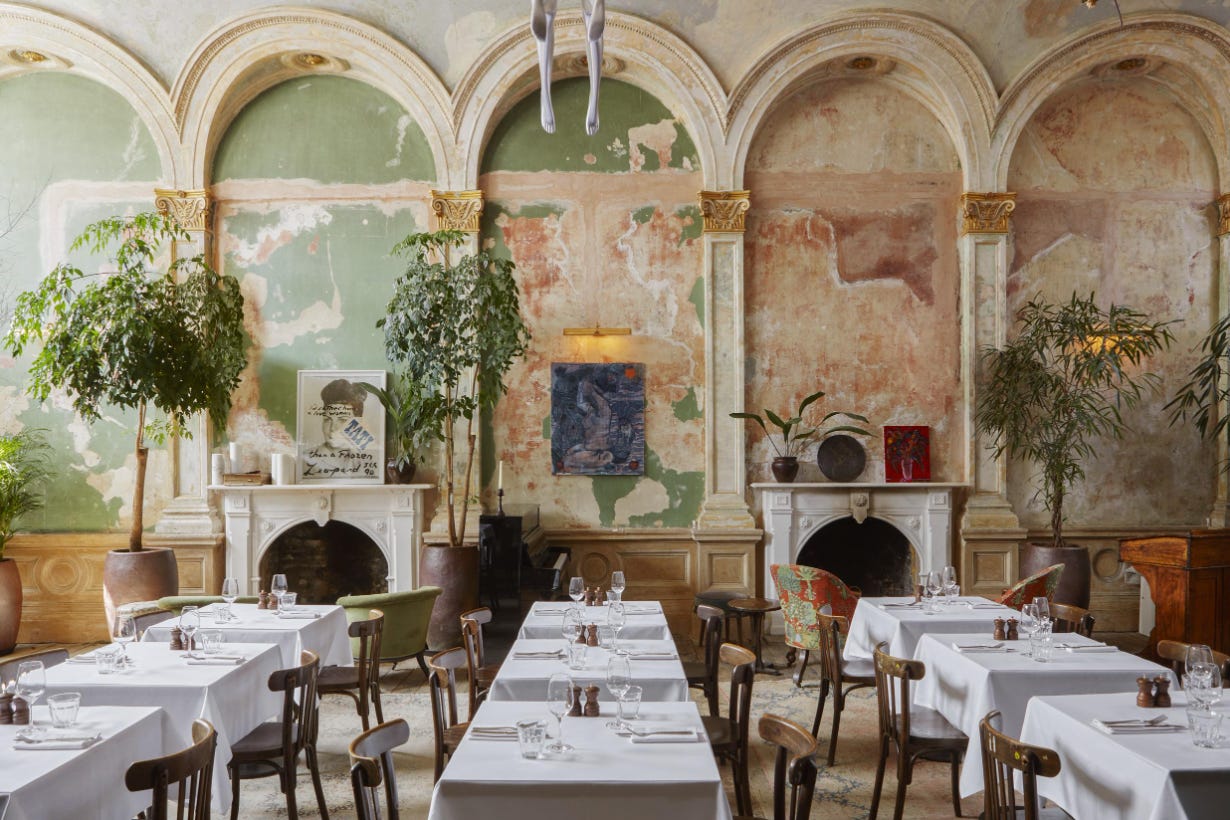
When Sessions Art Club opened in 2021 it very quickly became one of London’s most coveted tables. Opened by an unlikely trio, artist Jonny Gent, architect Russell Potter, and St. John co-founder, Jon Spiteri, the space is transportive and feels as much like an artist’s salon as it does a restaurant.
The institution test:
IDEA - Bringing food, art, music and performance together in a restaurant that doubles as a creative meeting place.
AUTHORSHIP - Artist Jonny Gent, architect Russell Potter and St. John co-founder Jon Spiteri brought their respective backgrounds to the project, with Florence Knight shaping the original menu.
IDENTITY - Peeling plaster, enormous arched windows, antique furniture, green banquettes and artwork throughout, the dining room is as much a draw as the food.
COMMUNITY - A favourite among London’s creative crowd, attracting artists, designers and diners who return as much for the atmosphere as the cooking.
CONVICTION - Florence Knight’s departure in 2024 was an early test of whether the restaurant could retain its identity without the chef who helped establish it. So far, it has.
DESCENDANTS - The founders have since brought a similar approach to Boath House in Scotland, although it’s still too early to judge Sessions Arts Club’s influence on the wider restaurant scene.
04.Mountain - Opened 2023
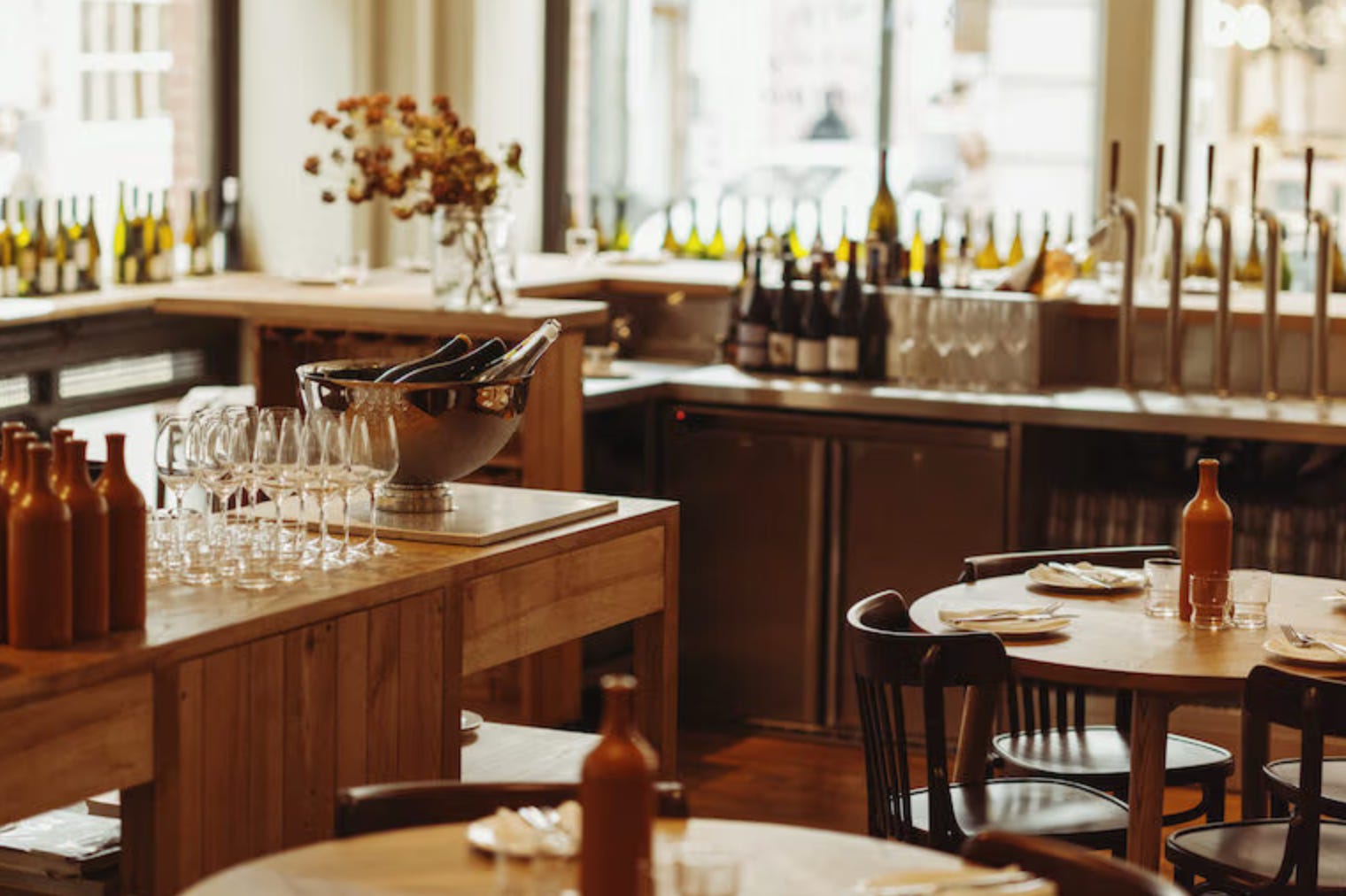
Tomos Parry’s Brat is undeniably on its way to becoming an institution, but doesn’t qualify for this list as its over 5+ years old. Parry’s follow up to Brat is Mountain, and in the 3 years its been open, has already made its mark. Mountain’s concept is totally unique, rooted in the relationship between Wales and Spain, combining fish and meet from both the coast and mountainous regions.
The institution test:
IDEA - Applying the Spanish “mar y montaña” tradition to Welsh ingredients, with fire as the central cooking technique.
AUTHORSHIP - Tomos Parry is unmistakably the creative force, supported by the wider Super 8 team.
IDENTITY - An enormous open kitchen, a bespoke wood-fired grill, a bakery, a serious wine programme and an energetic Soho dining room.
COMMUNITY - Strong critical recognition and a following inherited partly from Brat. We need better evidence of Mountain's own regulars and community.
CONVICTION - Serious investment in ingredient sourcing, working directly with producers and making bread, cheese and ice cream in-house.
DESCENDANTS - Parry has influenced London's live-fire cooking scene, but much of that influence began with Brat. It's too early to credit Mountain with its own descendants.
05.Bouchon Racine - Opened 2022
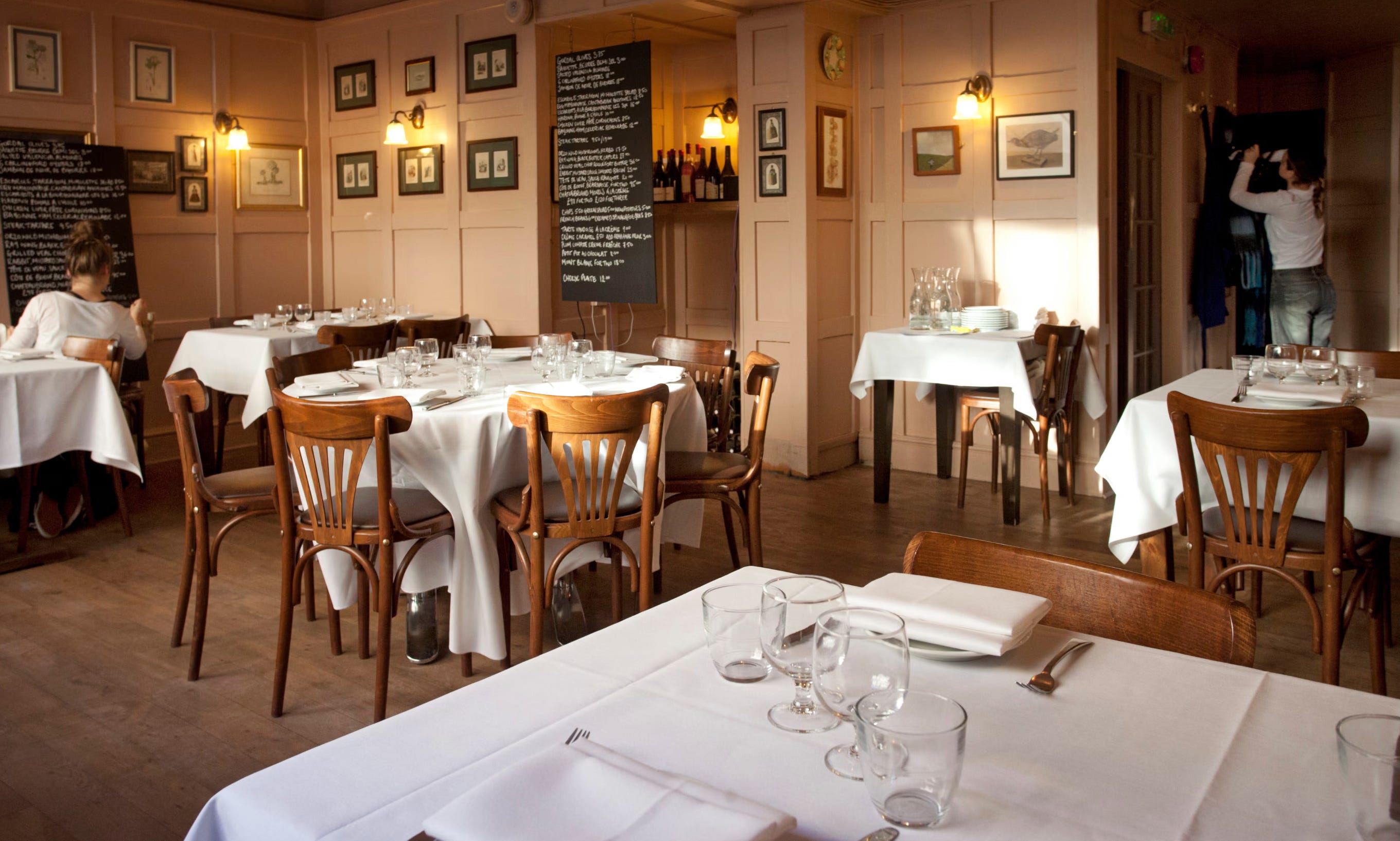
Henry Harris opened Bouchon Racine with restaurateur Dave Strauss in 2022, seven years after closing his much-loved Knightsbridge restaurant, Racine. Located above a pub in Clerkenwell, the restaurant marks Harris’s return to traditional French cooking, with classic dishes, telephone reservations and long lunches. It’s won over both former Racine regulars and a new generation of diners, and in 2026 was named the UK’s best restaurant at the National Restaurant Awards.
The institution test:
IDEA - Bringing traditional French bistro cooking back to London, with a menu inspired by the bouchons of Lyon and the bistros of Paris.
AUTHORSHIP - Henry Harris, whose cooking has been admired in London for more than two decades, alongside restaurateur and co-owner Dave Strauss.
IDENTITY - A small dining room above a pub, blackboard menus, classic French dishes and long, leisurely lunches.
COMMUNITY - A loyal following of former Racine regulars, restaurant industry insiders and a new generation of diners discovering Harris’s cooking.
CONVICTION - Harris has stuck to the French cooking he believes in, without trying to modernise dishes or follow trends. Even reservations are still taken by telephone.
DESCENDANTS - Harris’s original Racine influenced a generation of London chefs, but it’s too early to tell whether Bouchon Racine will have the same impact.
06.The Tamil Prince - Opened 2022
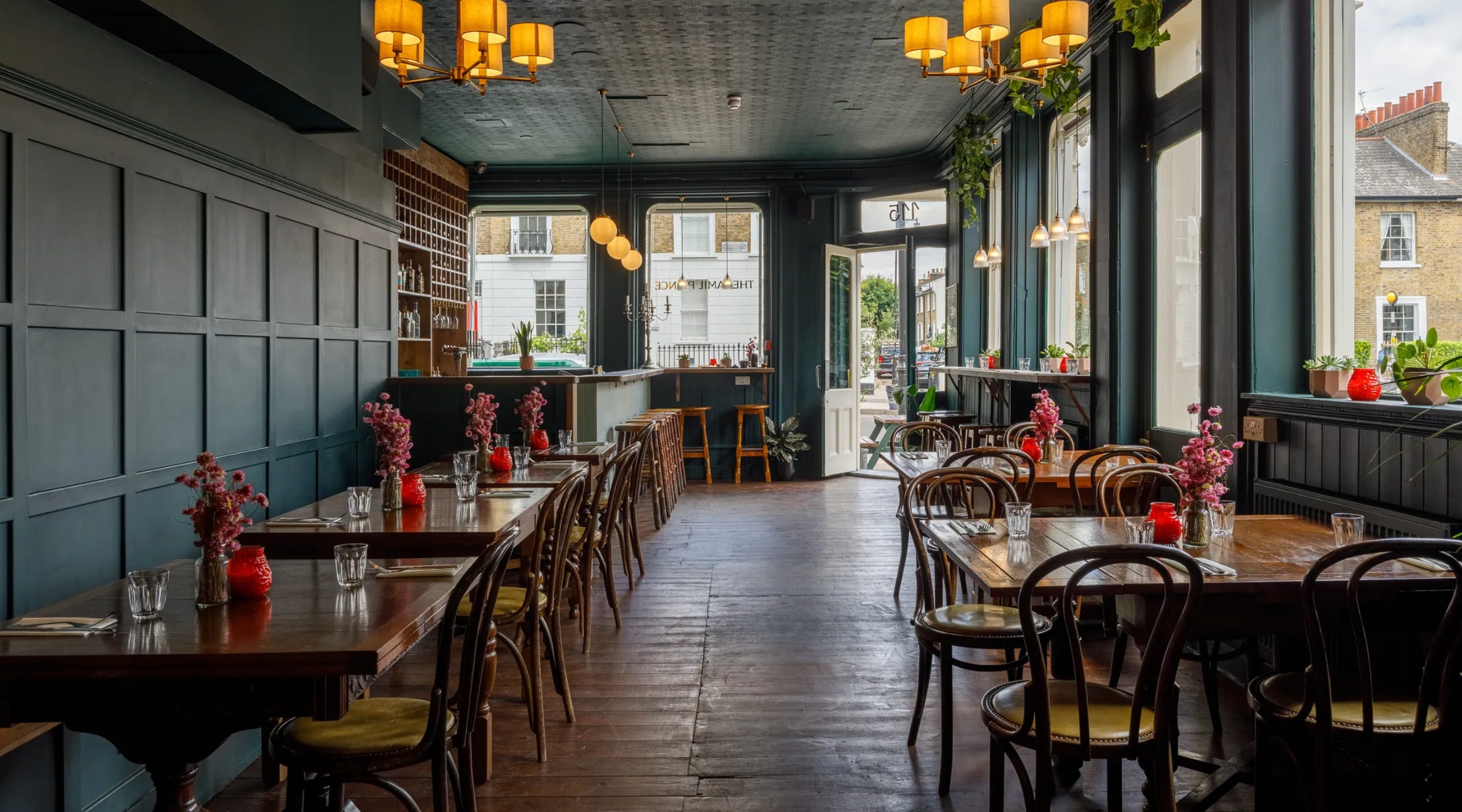
This one is my wild card, but the more I think about it, the more I see The Tamil Prince’s potential of becoming an institution. Chef Prince Durairaj and restaurateur Glen Leeson opened The Tamil Prince in 2022, taking over a nineteenth-century pub in Islington. Having both previously worked at Roti King they wanted to bring South Indian cooking to the traditional British pub, with pints at the bar and curries, rotis and grilled meats coming out of the kitchen. The restaurant quickly built a loyal following, and has since opened a second pub, The Tamil Crown, building on the success of the original.
The institution test:
IDEA - A modern take on the British pub, combining South Indian cooking with the familiarity and atmosphere of a neighbourhood local.
AUTHORSHIP - Chef Prince Durairaj, formerly of Roti King, and restaurateur Glen Leeson, who brought their respective backgrounds in Indian cooking and British pub culture to the concept.
IDENTITY - Dark green walls, an original pub bar, pints, Indian-inspired cocktails and a menu of rotis, curries and grilled meats.
COMMUNITY - A neighbourhood pub that has become a destination for diners across London, while still welcoming locals who simply want to stop in for a drink.
CONVICTION - Keeping the pub experience intact rather than turning the space entirely into a restaurant, with South Indian cooking at the centre of the menu.
DESCENDANTS - The founders opened The Tamil Crown in 2023, taking the concept to a second Islington pub. Its influence beyond their own restaurants is still developing.
If St. John, The River Café, The Eagle and Moro have taught us anything, it's that becoming an institution takes more than a successful opening. It's about creating something distinctive enough that people keep coming back, and influential enough to leave a mark on the city, and only time will tell which of these actually become institutions.
Let me know in the comments if there are any you would add to the list.


I would have to agree with Dorian.