


A quick note: This may be clipped in your inbox. For the best reading experience, read it in the Substack app or browser.
Damien Hirst once walked into Quo Vadis and found his former business partner’s imitation of one of his paintings hanging on the wall. Ian Fleming tried to extract military secrets from German prisoners by getting them drunk over lunch at Scott’s. And at the Savoy, one of the most famous names in luxury was fired for stealing from the hotel, a secret that wouldn’t come to light for another 86 years.
London’s dining rooms have seen things.
And I, for one, would like to know everything.
Give me the feud, the affair, the painting with a backstory, the waiter who knew too much.
The best restaurant stories also have a unique way of surviving. Chefs will eventually leave, owners change hands, menus get rewritten and dining rooms refurbished…but stories attach themselves to a place and once you know a story, it becomes impossible to sit in the room without looking for signs of what happened there.
So I went looking for five of the best: feuds, espionage, scandal, tragedy and spectacularly bad decisions, all hiding inside London dining rooms that are, remarkably, still open today…consider this an invitation to book a table and go looking for the evidence yourself.
Here’s what happened.
01.Quo Vadis (Soho)
The restaurant that turned a business breakup into an art exhibition.
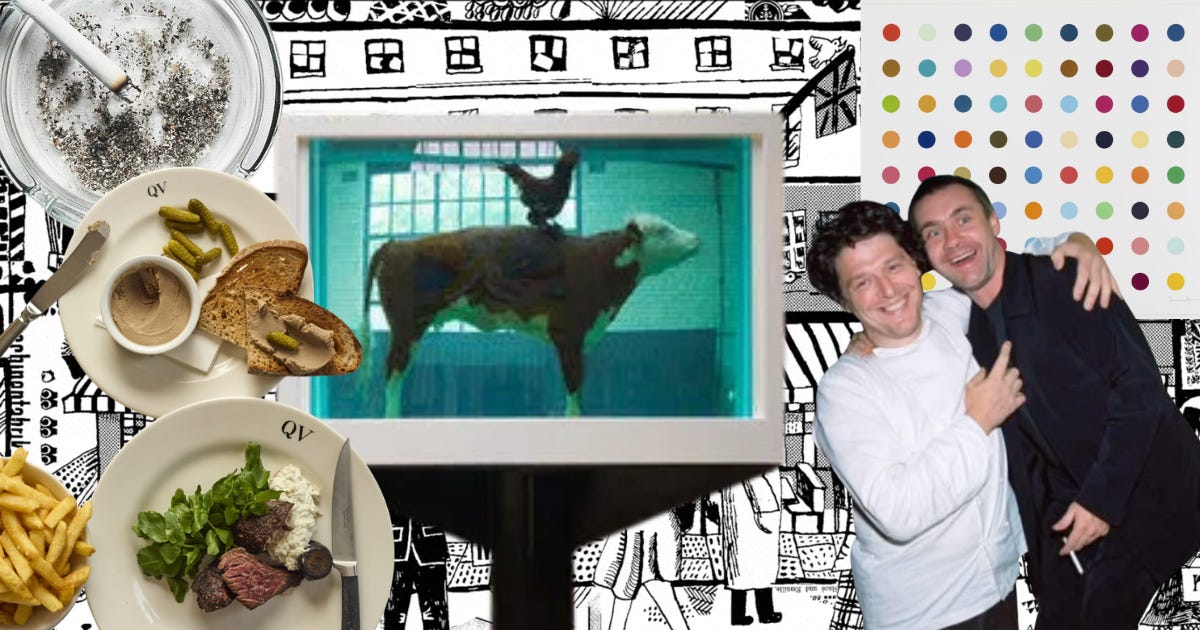
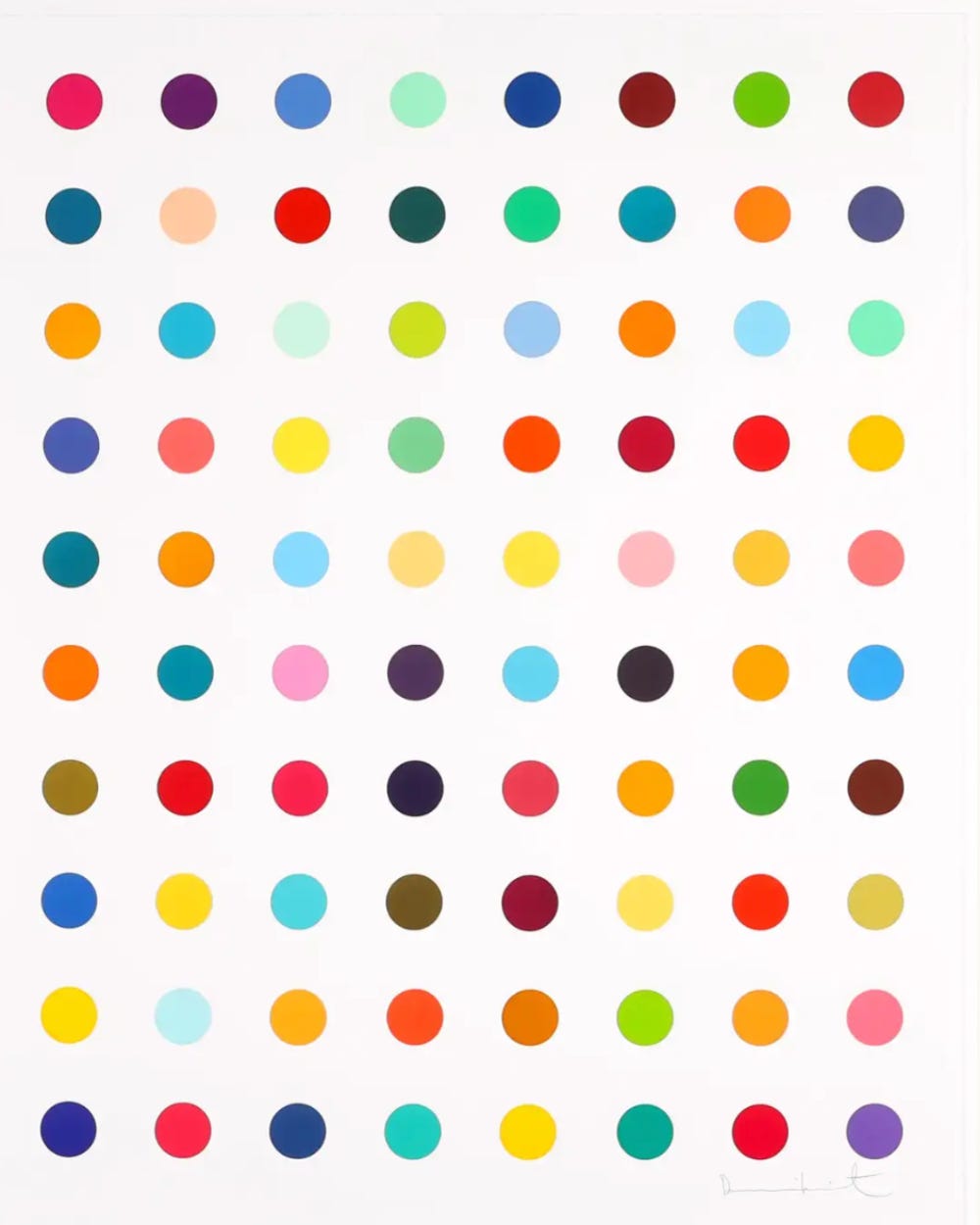
In 1999, British artist Damien Hirst walked into Quo Vadis for lunch and discovered something strange hanging on the walls. At first he thought he was looking at one of his own paintings. Then he realised it was a replica, one of his spot paintings, crossed with three violent slashes and titled Divorce. Its creator was Marco Pierre White, who until recently, was his business partner.
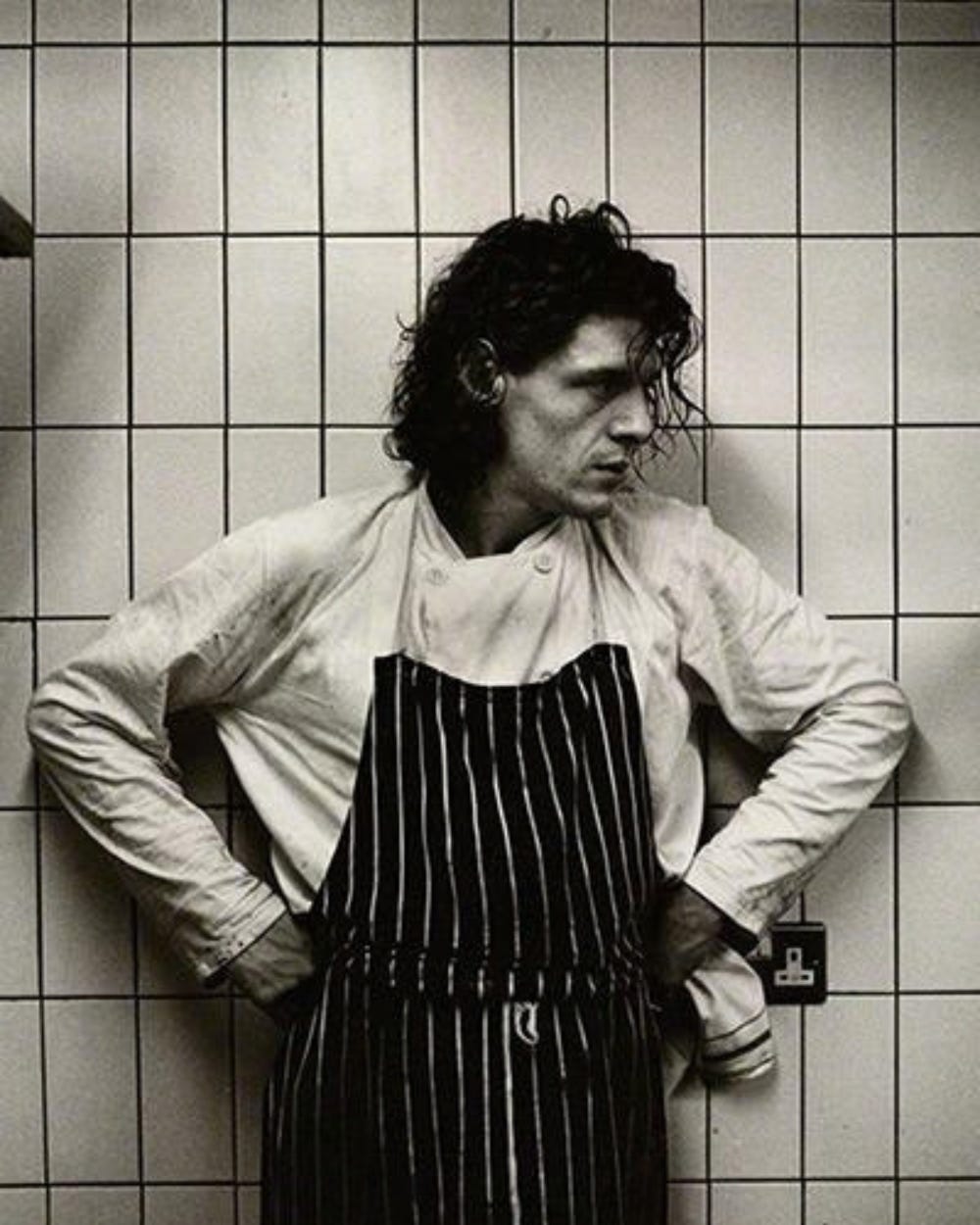
Marco Pierre White took over Quo Vadis in 1996, already the youngest chef, and the first British chef, to hold three Michelin stars. Among his partners was Damien Hirst, who was handed a five-year, £200,000 contract not just to invest, but to decorate the place.
He didn’t hold back…two skinned cows’ heads floated in formaldehyde behind the bar. A pair of skeletons hung from butcher’s hooks in a glass cabinet. It brought thirty animal-rights protesters to the door in January 1997 and ended with the police being called and five people taken to court.
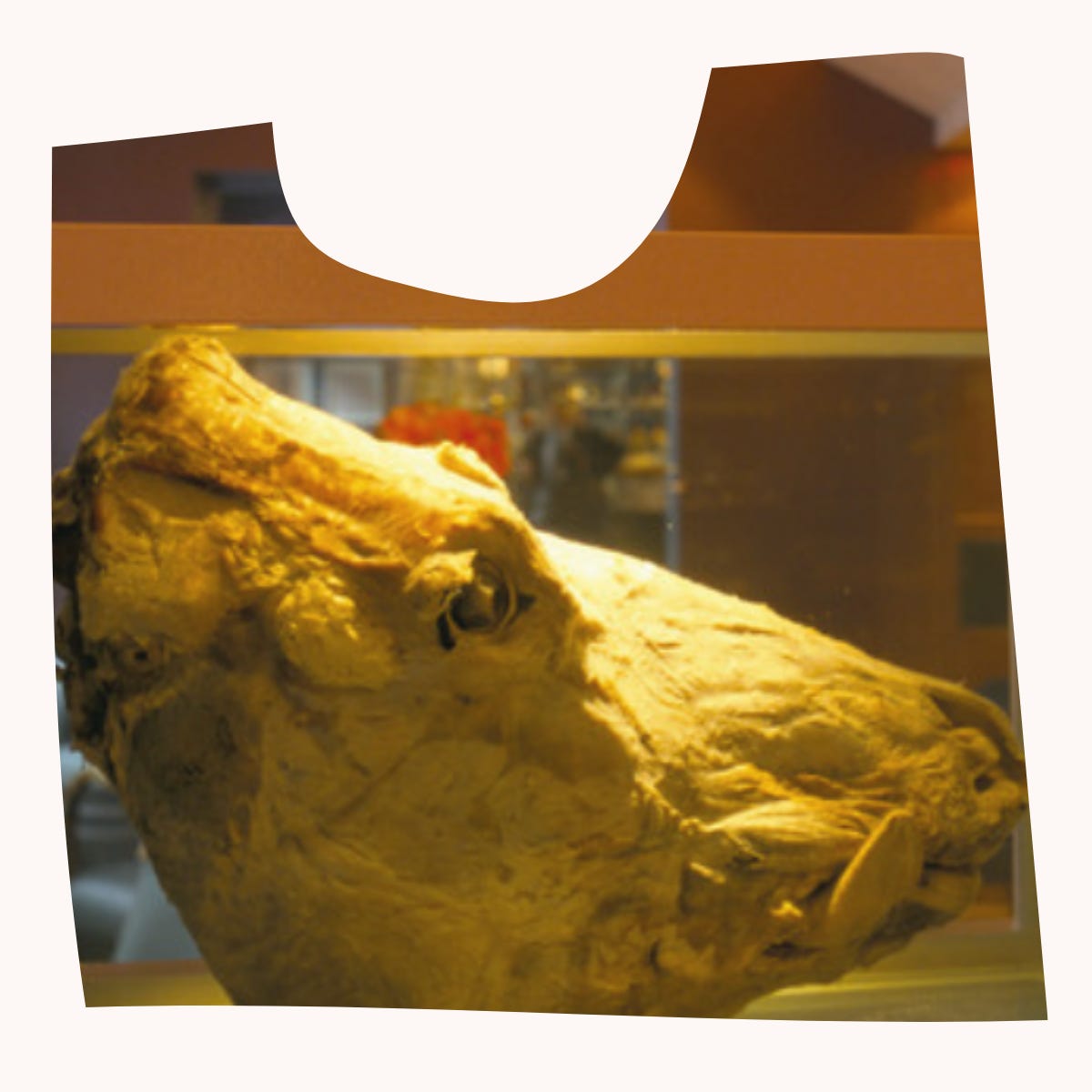
It was very 1990s London with one of the country’s most notorious chefs, one of its most notorious artists, and dead animals suspended above the tables.
Behind the spectacle, the relationship was souring and by April 1999, White had bought out Hirst and the other partners. Hirst’s collection came down, though even that became contested, White said he wanted it removed, and Hirst said he removed it himself.
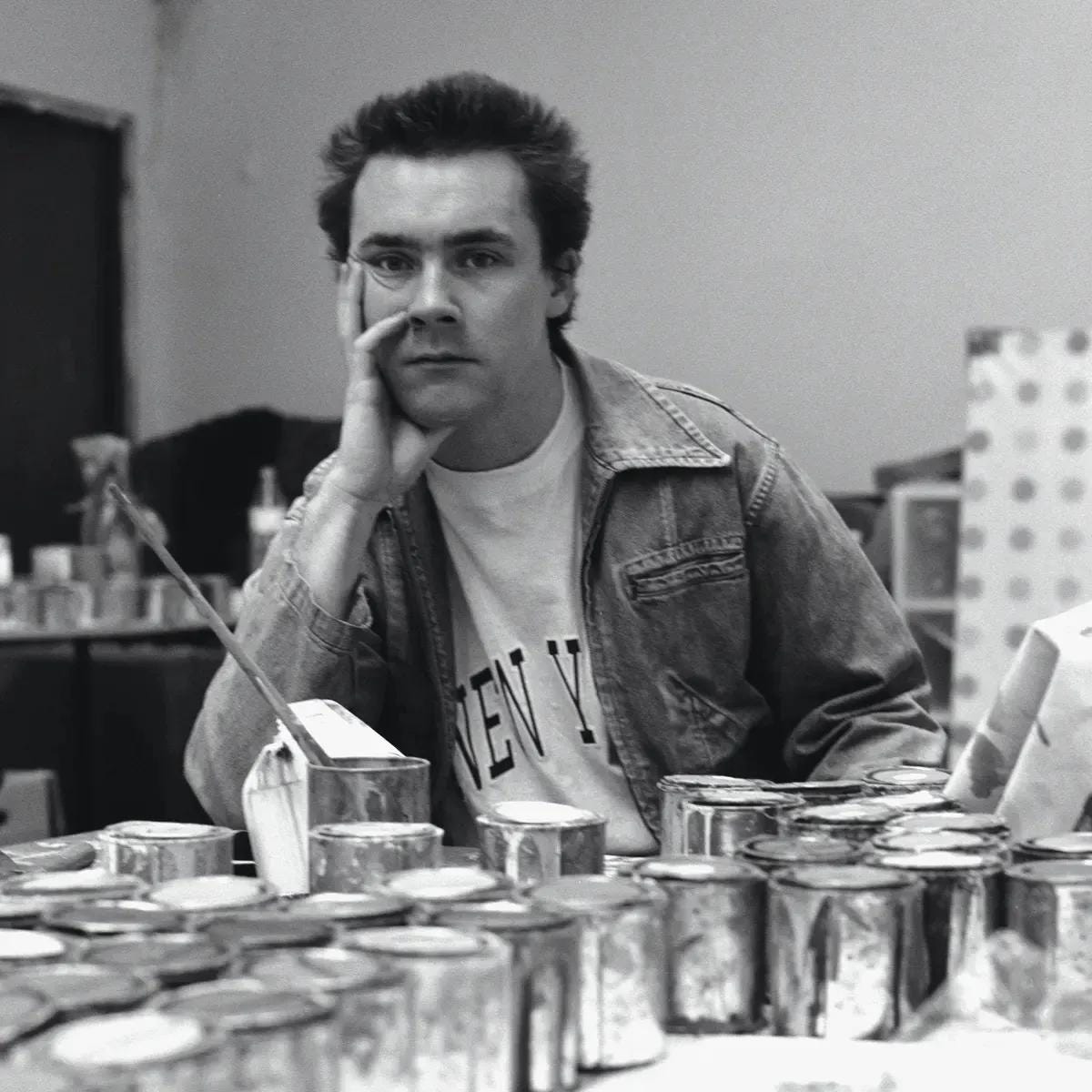
Either way, Quo Vadis now had a lot of empty wall space.
Instead of hiring someone to fill it, White decided he’d fill it himself with a collection that parodied Hirst’s, piece by piece. The vitrines became Which Came First?, a shelf of eggs and a chicken. The butterfly paintings got his own imitation. The DNA sculpture became BSE. And in the foyer, the most pointed of all: Divorce, his own spot painting, slashed three times.
I haven’t been able to track down a single photograph of White’s versions, and my emails to Quo Vadis asking about their archives have, so far, gone unanswered. If anyone has seen one floating around, please send it my way, I’m determined to find them!
If you go…
Look for:
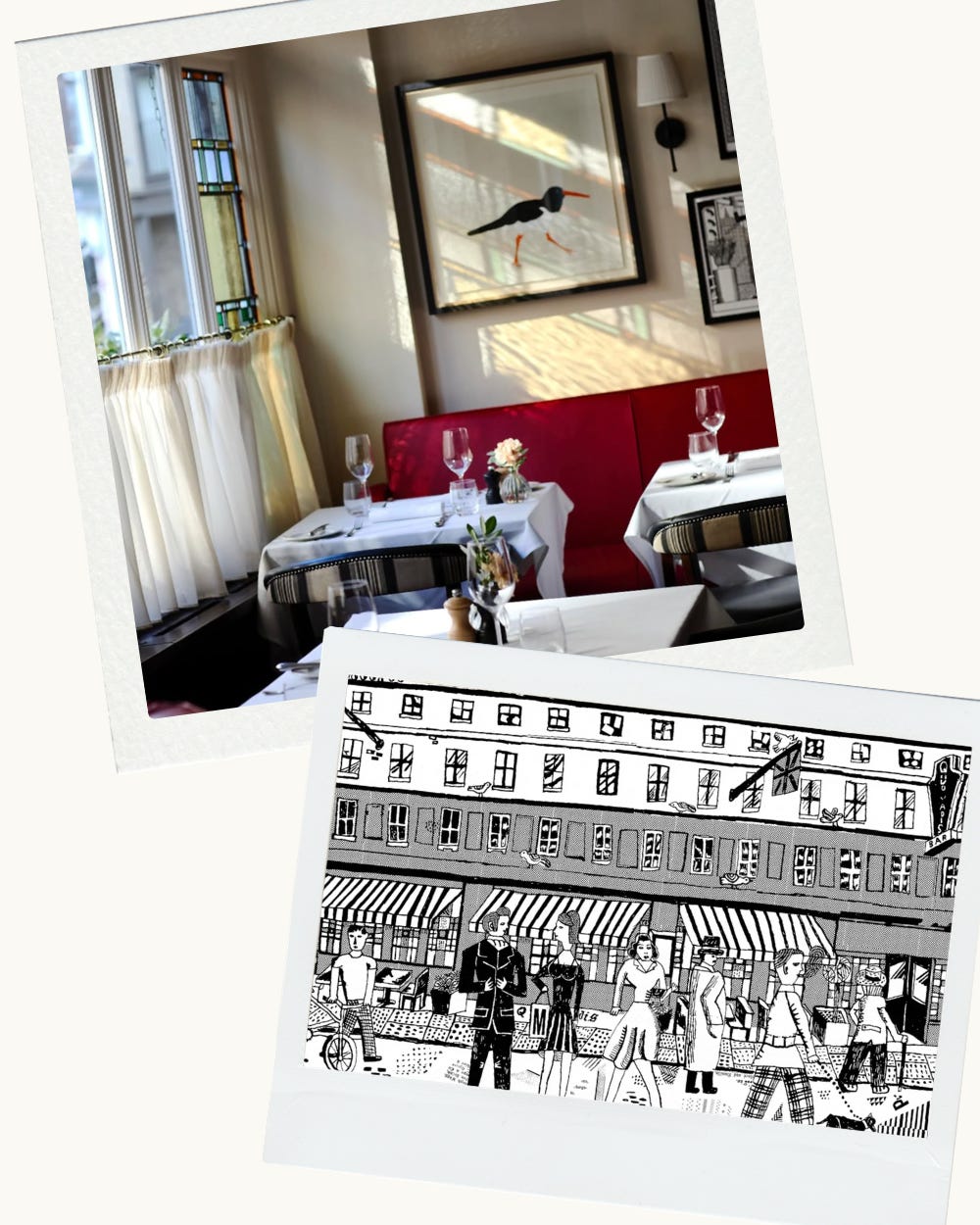
John Broadley’s illustrations throughout the restaurant and across the menus, you can’t miss them. There’s also a Kate Boxer painting on the wall which I recently learned, via Panayiota Soutis’s newsletter, that she’s Jaxson Boxer’s mother. Her work also hangs at The Camberwell Arms.
Order:
Whatever is on the menu that feels most classically French & Marco
Ask about:
The Marx Room. Long before Damien Hirst or Marco Pierre White arrived, Karl Marx lived at 28 Dean Street with his family.
02.Scott’s (Mayfair)
The restaurant where Ian Fleming accidentally got mistaken for a German spy.
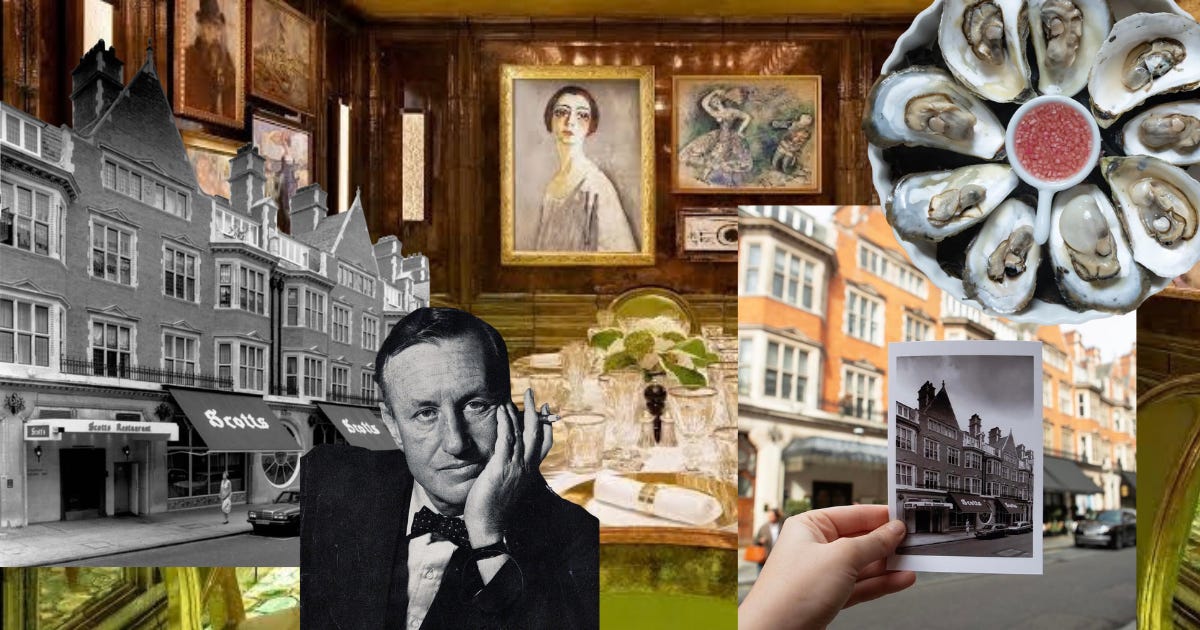
In 1940, Ian Fleming, the man who’d go on to create James Bond, walked into Scott’s for lunch with two German prisoners of war. The plan was to get them drunk enough to give away military secrets.
I’ve eaten at Scott’s several times, including dinner in the Renoir Room, and somehow never knew that Fleming once accidentally triggered a Scotland Yard surveillance operation over lunch.
Fleming was working for British Naval Intelligence at the time. The two men were captured U-boat officers, believed to know how German submarines were navigating British minefields. His approach was not exactly sophisticated: lunch, alcohol, see what secrets slipped out.
There was just one problem…nobody had told the staff at Scott’s.
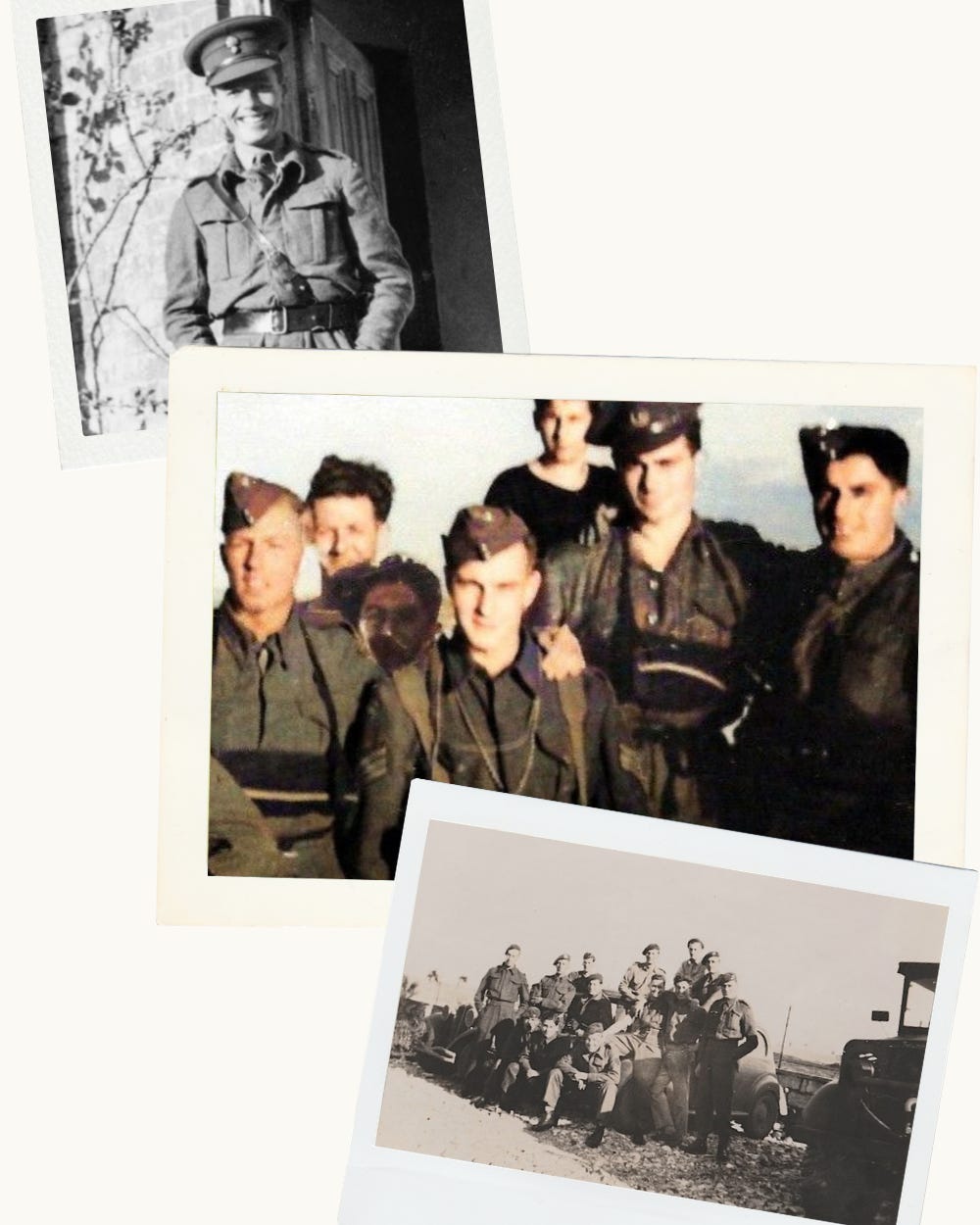
The waiter, a man named Baker, overheard four men speaking quietly in German and called Scotland Yard. Fleming soon noticed the tables around him filling up with unusually serious couples, his intelligence operation had triggered a second intelligence operation… into him.
His actual plan wasn’t going much better. He and his colleague were getting drunker, and the Germans weren’t giving anything away. Fleming returned to the Admiralty “befuddled and no wiser” about the minefields, and was informed by his furious boss that the afternoon’s chief achievement had been mobilising a sizeable contingent of Scotland Yard.
And yet Fleming kept going back. Baker went on to become Scott’s head waiter, Fleming became a regular with a favourite table, a two-top on the first floor, and when he started writing Bond, Scott’s made it into the books.
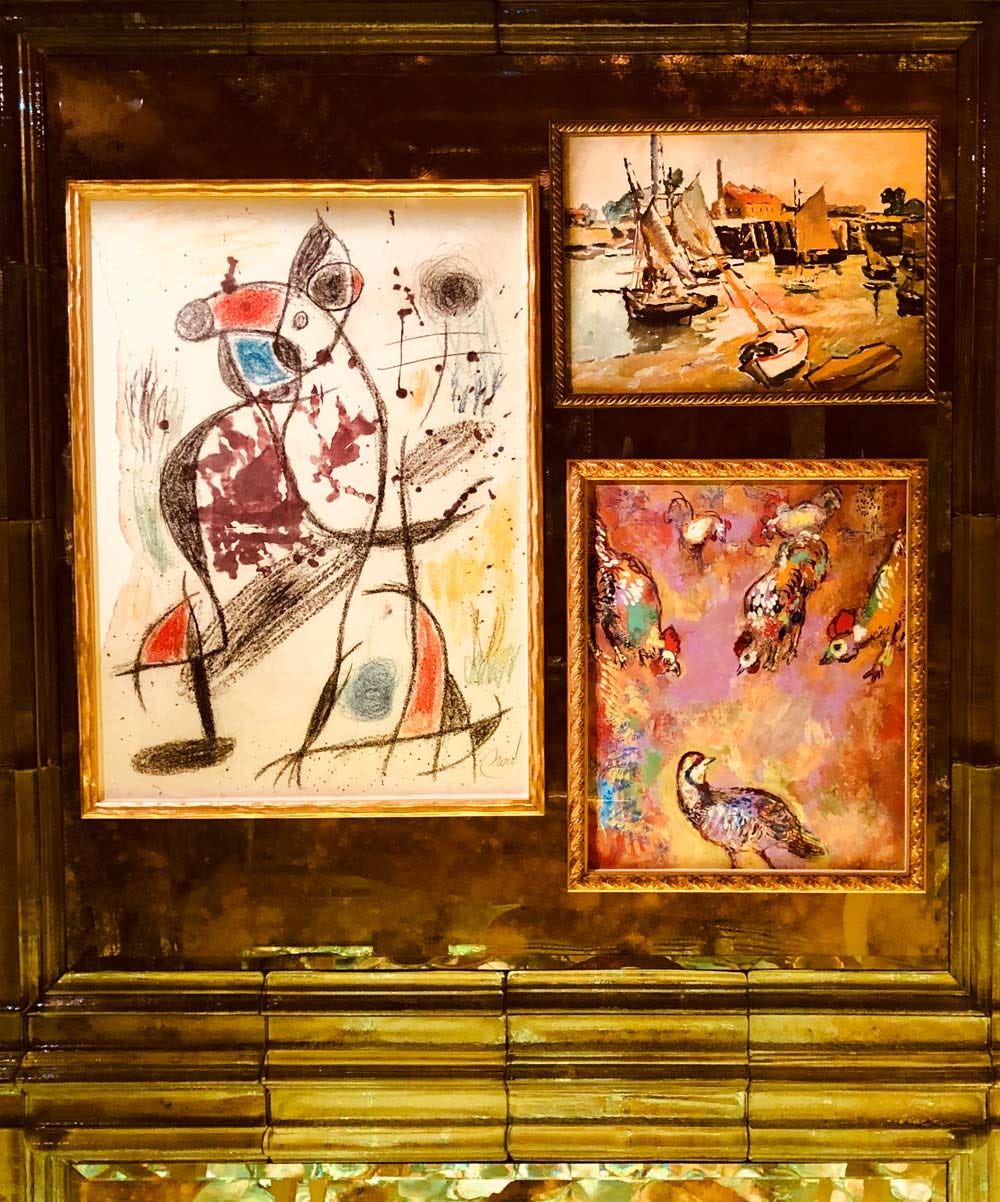
If you go…
Look for:
The oyster bar. Scott’s began as an oyster warehouse in 1851, long before Fleming became a regular.
Order:
A martini. Because of the Fleming connection, it feels difficult to recommend anything else.
Ask about:
The move from Coventry Street to Mount Street in 1967, the restaurant Fleming actually knew was the original site.
03.Langan's Brasserie (Mayfair)
The restaurant where a man traded meals for masterpieces and then burned his own house down.
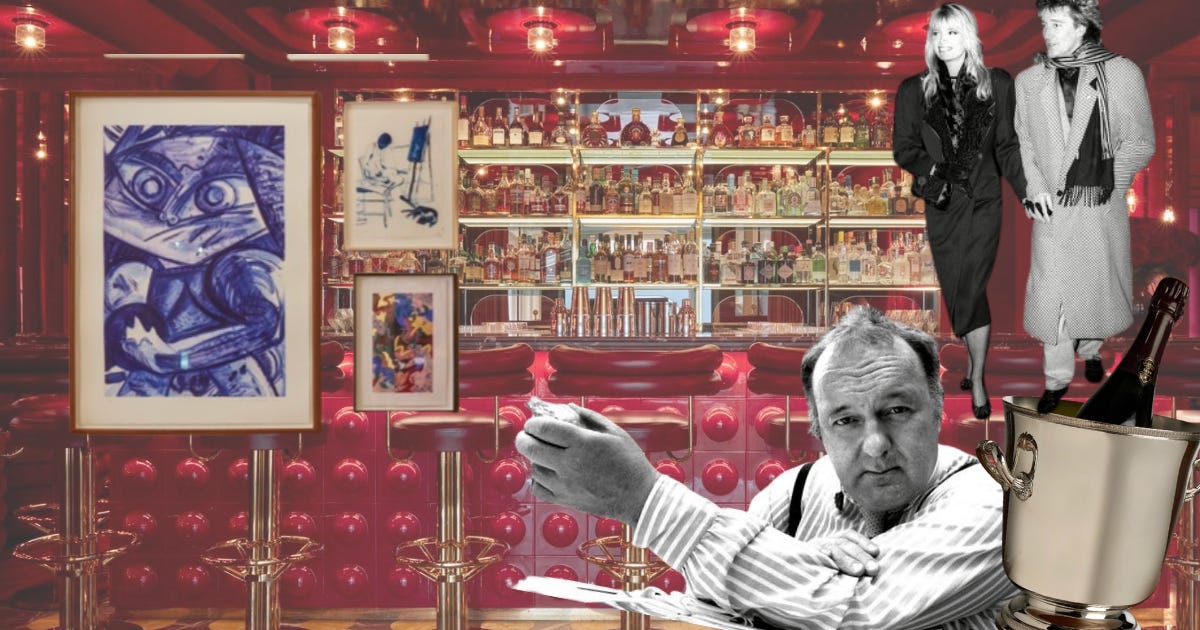
In December 1988, Peter Langan died in a fire at his Essex home, one he’s alleged to have started himself, weeks after a spectacular meltdown. He was 47.
It’s a strange way to end a story about a man who spent his career paying artists in lunches instead of cash, and who once put out a kitchen fire with a bottle of vintage champagne rather than water. To understand how Langan’s Brasserie ended up hung with Bacon, Freud and Hockney, and how the man behind it went out the way he did, we have to go back to 1976.
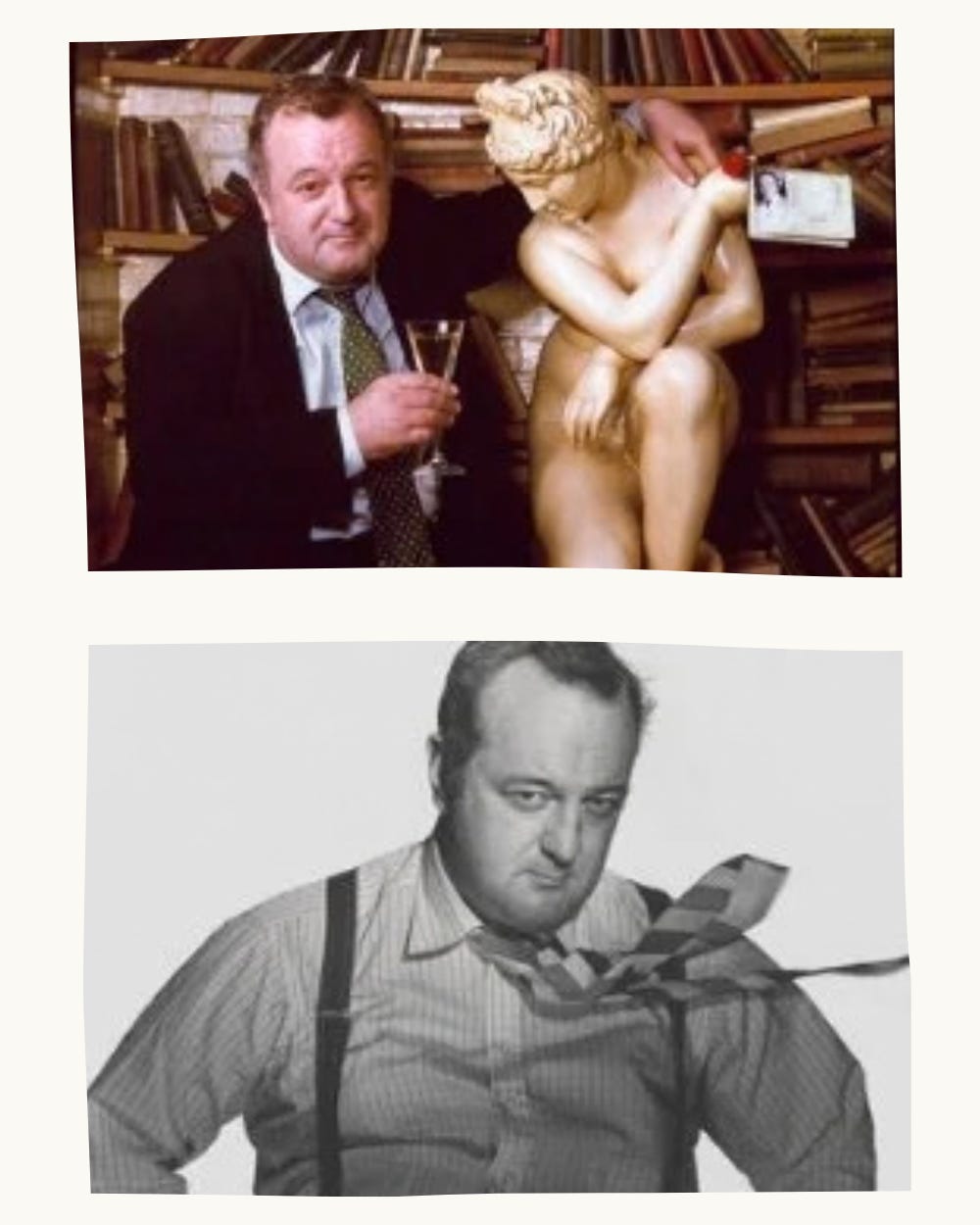
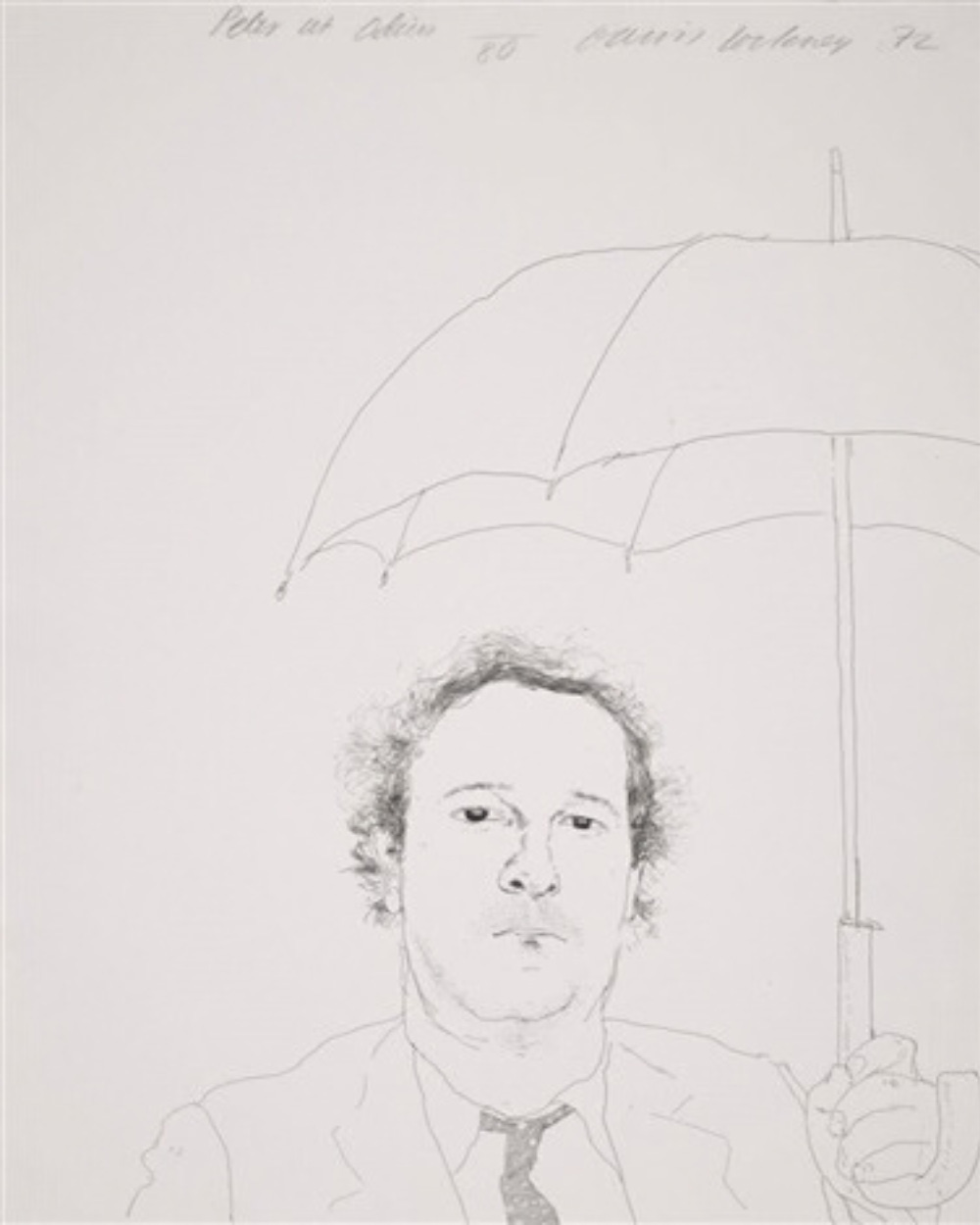
Langan opened the restaurant on Stratton Street that October, and ran it on one non-negotiable rule: artists ate for free, so long as they left something on the wall instead of a bill. By the time the doors opened, Bacon and Freud were already hanging there, and Hockney went further than anyone, designing the menu, sketching Langan three separate times, and drawing him, his chef and his co-owner eating lunch together beneath the palm trees.
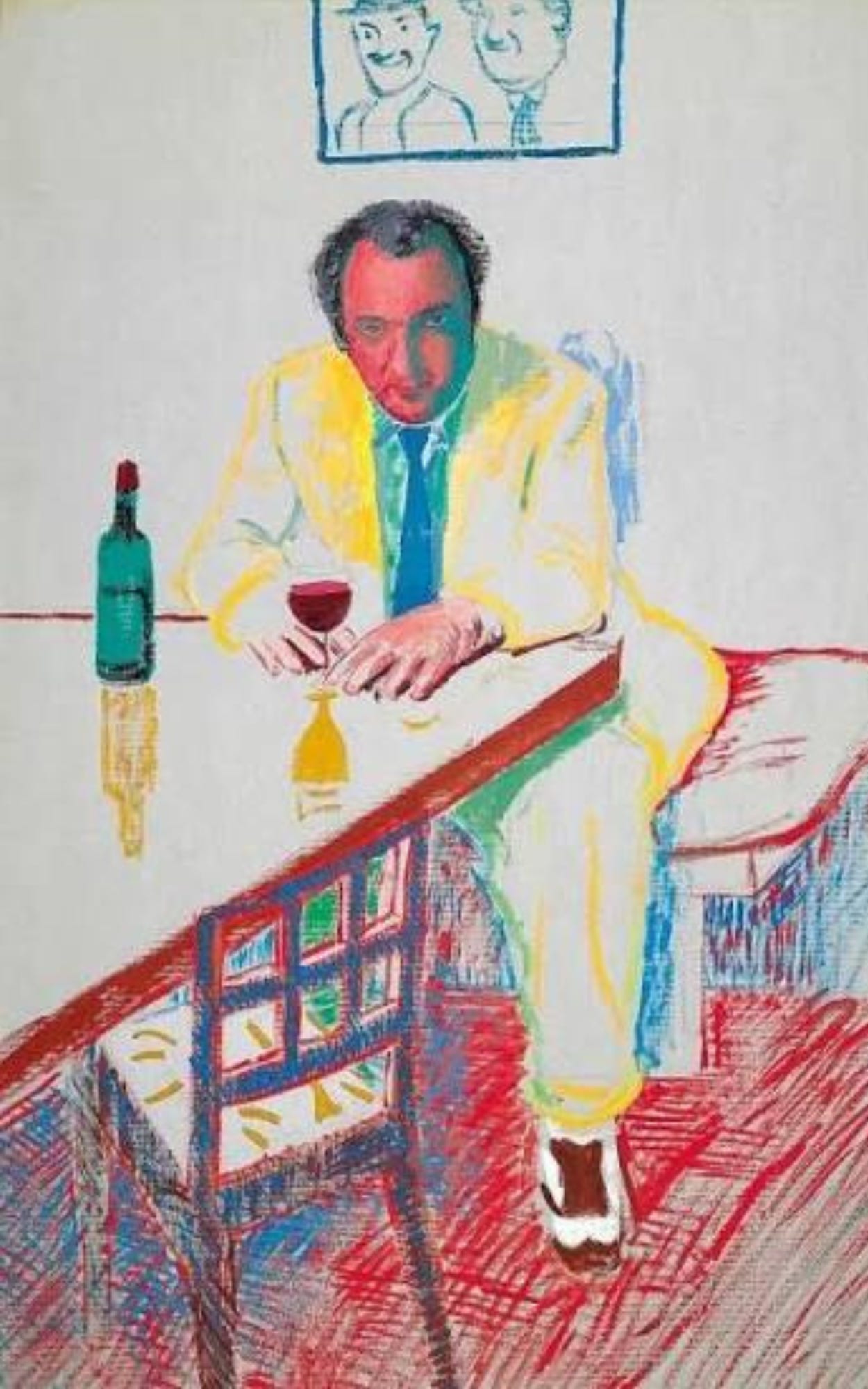
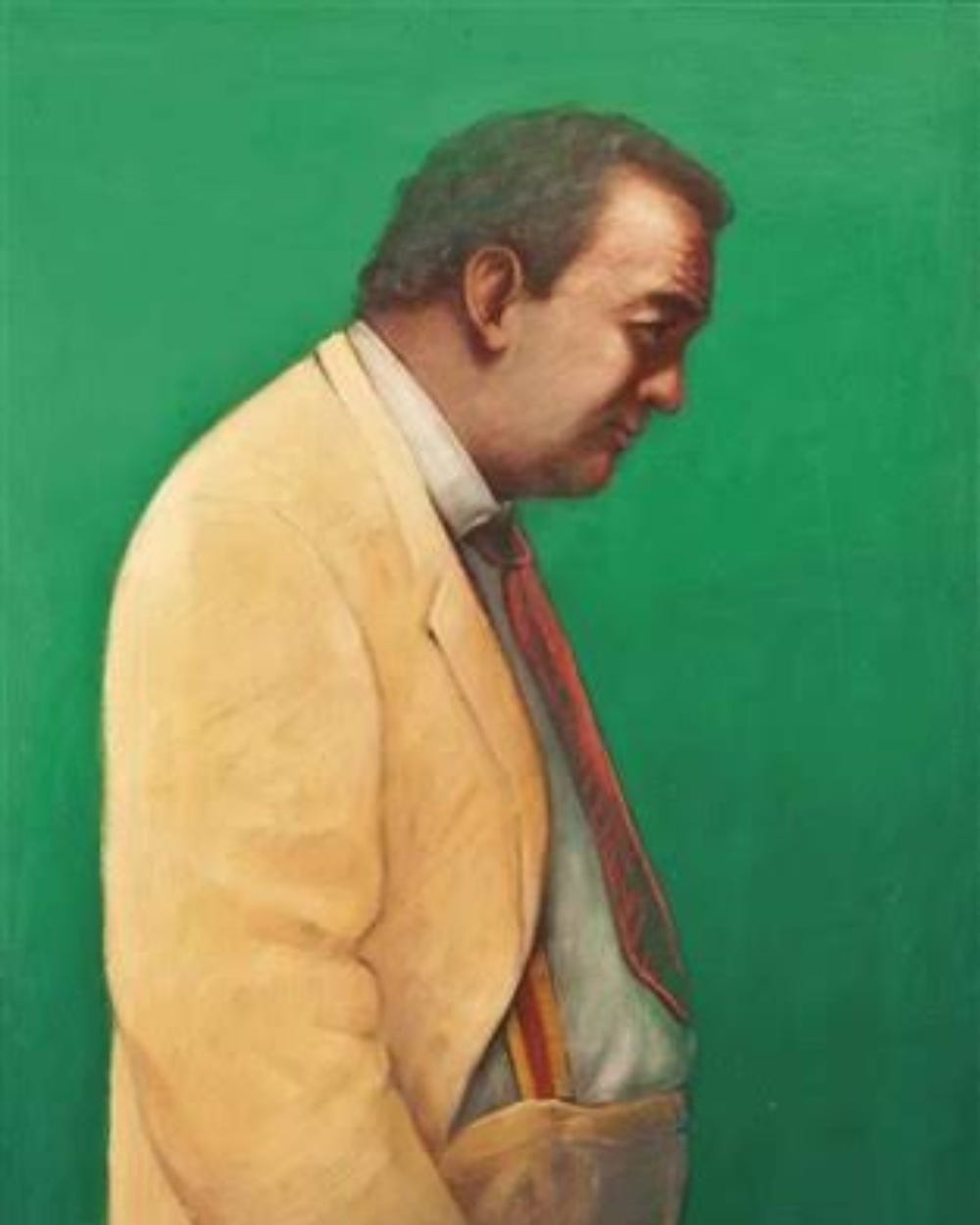
Running the place, Langan drank a dozen bottles of champagne a day, he was known to fall asleep under the tables mid-service and, on one occasion, to crawl across the floor biting diners’ ankles.
Miraculously, none of it seemed to hurt the restaurant and by the mid-1980s, Langan’s was the most desirable room in London with guests like Elizabeth Taylor, Marlon Brando, Mick Jagger and Princess Margaret.
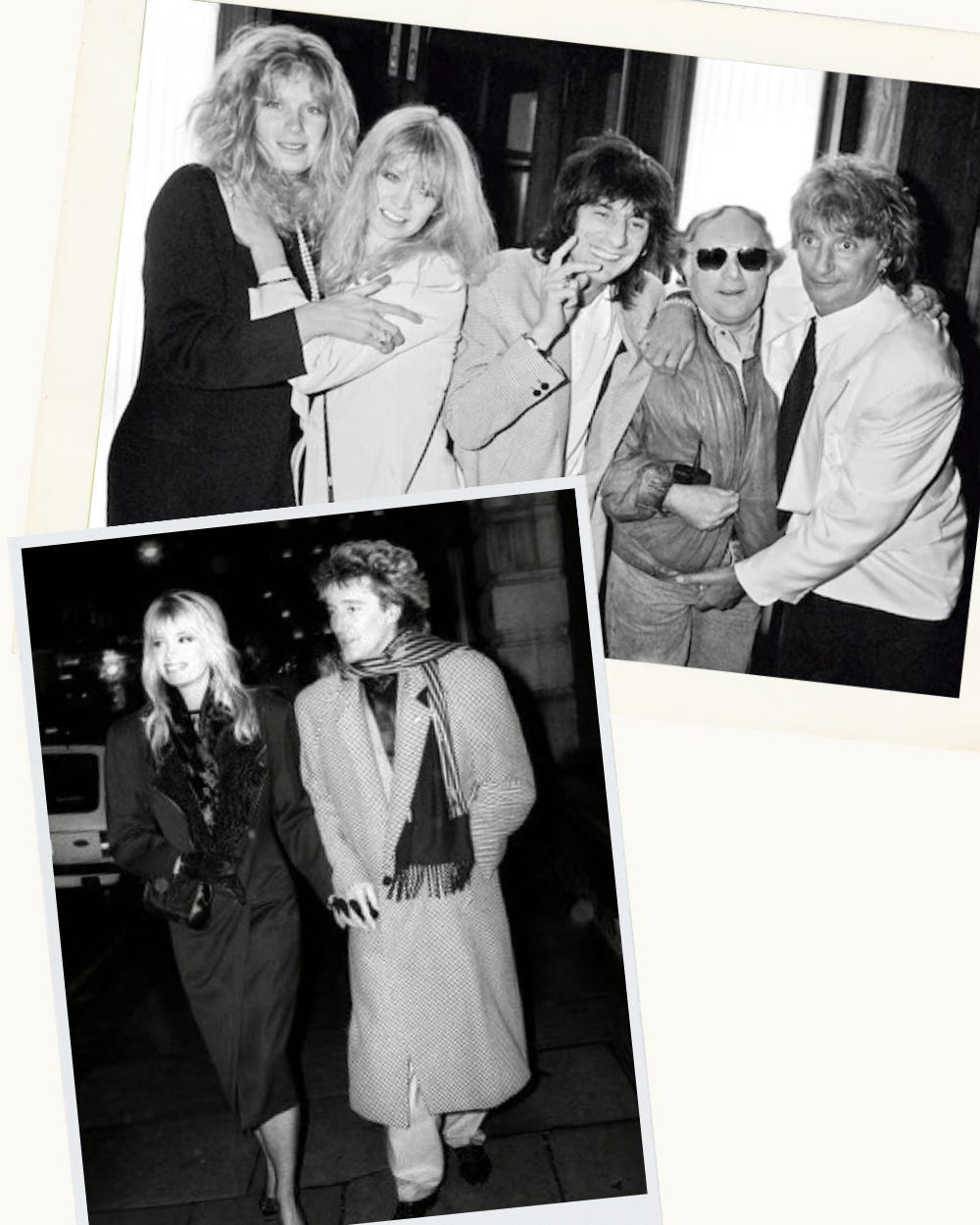
Then in 1988 came the argument with his wife, a threat to leave, and the fire… weeks later, Langan was dead.
The restaurant outlived him easily. It survived administration in 2020, and new ownership after that, and it still hangs fresh art on its walls today, in tribute to a man who never once wrote a cheque for a painting.
If you go…
Look for:
The Hockney portrait of Langan in the main dining room, one of several the artist drew of him, all in different poses.
Order:
The crab bisque or the bangers and mash, the menu itself has barely changed since Richard Shepherd wrote it in 1977.
Ask about:
The original artwork policy. Langan's still displays contemporary pieces sourced from nearby galleries as a nod to the "art in lieu of cash" tradition Peter started.
04.Savoy Grill (Strand)
The scandal the Savoy hid for 86 years, starring the man who’d go on to found The Ritz hotel.
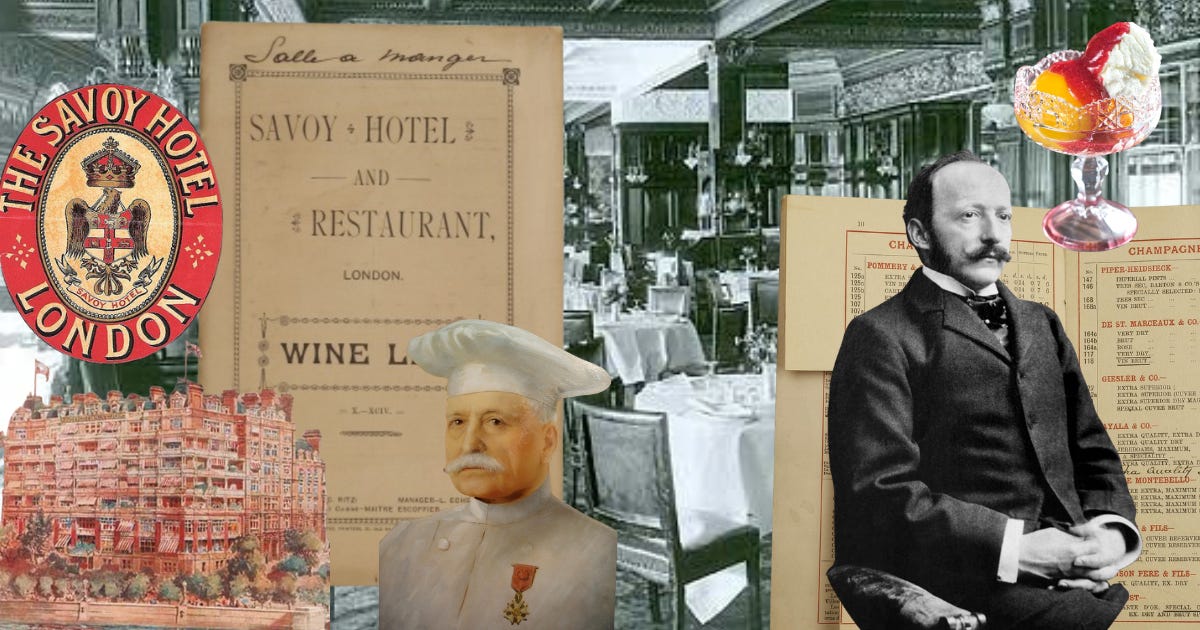
Everyone knows the name Ritz means the height of hotel luxury, but almost nobody knows that The Ritz exists because its founder got caught stealing from the hotel restaurant down the road.
In March 1898, César Ritz was the general manager of the Savoy, and August Escoffier, who at the time was the most celebrated chef alive, ran its kitchen. Together Ritz & Escoffier turned the Savoy Grill into one of London’s most fashionable addresses, with the Prince of Wales among their regulars.
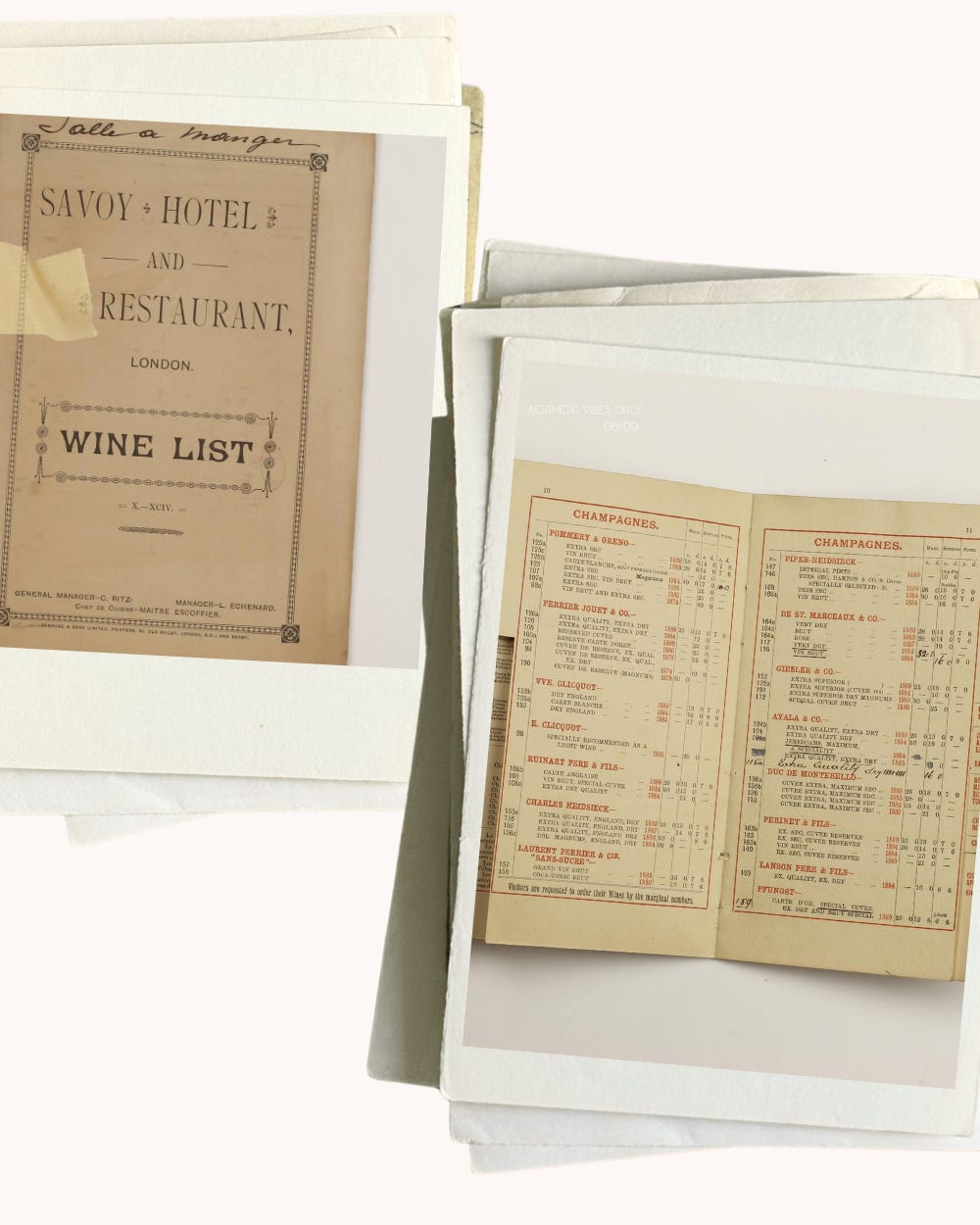
But not everything was as it appeared on the surface. When the Savoy’s directors opened the books they uncovered a 5% kickback scheme running through the kitchen. Basically Escoffier would order 600 eggs, the supplier would deliver 450, and the two of them would split the difference. Wine and spirits worth over £500k in today’s equivalent had simply vanished, some of it comped to guests who were being coutted for Ritz & Escoffier’s next project, a rival hotel they were building down the road.
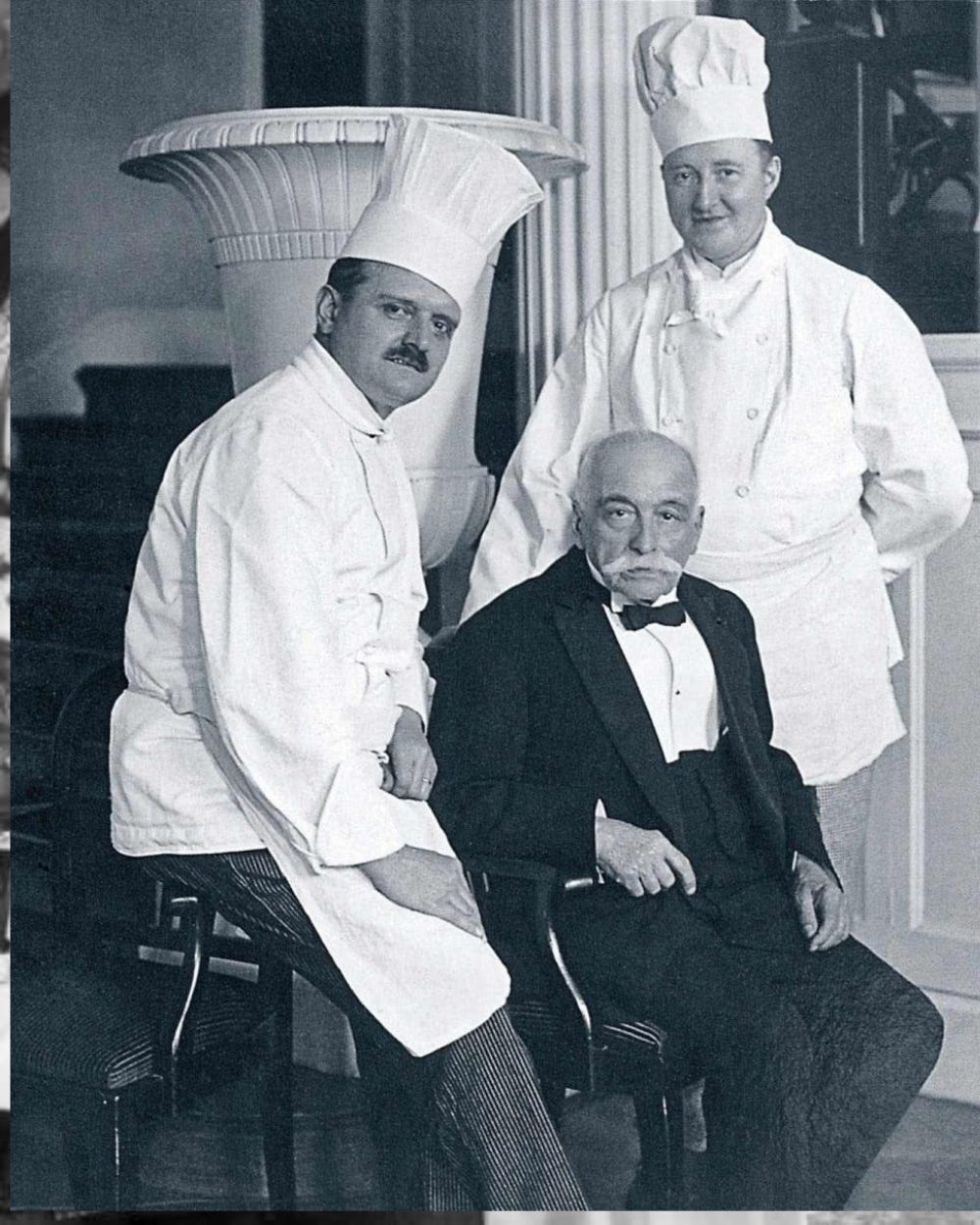
On 7 March the directors sacked Ritz & Escoffier, ordering them to leave the building immediately. Sixteen kitchen staff loyal to the pair took up their knives and refused to leave. It took a squad of Met Police to clear the building, and the next morning’s papers ran it as “A Kitchen Revolt at the Savoy.”
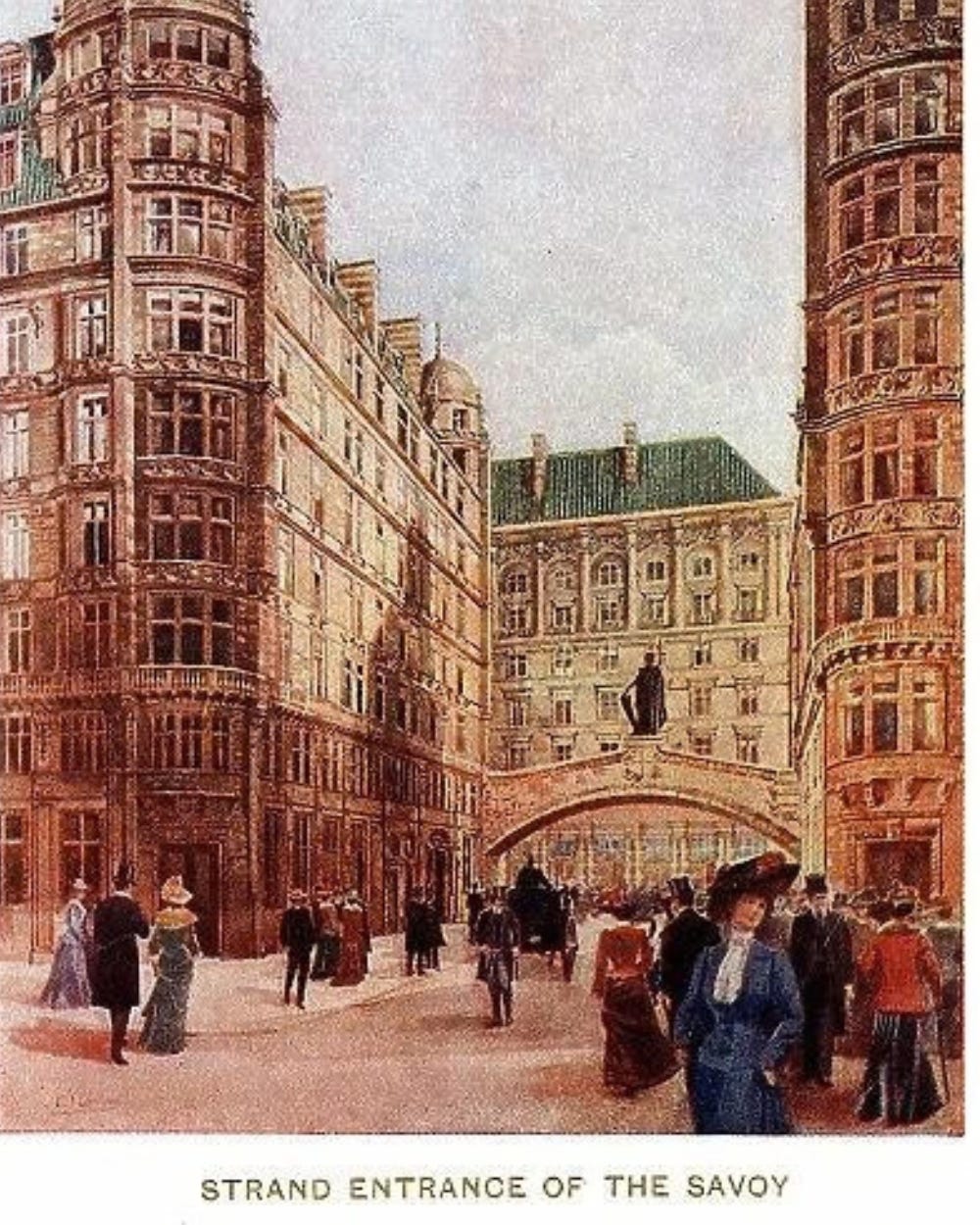
Facing a lawsuit, both Ritz and Escoffier signed a confession on the condition the Savoy never made it public. The Savoy kept their word for more than eighty years, until copies of the confessions mysteriously appeared on the desk of Observer food writer Paul Levy in late 1983. Nobody knew who had sent them but Levy nicknamed his anonymous source “Deep Palate.”
By then it didn’t matter though, Ritz had already turned the disgrace into momentum, opening his own hotel in Paris that same year, and one in London soon after. Within a decade, the Ritz changed the luxury world and “ritzy” became synonymous with glamour. As for Escoffier, his legacy also outlived the scandal with the dishes he made famous in the Savoy kitchen, Peach Melba, Crêpes Suzette, still on the menu at the Savoy Grill.
If you go…
Look for:
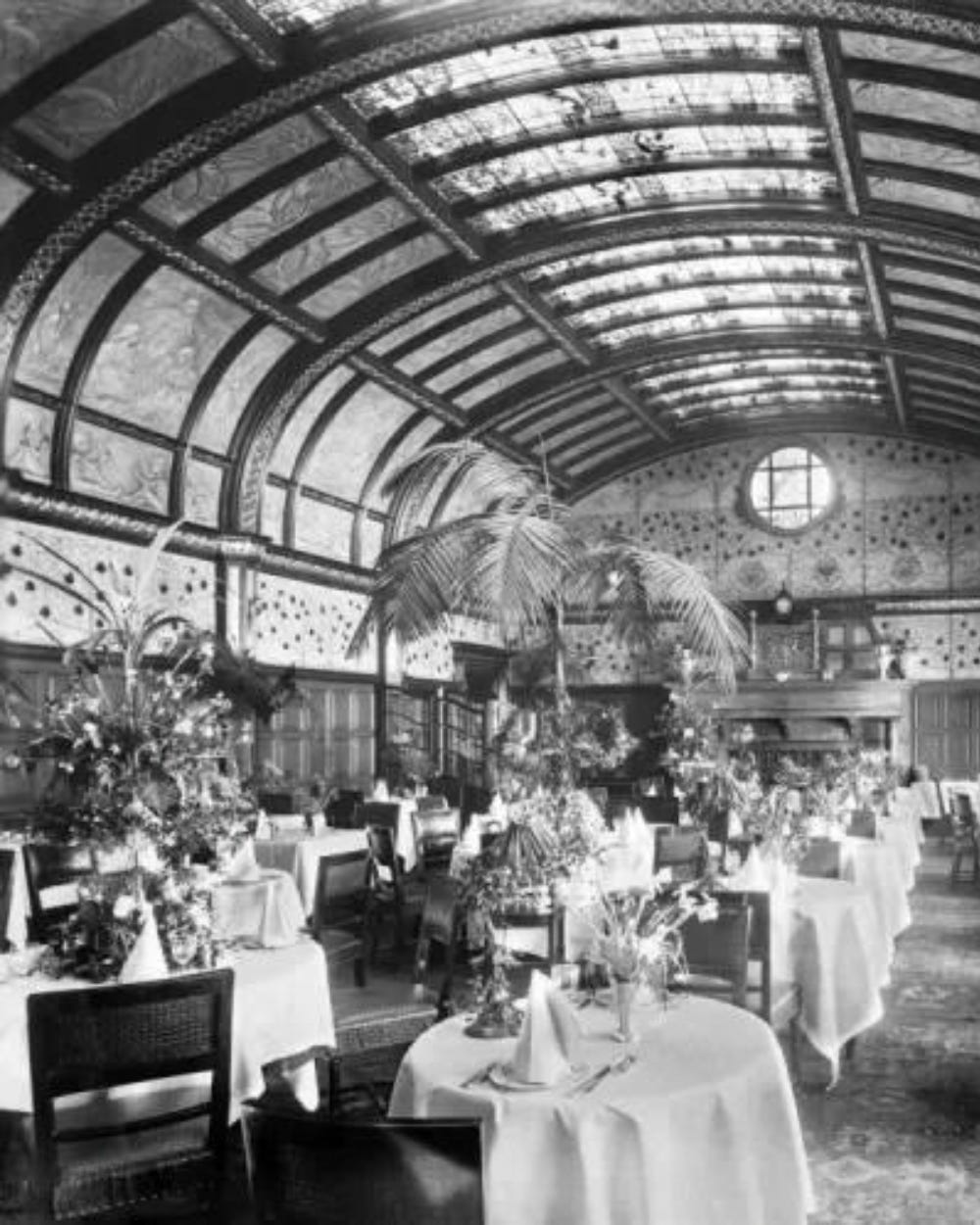
The black-and-white photographs lining the Grill's walls, and the chef's table set right into the kitchen, as close as you'll get to standing where the 1898 "revolt" actually happened.
Order:
The Peach Melba. Escoffier invented it in this exact kitchen in 1893, five years before he got fired from it
Ask about:
“Deep Palate,” the anonymous source who left copies of Ritz and Escoffier’s signed confessions on Observer food writer Paul Levy’s desk in 1983
05.Café Royal (Regent Street)
The restaurant where a lunch conversation decided Oscar Wilde’s fate.
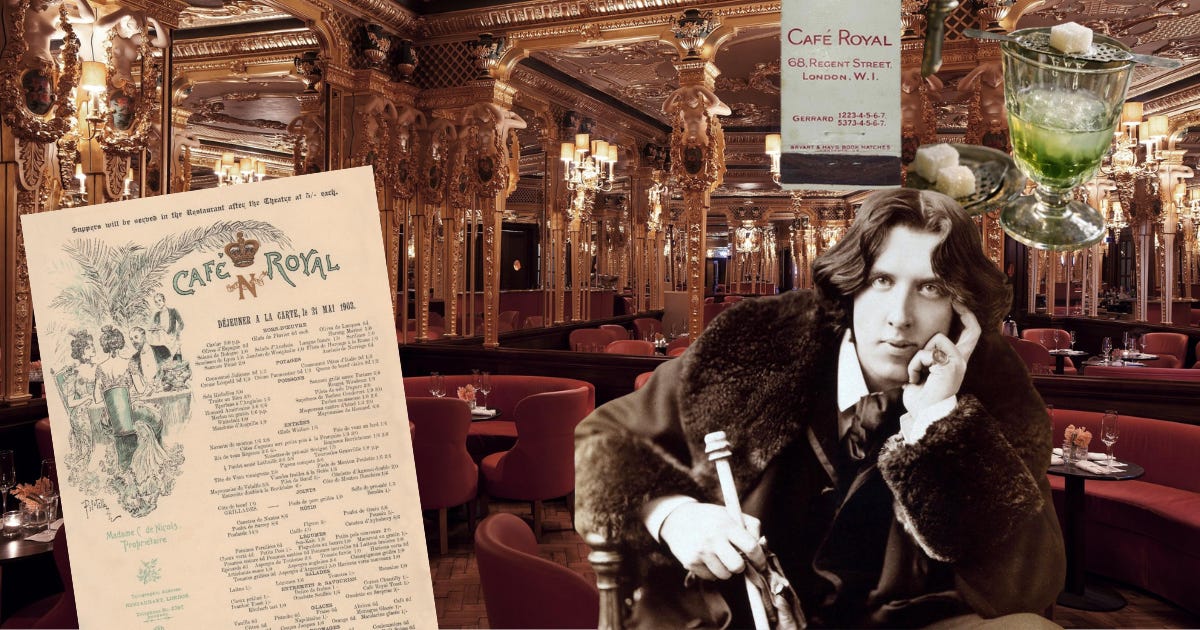
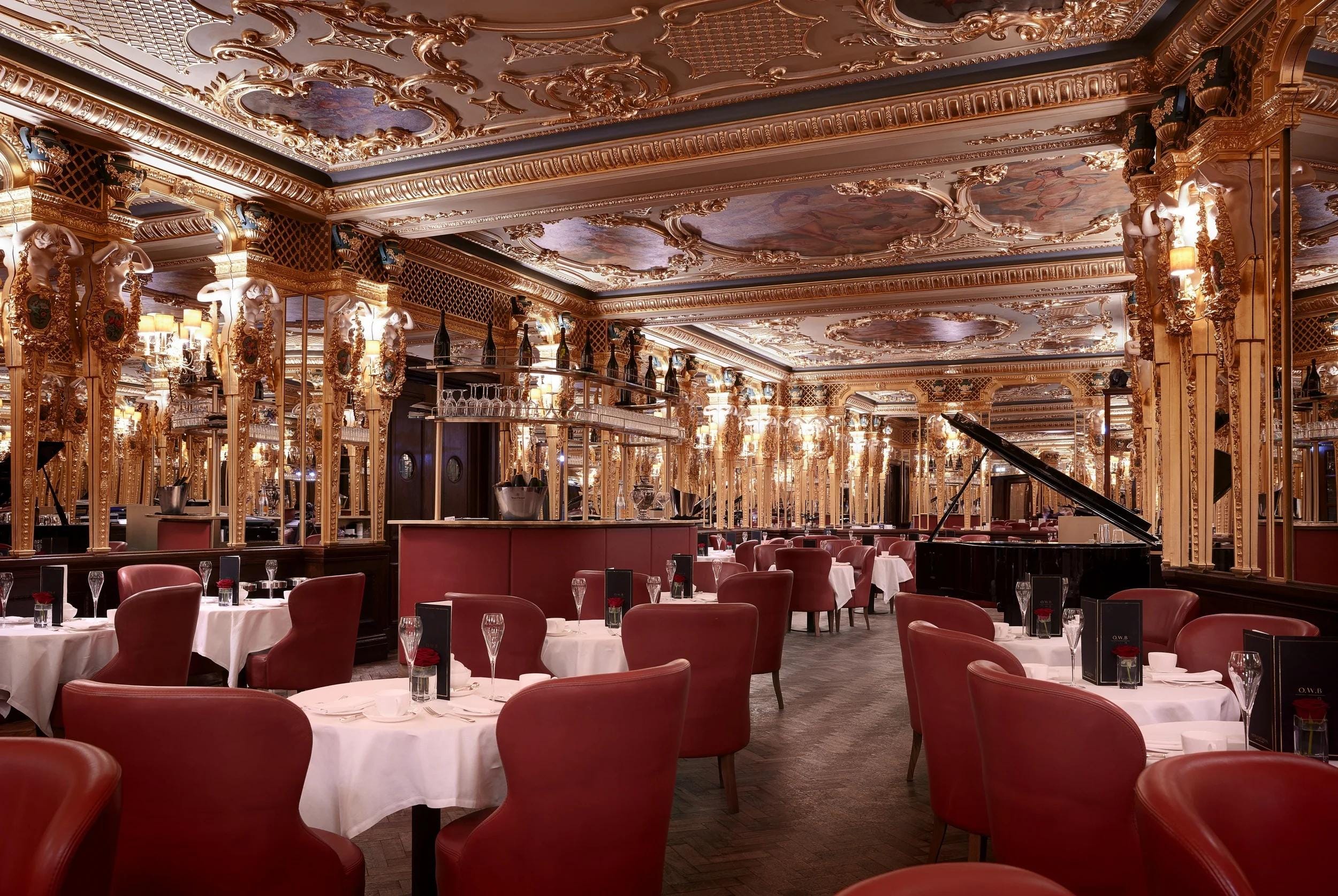
Through the early 1890s, Oscar Wilde spent much of his time at Café Royal. The gilded Domino Room was where he drank, argued and performed for the young men in his circle at a time when the “wrong” kind of desire was a criminal offence.
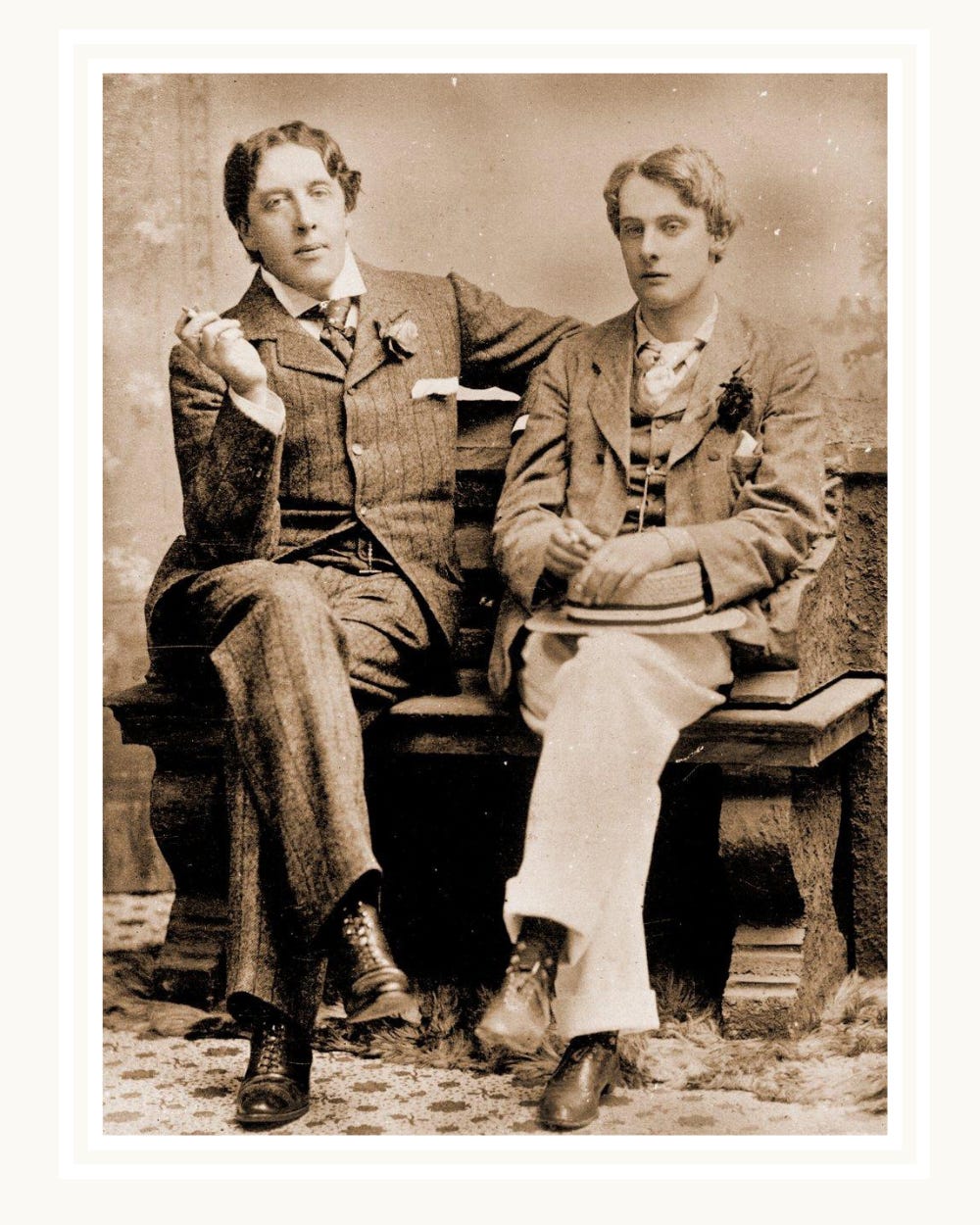
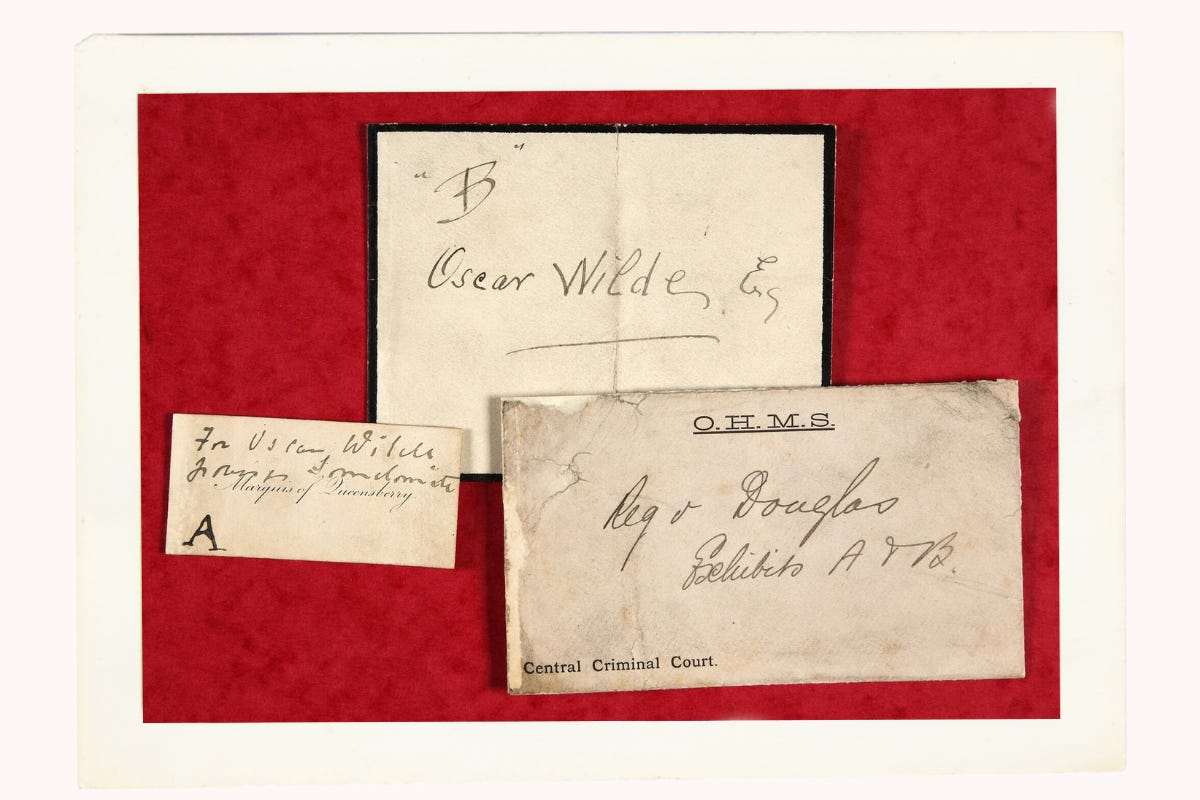
By 1895 the performance had caught up with him. The Marquess of Queensberry, father of Wilde’s lover Lord Alfred “Bosie” Douglas, had left a card at Wilde’s club accusing him, in a memorably misspelled note, of “posing as a somdomite.” Wilde, against the advice of nearly everyone around him, decided to sue for criminal libel.
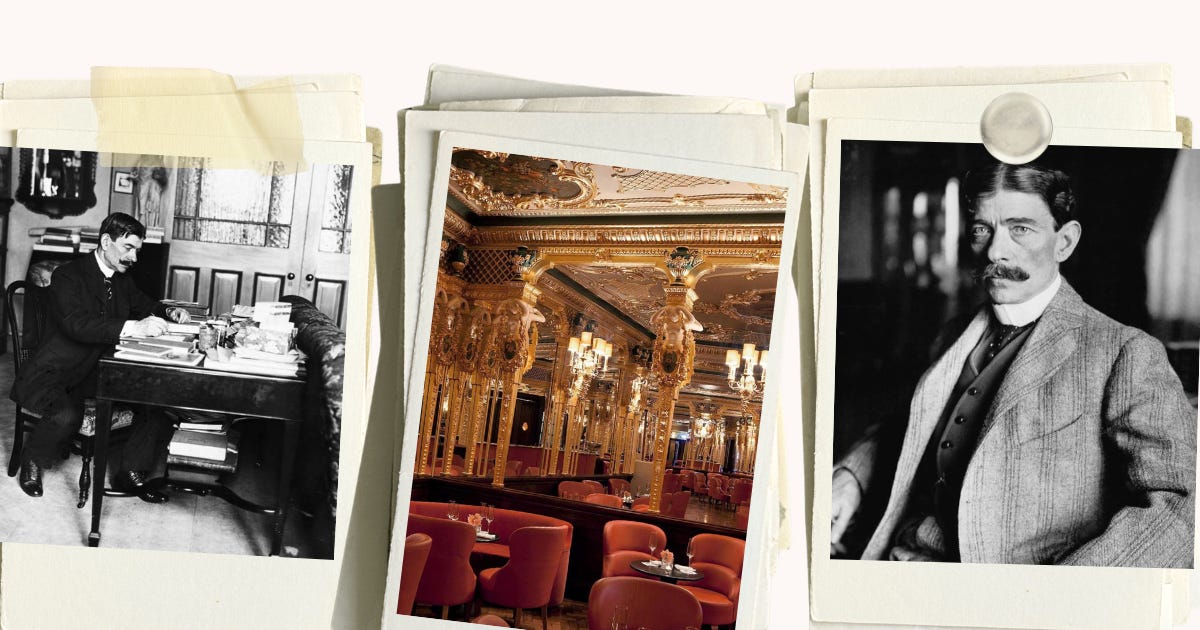
On 24 March 1895, days before the trial opened, the writer Frank Harris took Wilde to lunch at the Café Royal and told him, as plainly as he could, to drop the case. Harris had already made enquiries. He knew what Queensberry’s lawyers were preparing to produce in court, and he knew Wilde couldn’t survive it.
Wilde refused and said the lunch with Harris was a betrayal, not a warning.
Three weeks later, Queensberry was acquitted and the evidence gathered for his defence became the basis for Wilde’s own prosecution. He was convicted of gross indecency and sentenced to two years’ hard labour. He left prison broken, and left England for good, never writing another major work.
The Café Royal outlived all of it. It’s survived being sold, restored, and eventually converted into a five-star hotel, its dining rooms and bars retained. The room where Harris made his case and Wilde made his fatal decision is still there.
If you go…
Look for:
The Oscar Wilde Bar, and the Grill Room, both preserved from the building's Belle Époque incarnation, gilt mirrors, marble, the works.
Order:
Afternoon tea in the Grill Room if you want the room without the crowd; a martini at the bar if you want the ghost.
Ask about:
The lunch with Frank Harris, three weeks before the trial that ended Wilde's life as he knew it, most guides mention the affair with Bosie and skip past the detail that happened in this exact room you’re in


Favorite read this week! Thank you for sharing
Wow Danielle, this was such an interesting read! Very well researched. I am looking forward to #2!