


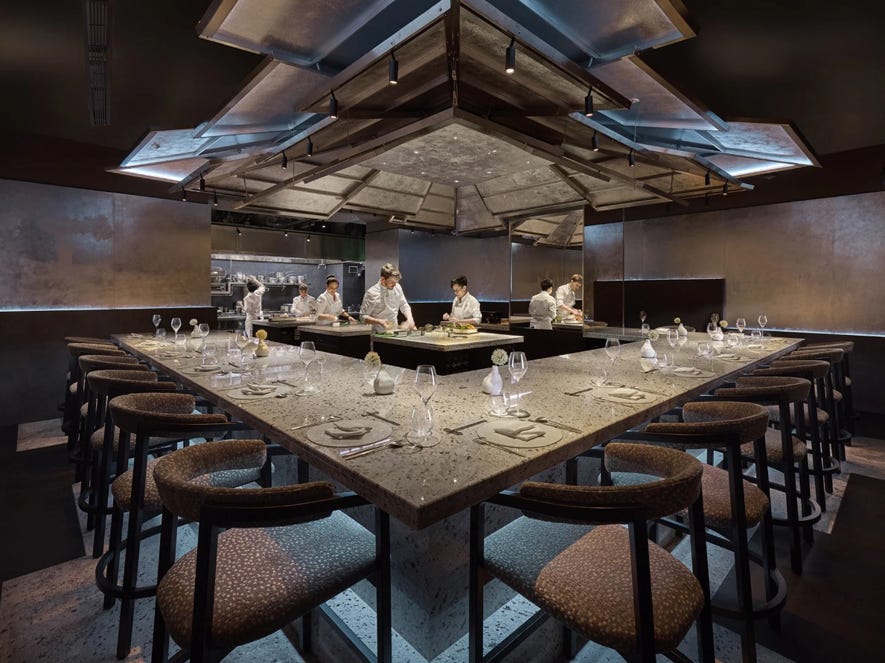
At the February 2026 Michelin ceremony, Somssi, a 14-seat chef’s counter inside the Mandarin Oriental Mayfair, won its first star under chef Jihun Kim. Five weeks later, in March 2026, Kim announced his departure, and the hotel confirmed the restaurant had closed.
It was the second time in eighteen months those fourteen seats had done this. The same room had opened in September 2024 as Dosa, trading on the name of celebrity chef Akira Back. Dosa won a star in February 2025, and by July 2025, Back ended his involvement with the hotel, and Dosa closed with him.
I started looking into this because some of the most serious restaurants in London are inside hotels with elite chef’s names attached to them. But this wasn't always the case. For most of the twentieth century the hotel restaurant was a functional thing… a dining room for guests who didn't know the city well enough to eat anywhere else, judged on convenience rather than cooking. Now it’s the other way around. People book the hotel for the restaurant, and Londoners who'd never need a room fill the same tables. How did that inversion happen?
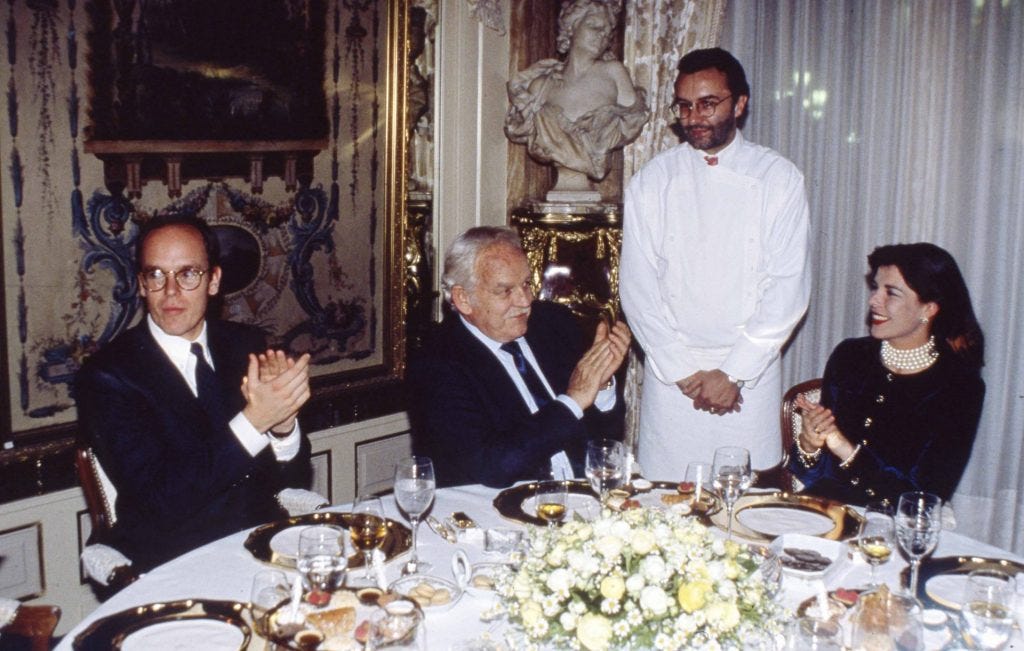
The answer begins, improbably, in Monte-Carlo. In 1987, Alain Ducasse took over the restaurant at the Hotel de Paris, an institution owned by the principality's own casino and hotel company, and Prince Rainier III challenged him to win Monaco its first three Michelin stars. Ducasse did it in thirty-three months, in 1990 the first hotel restaurant anywhere to reach the top rating. The restaurant is Le Louis XV, and still holds those three stars today.
For the first time, a renowned chef proved a hotel's restaurant could be a destination in its own right. At the same time London did serious hotel dining the old way. The Connaught's finest room was called (wait for it) … The Restaurant. The chef was Michel Bourdin, a Frenchman trained at Maxim's in Paris who ran The Connaught’s kitchens for twenty-six years and won the hotel its first star in 1975. But Bourdin was an employee of The Connaught, and the stars belonged to the hotel, rather than the chef.
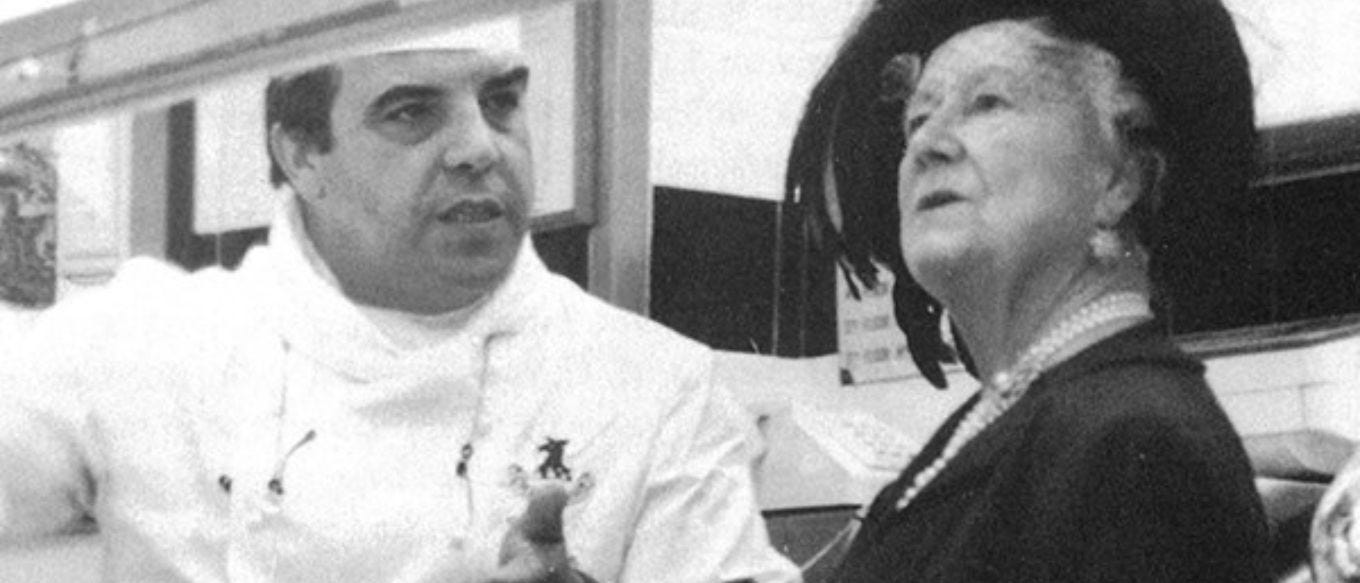
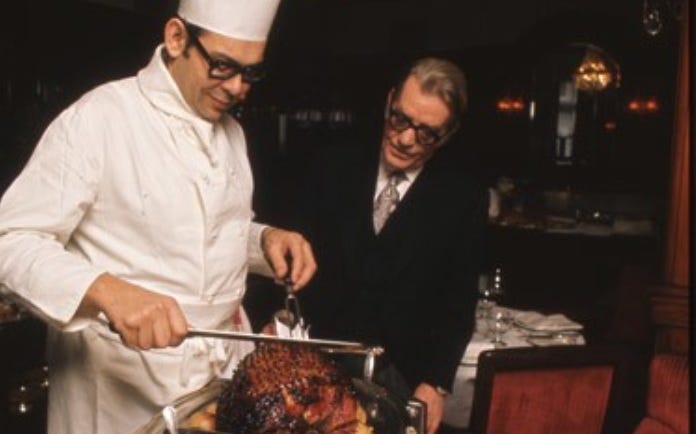
That's the difference between the old way of running hotel restaurants and the new, Bourdin worked for the hotel. Today, more often, the hotel works for the chef's name. Ducasse's win in Monte-Carlo showed hotels what their restaurants could be worth with a renowned chef like Ducasse in kitchen. And so began the birth of the modern hotel restaurant.
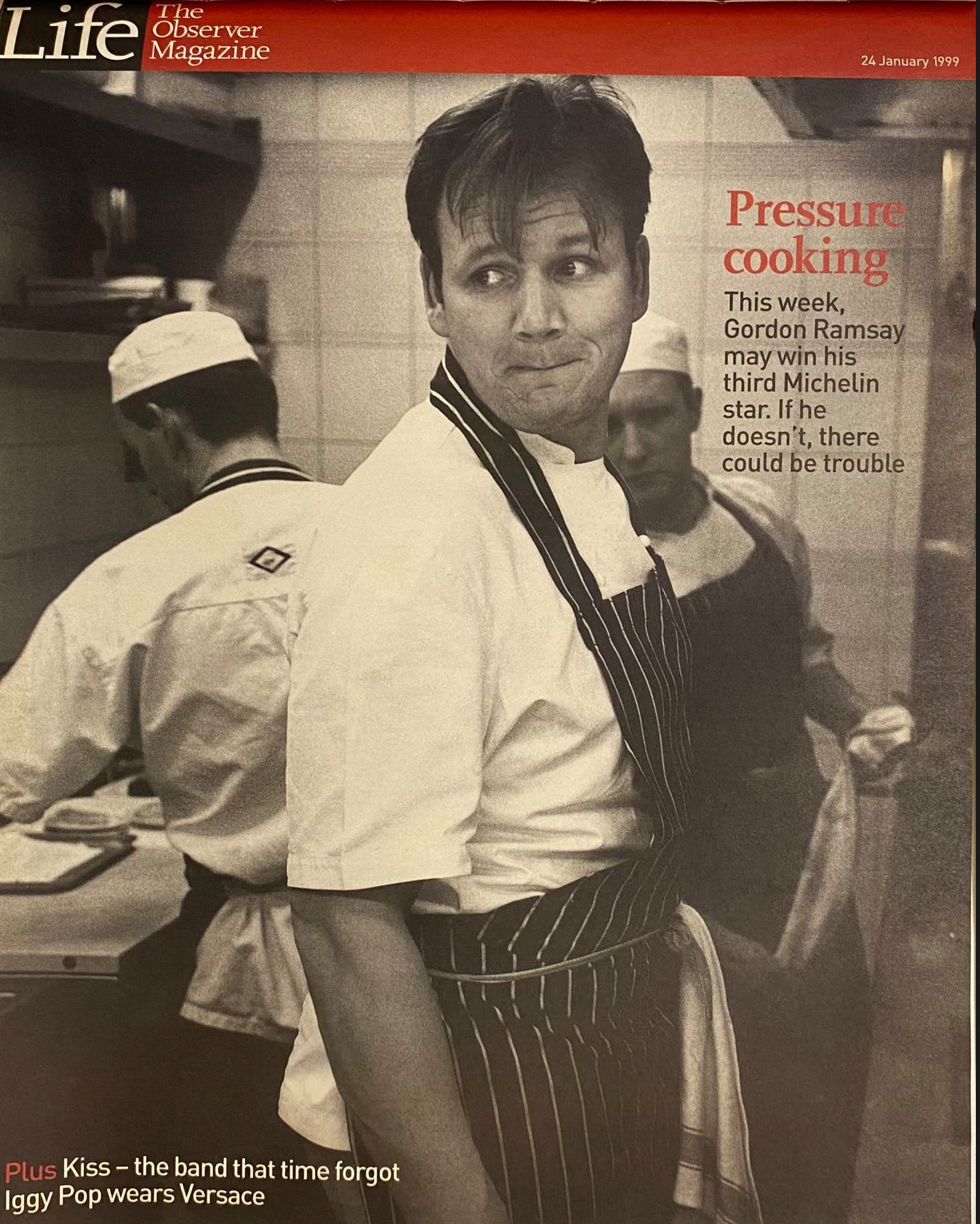
In 2001, Gordon Ramsay won his third star at Restaurant Gordon Ramsay, and it was that win that set off what came next. Blackstone had just bought Claridge's, and they came to Ramsay with a deal: his name over the hotel's dining room. Ramsay didn't cook there himself, the kitchen was run by his chef de cuisine, Mark Sargeant, but Ramsay oversaw the menu and the direction, and, crucially, Claridge's got to hang his name over the door as a halo for the rooms.
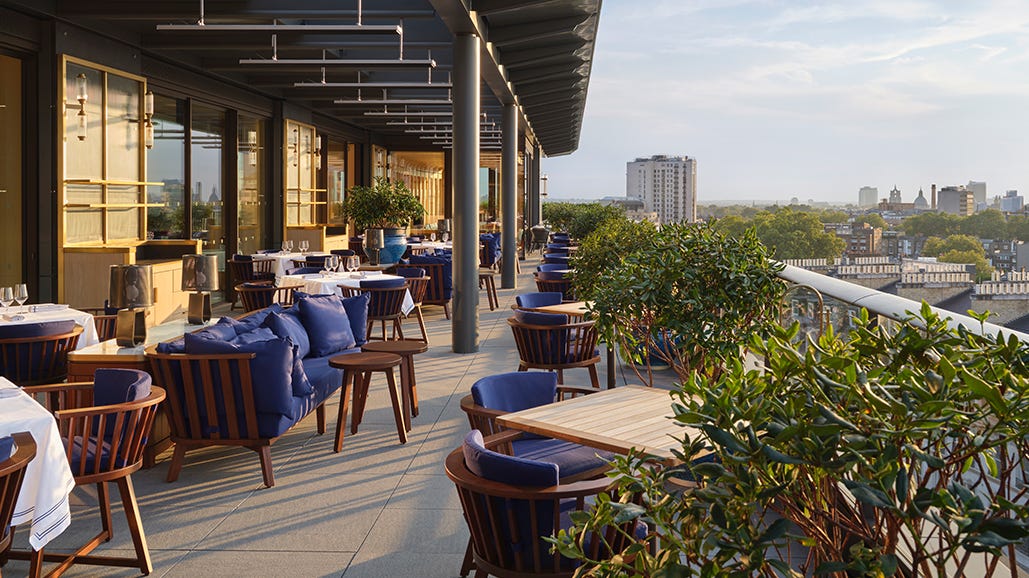
For a hotel, the restaurant is not where the money is. A hotel earns about 73% gross profit on a room, but only about 28% on its restaurant (source). So why would a hotel bother with the culinary world at all, rather than just building more rooms at a better margin?
Because a serious restaurant pays off somewhere else. Hotels with a prestigious restaurant charge 9% more per room and earn 19% more revenue per available room (source). The restaurant stops being a functional need to just feed their guests, and becomes a marketing tactic to drive occupancy.
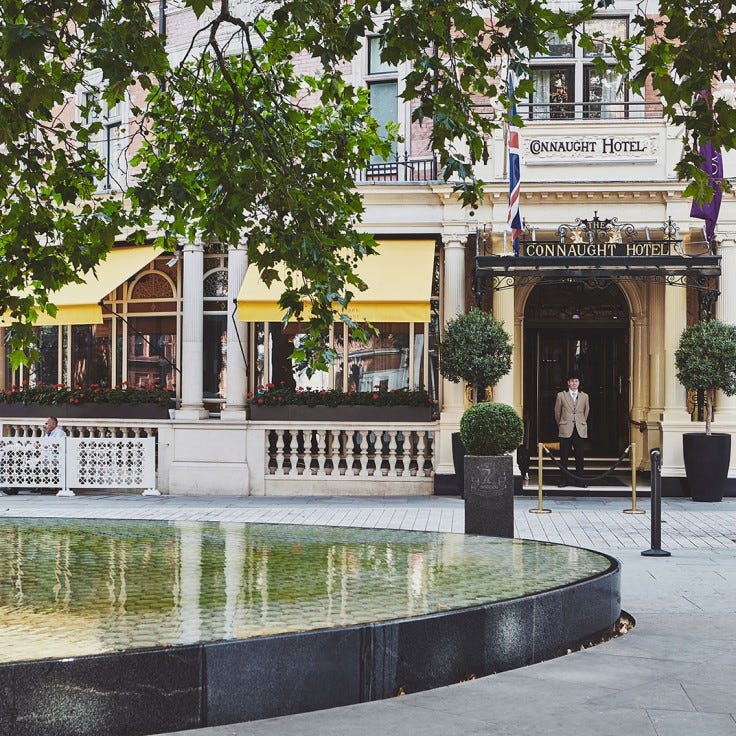
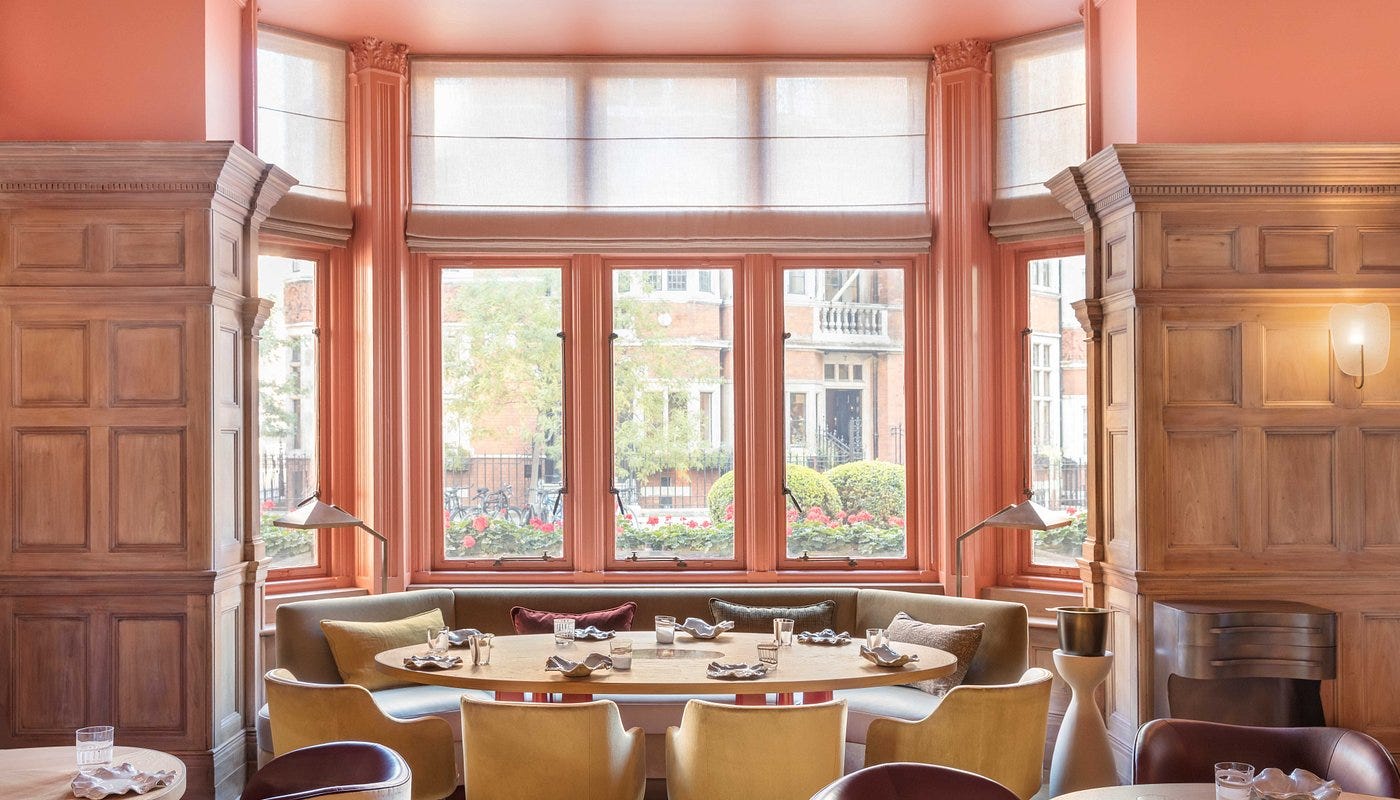
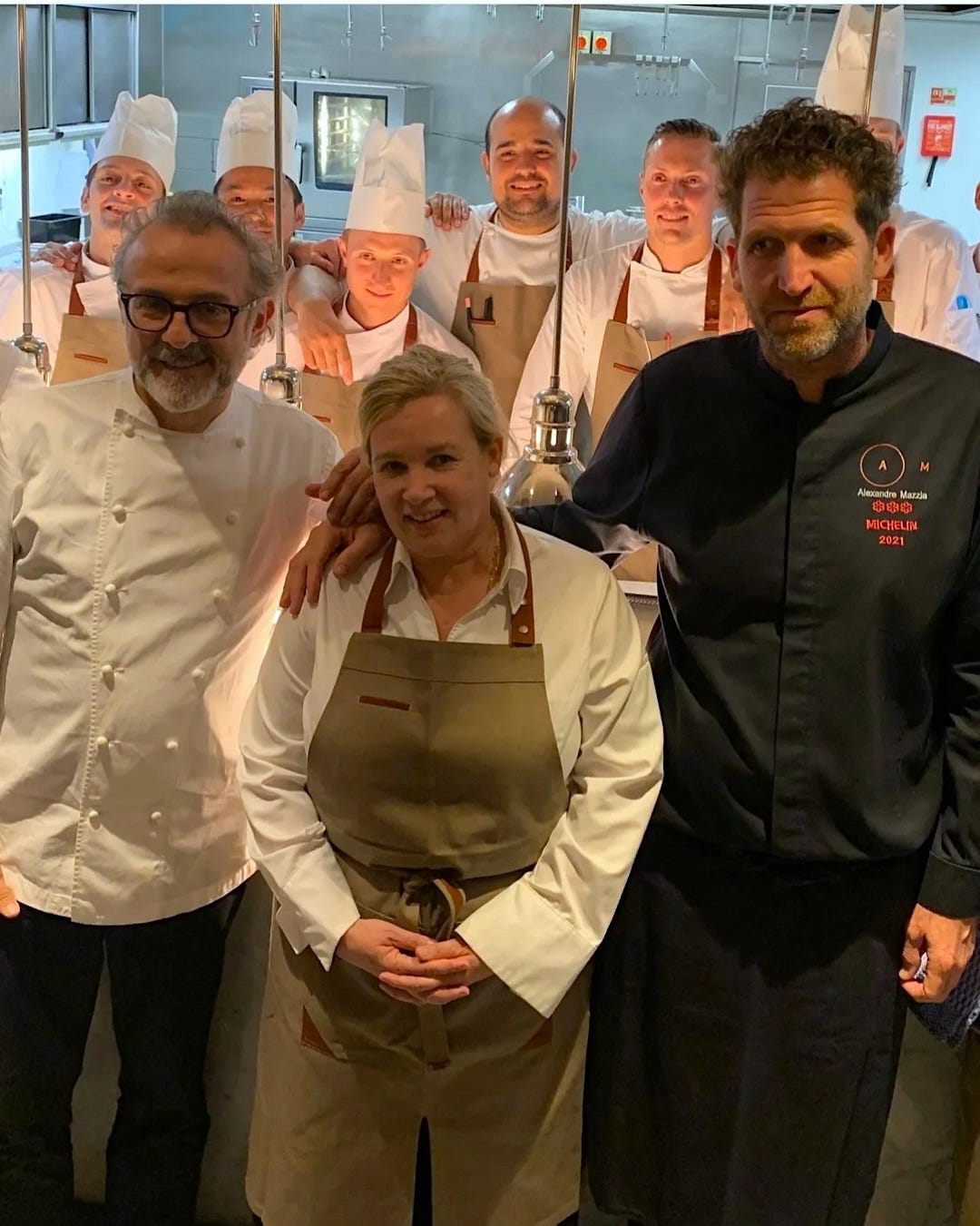
Look what the Connaught Hotel has done with the same building. The dining room Michel Bourdin ran for twenty-six years that was called The Restaurant is now Hélène Darroze at the Connaught. The hotel that once employed its chef and kept the stars for itself has switched sides: the chef’s name is over the door, and the room is hers. Darroze took over in 2008, won a star in 2009, a second in 2011, a third in 2021, and hasn’t dropped one since. Eighteen years, one name, three stars.
There’s a symmetry worth naming here that I stumbled on when doing my research. Darroze arrived to work in the office at Le Louis XV in 1990 after receiving her business degree. The same year it became the first hotel restaurant anywhere to hold three stars, and Ducasse pulled her from behind the desk onto the stove. The chef who has kept The Connaught steady for nearly two decades was made by the man, and the room, that started the modern hotel restaurant.
Now let's go back to Gordon Ramsay at Claridge's. This arrangement, like every one of these deals, had an end date. Ramsay's lease ran ten years, was extended in short stretches, and in 2013 he walked away from renewing it. The restaurant didn't fail, the contract simply ended, and a Michelin starred room closed because the paperwork ran out. The thing that makes a hotel restaurant a success, a prestigious chefs name tied to it, is also the most fragile part of the whole model.
Which brings us back to those fourteen seats at the Mandarin Oriental Mayfair. Two names went over that door in eighteen months, Akira Back, then Jihun Kim. Both won a star. Both restaurants closed.
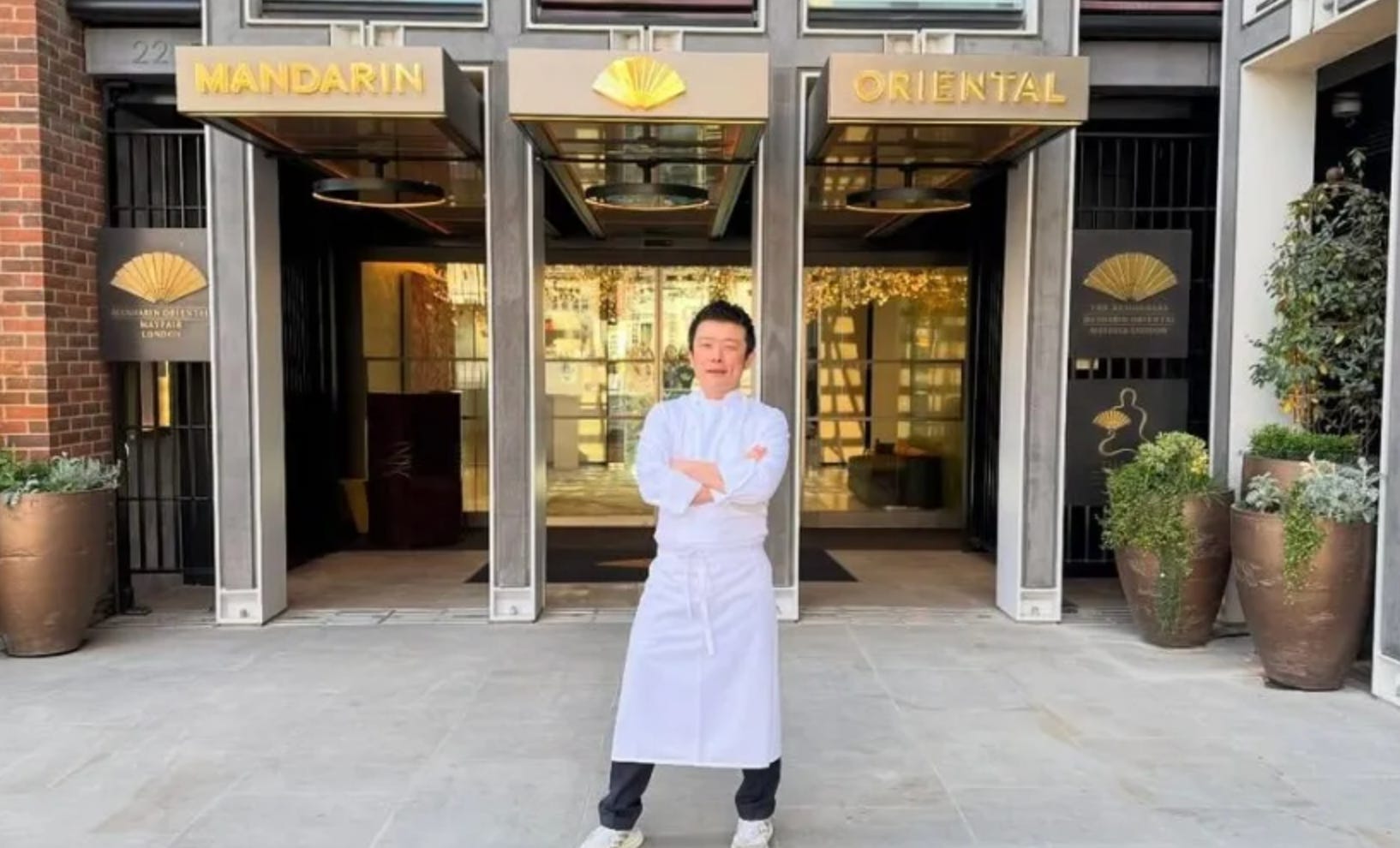
Here is the part I left out at the start: the chef never changed from Dosa to Somssi. Jihun Kim ran the kitchen under Back’s name and won Dosa its star. He reopened the same room under his own name and won it again. Same hands, same room, same food. Only the name over the door changed and each time the name left, the restaurant died with it. The restaurant was attached to the name but the star was attached to the chef.
The model is fragile because the deal lets those two drift apart, the name can leave, the cook can leave, the contract can lapse. But when they hold together, the licensed restaurant doesn’t just survive, it produces the best hotel dining in the world. Somssi is what it looks like when the pairing breaks. Hélène Darroze at The Connaught is what it looks like when it holds.
Table for Two lives at the intersection of food and culture, not simply recommendations, but a considered point of view on why dining matters, and where to find the best of London's table culture. If this piece resonated, please support us by subscribing.
I’m thoroughly enjoying this little history lesson
Super interesting analysis!!! LOVED it