


Welcome to the second instalment of After Dinner Conversation. This is Table for Two’s reflection on five interesting stories related to restaurant and dining culture, what’s stayed with me and what I’ll be sharing with my table next time I’m out for dinner.
We’re back with another instalment of After Dinner Conversation. The plan was to do these round ups monthly, but the first instalment two weeks ago clearly struck a chord, so we’re back mid month with round two.
We also seem to have made it to the other side of the London heatwave, at least for now, and I’m not taking that comfort for granted.
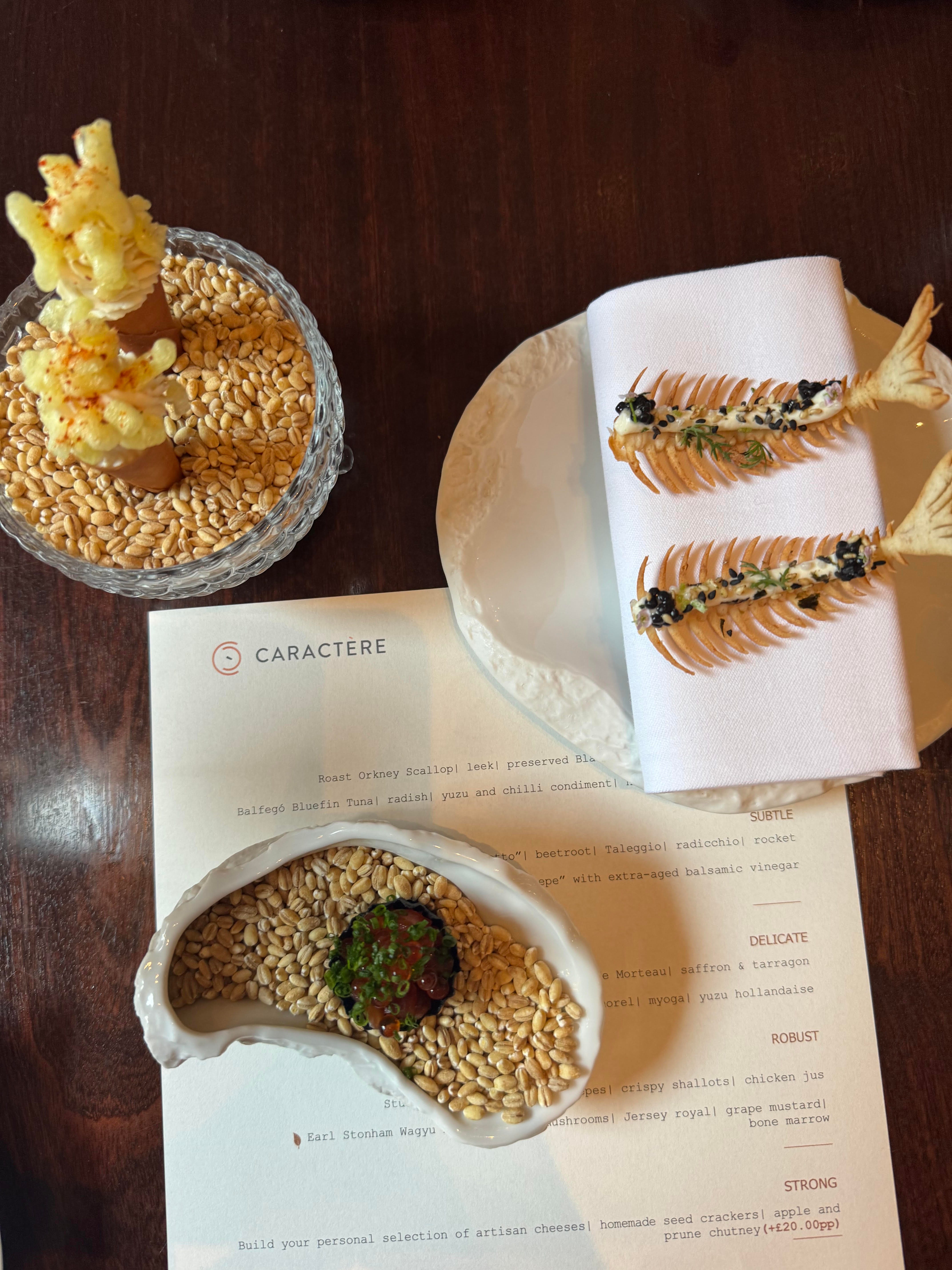
It’s been an intentionally low key week otherwise, save for dinner Thursday night at Caractère in Notting Hill for an early birthday celebration with my friends.
This week also marks two months since I started this Substack. I’m having so much fun writing it, I’d love to hear what you want more of.
As always thanks for being here, and I hope you enjoy this week’s After Dinner Conversation round up.
01. The price of building a Mayfair restaurant
Have you ever wondered what it actually costs to build a restaurant in Mayfair?
The answer, apparently, is somewhere between £2.5m and £3.5m. That number has been sitting with me since I read this interview on Glassette with Atelier Wren, the interiors duo behind the new Berenjak Mayfair, which opened back in March.
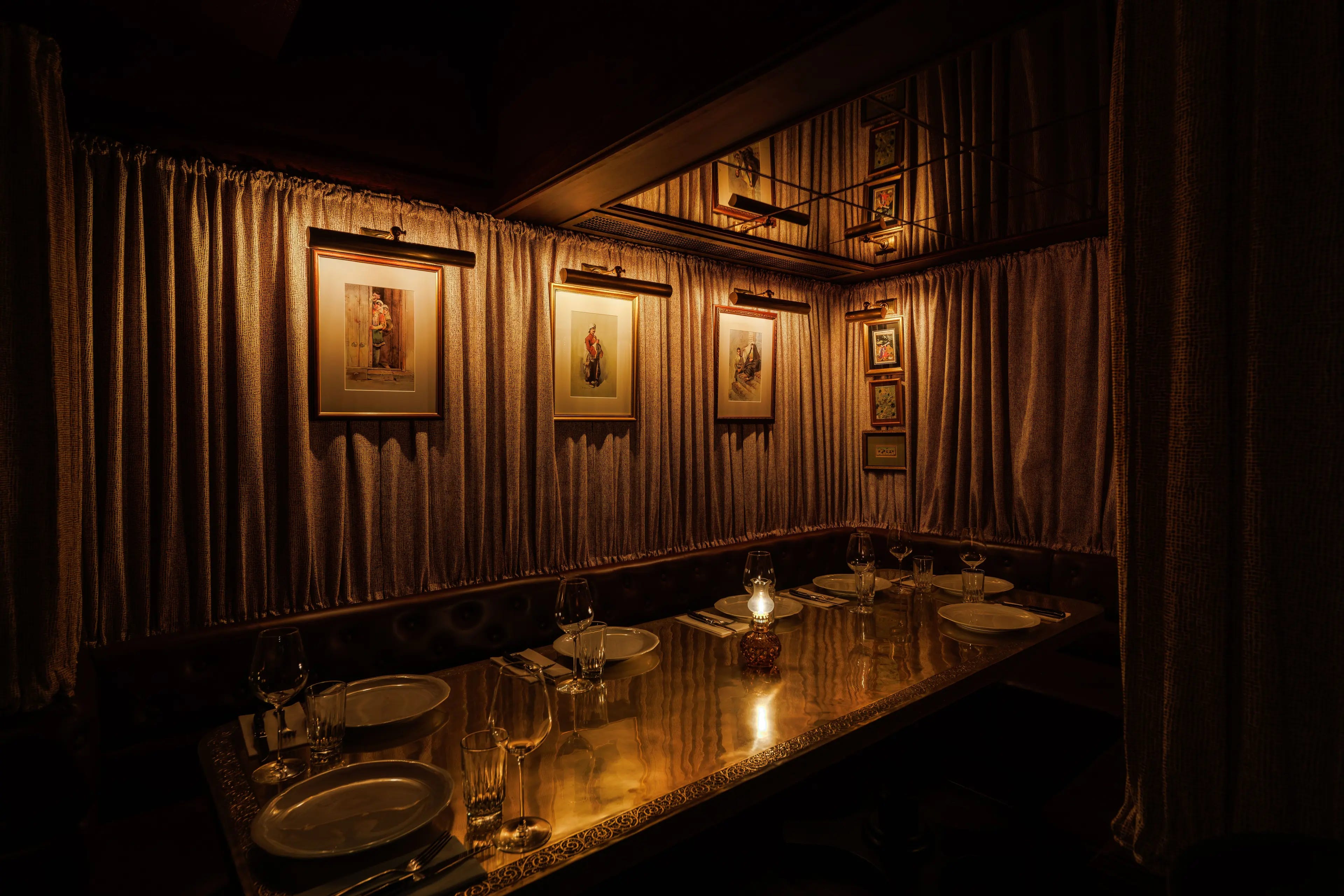
The interview get into all the questions I’d want answered too… what they overspent on, the single most expensive thing in the room, etc. But the part that really stayed with me was the brief itself: make the space feel like a family villa on the Caspian Coast, and do it by converting two separate commercial units into one. There’s something quite moving about that, actually, how much care goes into making a room feel inevitable, when the bones of it start out anything but.
I happened to be at Ambassador’s House, another JKS restaurant, last Sunday, and found myself thinking about exactly this, how the rooms we sit in feel so complete, when really a team spent months solving a puzzle just to set the atmosphere for our meal.
02. My favourite flavour ice cream is Loewe
Okay, I’ve found London’s chicest ice cream of the summer. Loewe has partnered with The Dreamery ice cream shop in Islington to promote their new pistachio scented candle, with two flavours on offer: Pistachio, of course, and Sour Cherry.
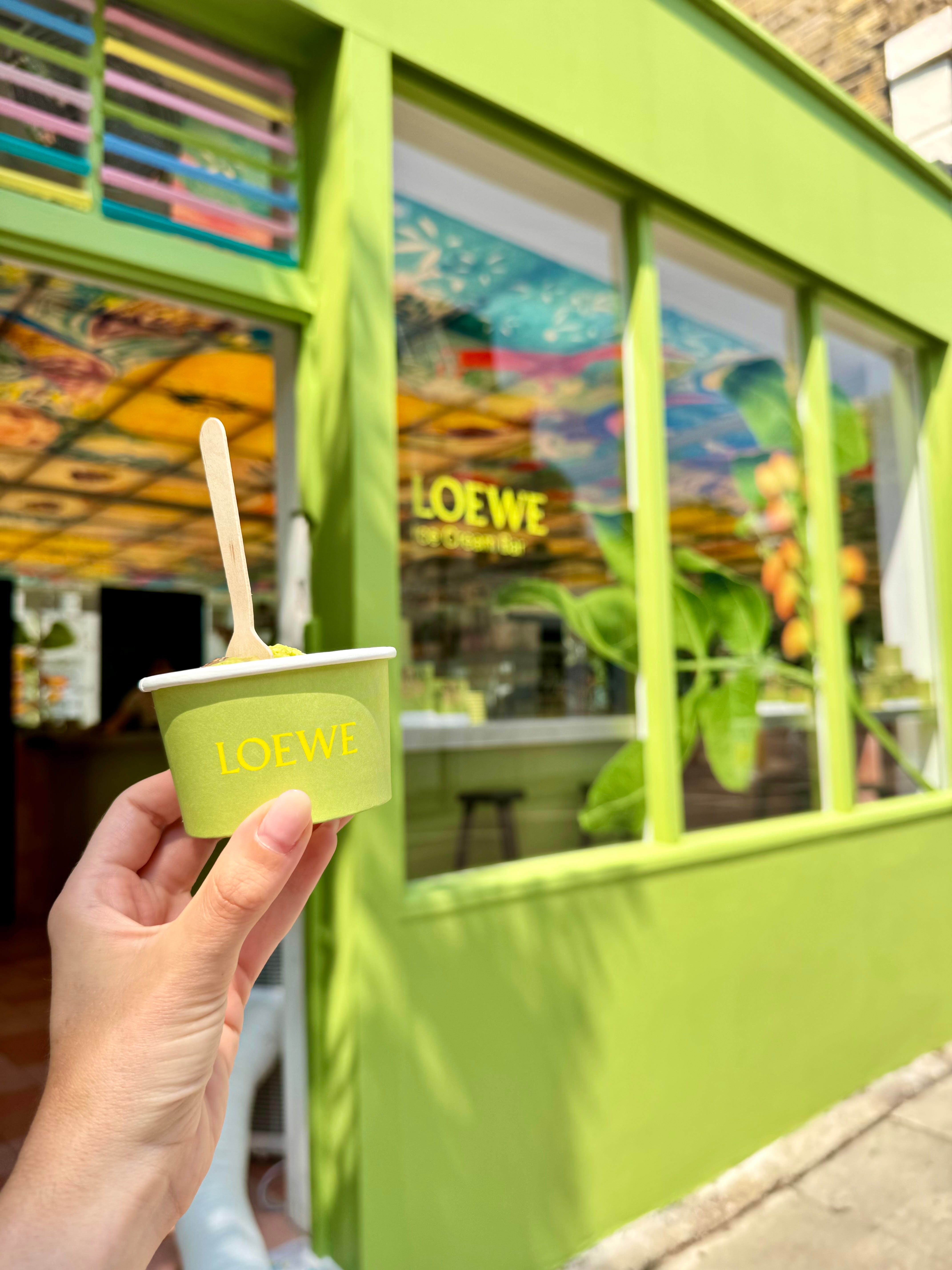
What’s really struck me is how luxury fashion houses are using food to bring their brands to life. A few weeks ago I posted about the ice cream at Anya Hindmarch’s pop up. But it’s not just ice cream.
Chef Mauro Colagreco, of Mirazur fame, has opened Monsieur Dior for the summer, a restaurant set inside the gardens of Dior’s newly renovated Saint Tropez boutique. And Louis Vuitton has partnered with chefs Arnaud Donckele and Maxime Frédéric on the Michelin starred restaurant at the White 1921 Hotel.
A dinner, an ice cream pop up, a chef collaboration… each one generates an enormous amount of organic, aesthetically coherent content.
But I think it goes deeper than UGC content. There's so much emotion tied up in taste… taste is nostalgia, it's memory, it can be aspiration, connection. Those are the same emotions that turn you into a loyal customer of a luxury fashion house. And it's exciting to watch fashion collaborate with chefs and restaurants to build experiences around them.
Experience it for yourself:
Loewe x The Dreamery collaboration is running at The Dreamery’s ice cream shop in Islington until 30th July.
03. What actually goes on in the kitchen before a star’s awarded
I’m not sure where I was last October when Knife Edge: Chasing Michelin Stars came out, but it wasn’t on my radar.
Each episode takes place in a different country and follows 3 restaurants in the twelve weeks leading up to that country’s Michelin star ceremony as chefs chase their first, second, or third star. You watch them push their kitchens right up to the ceremony itself, where you find out (alongside them) whether they’ve earned it.
A few things stayed with me from this series.
First, the heart, grit, and soul these chefs pour into their restaurants is a good reminder of everything that happens before a dish ever makes it to the table in front of us. It’s one of the reasons I think dining with context is so important.
Second, I found it fascinating to hear how kitchens speculate about whether a solo diner might be a Michelin inspector, a phenomenon I’ve wondered about myself. James and I have even played a game trying to guess who in a dining room might be an inspector.
And third, the anonymous interviews with the inspectors themselves was the first I’ve ever heard from a Michelin inspector, on the record.
I appreciate this show came out in October last year so it’s technically old news, but if you’re like me and haven’t already watched it, it’s worth adding to the top of your queue.
Where to watch: Knife Edge: Chasing Michelin Stars is available streaming on Apple TV.
04. The UK’s tipping culture now rivals the US
When I moved to London eight and a half years ago, the rules around tipping were simple. You only had to tip at sit down restaurants, and even then, 12.5% was automatically added to your bill. Easy.
Nearly a decade later, it’s gotten more complicated. Earlier this year I bought drinks at a bar and remember being miffed to realise, after I’d already tapped my card, that a service charge had been added to the bill without asking me.

That’s the exact experience I had in mind reading London Centric’s piece on How American tipping culture came to London. Their argument: post Covid, tipping has reached this frenzied state largely because of April 2025’s hike in employer National Insurance, which made direct pay rises harder to absorb, combined with a 2024 law requiring all tips and service charges go to staff , money that’s structured as a genuinely optional service charge, is taxed at just 20%, versus the much higher tax on wages.
It’s made me far more sympathetic to hospitality asking for a tip on every takeaway coffee or pastry, it’s not a shakedown, it’s the system (albeit, a twisted system) working how it’s supposed to.
05. Michelin’s new ‘Grapes’ distinction sparks backlash in Burgundy
Last week, Michelin released its inaugural Michelin Grapes guide, extending its rating system into one of the world’s most famous wine regions.
Rather than scoring individual bottles, Michelin is now rating entire estates, one, two, or three grapes. In this first round: 9 estates took three grapes, 20 took two, and 33 took one.

The backlash was immediate. Domaine Arnoux-Lachaux, awarded one grape, publicly asked Michelin to remove it from the guide entirely:
“We do not know how the Domaine’s rating … could have been established. Since 2020, we have deliberately chosen not to submit our wines for press reviews or ratings.”
It's a legitimate question…. how do you rate an estate that won't participate? Though it's worth noting that DRC, Leroy, Roumier, Coche-Dury, and d'Auvenay all landed in the top tier without apparent objection. Which raises the real question here: is Michelin's process the problem, or is this one estate unhappy with its grade and framing it as a principle?
That's this week's After Dinner Conversations. Let me know in the comments what you make of any of these, and I’ll see you on Wednesday!
Table for Two lives at the intersection of food and culture, not simply recommendations, but a considered point of view on why dining matters, and where to find the best of London’s table culture. If this piece resonated, please support us by subscribing.
To add to the idea of the food and designer brand collaborations: I’d noticed an odd, sudden surge of clothing stores that just merged into a cafe, either of the brand or just by association, and then listened to a video which included interviews from the managers of Coach, Louis Vuitton etc that led these collaborations. Their idea, as they explained, was essentially to allow people who couldn’t afford a luxury item to at least ‘have a reason’ to go into the store and buy ‘something’ from them.
That to me seemed a very unappealing excuse for just profiting off of another consumerism-unprovoked spending- emulating influencers loop
Now the Loewe and The Dreamery fusion I can understand and appreciate, fusing and using two senses that are already inextricably linked
But it reminded me of the rest of this new consumerist phenomenon