


I can’t pinpoint the exact moment I fell in love with restaurants, but I know it started somewhere between the East Village and SoHo, in my early twenties.
I was twenty three, living in New York City, with some of the best restaurants in the world at my fingertips. I spent most of what I made exploring the city through food, discovering new neighbourhoods through their restaurants, booking tables at places that felt out of reach, and when I wasn’t eating out, reading about the chefs behind the restaurants and the perspective they brought to their menus. Twenty three year old me was so curious about the culinary world and in some ways I think dining well was how I made sense of the city as I tried to find my place in it.
Nearly a decade and a half later, my palate is more refined and my standards are higher. After eating at hundreds, maybe thousands, of good restaurants I know a great restaurant when I find one.
One of my earliest lessons from my days in New York is that a restaurant isn’t just about the food. It’s about the whole experience, connecting with the people around you, the room you’re sitting in, the story the chef is telling through the menu. Dining well is almost an art form and great food can spark conversation, connection and inspiration.
I really do believe great atmosphere is nearly as important as great food. The cynical might say it’s style over substance but I don’t agree. A well thought out and curated restaurant invigorates all of your senses and makes eating out more than a meal, it makes it an entire experience.
When I moved to London eight years ago, I learned a new city in the only way I knew how: through the city’s restaurants. I must admit I was an obnoxious New Yorker who moved here not thinking the food or restaurants could even hold a candle to NYC, but how wrong I was. Dare I say London might have better restaurants than NYC?
And after a decade and a half of eating at hundreds of restaurants, I’ve developed a very clear sense of what I’m looking for and the recommendations on this Substack are built with my framework in mind.
So here it is, everything I look for, fifteen years in the making. Consider this the lens behind every table I book and every recommendation I make.
How Table for Two evaluates and scores restaurants
Every restaurant reviewed on Table for Two is scored across two separate categories: food and atmosphere.
A restaurant gets a score out of five for both food and atmosphere. These scores sit side by side deliberately, because a high food score and a lower atmosphere score tells you something completely different to the reverse.
Evaluating the food
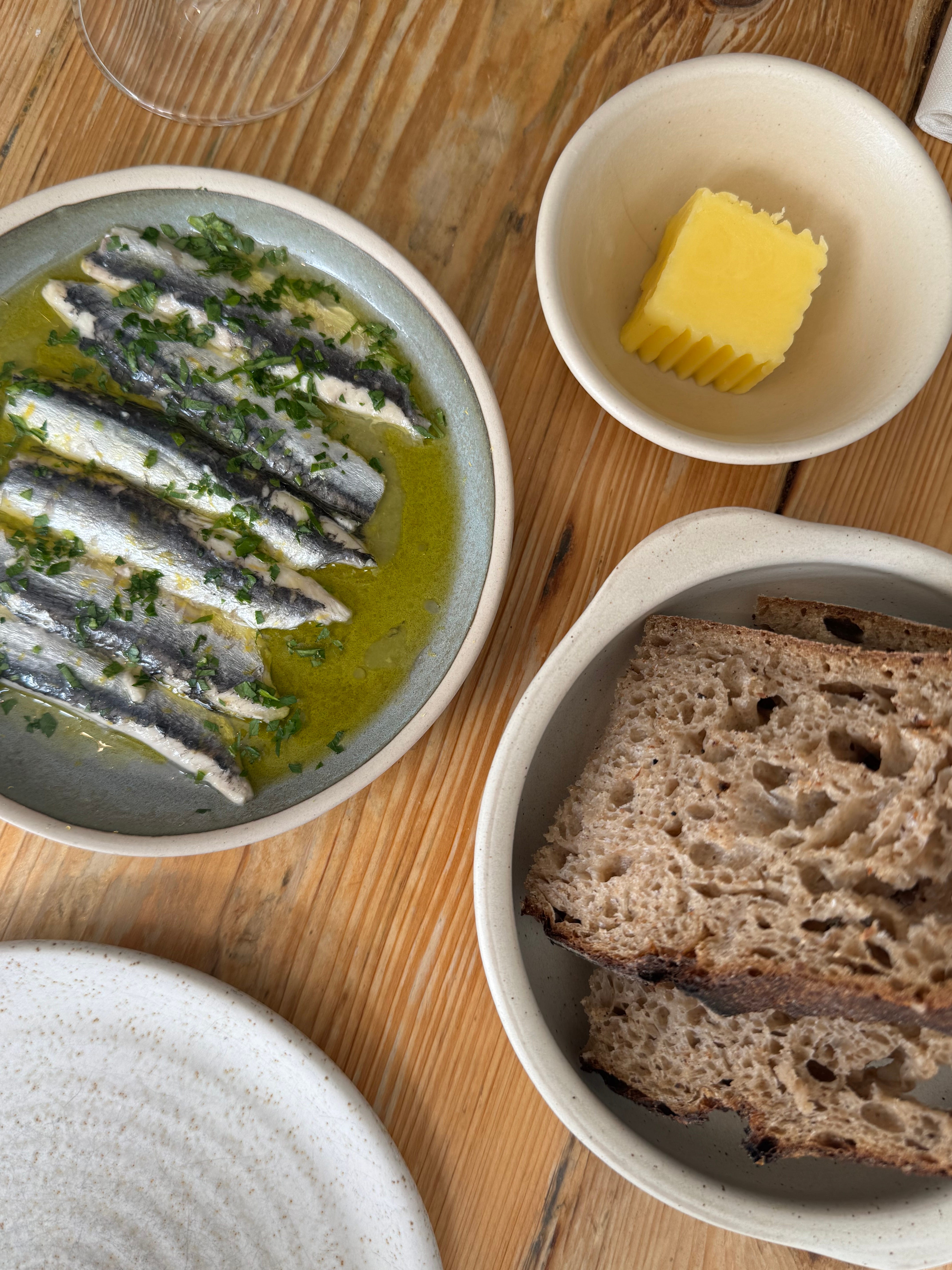
My husband is a fantastic cook at home, so when I go out to eat I want one of two things: something that’s nearly impossible to recreate in a home kitchen, or food cooked to such an exceptional standard it’s simply worth eating outside the house.
If I’m being honest, I just intuitively know when I’ve eaten great food, but I appreciate that doesn’t translate well on Substack. I’ve sat with this list for days, edited it more times than I can count, and I feel genuinely confident that this is what great food comes down to.
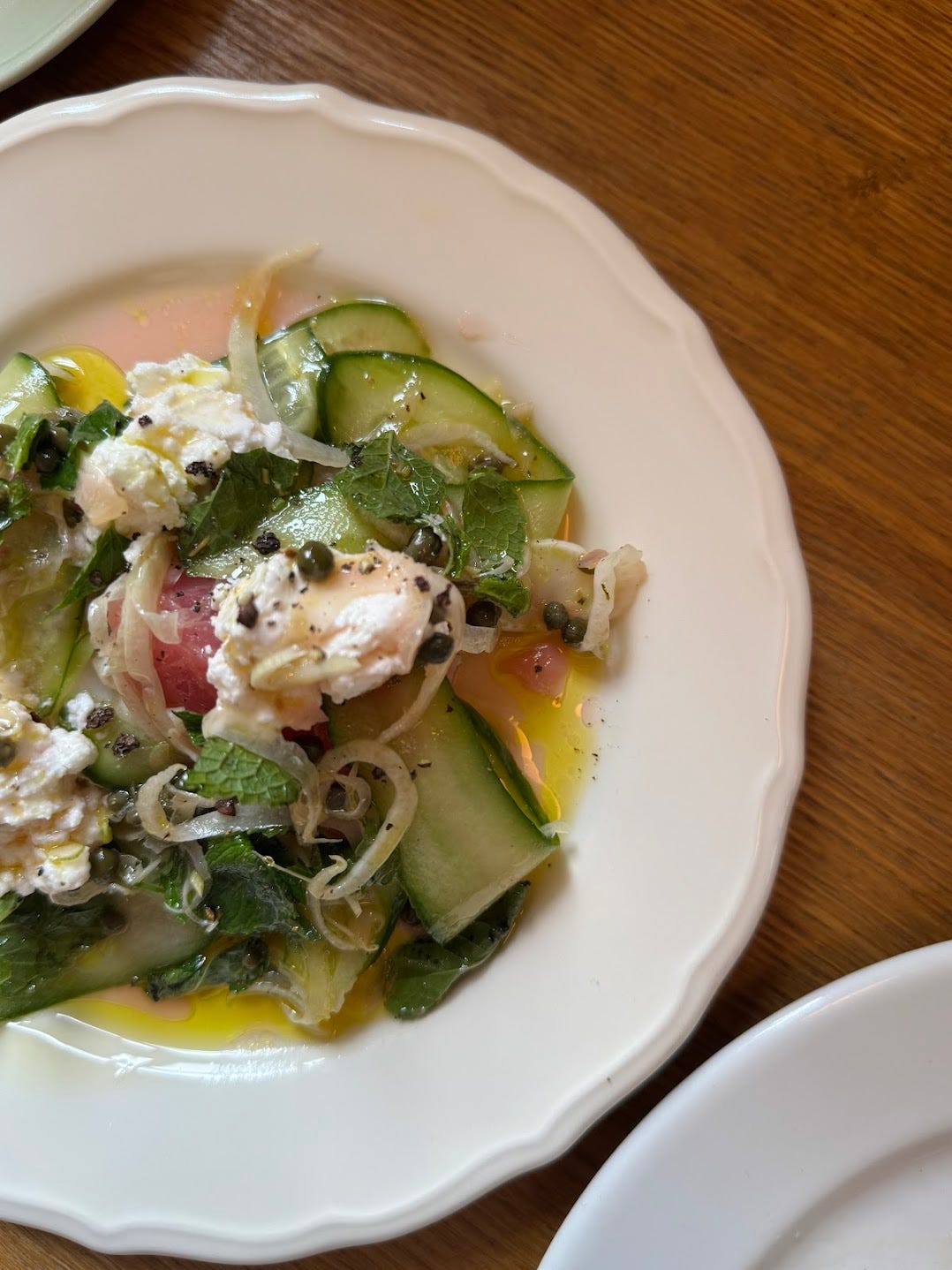
Food is scored across five criteria. Each earns one point or zero. No half marks, no sliding scale. It either delivers or it doesn’t. These categories include:
Creativity. Is there a twist? Some ownership from the chef? A point of view on the plate that you wouldn’t find anywhere else. A recent example was at Casa Vigil in Mendoza, a Michelin star restaurant where we sat for a 13 course tasting menu. One of the plates was a Milanesa sandwich, executed to the highest standard, but included on the menu because it made the chef nostalgic for his grandmother and childhood. The chef’s point of view was so distinguished and it felt incredibly personal.
Flavour. Great flavor has a beginning, a middle and an end. It arrives as one thing and leaves as another. Think of a great cut of steak grilled over coal, as you chew, a smokiness uncovers itself that wasn’t there on the first bite. Average flavor is the opposite. What you taste first is what you swallow. It’s one note, start to finish.
Inspiration. A dish can inspire in two ways. The first is personal, it sends you home wanting to try a new ingredient, or sends you across town chasing a version you can't stop thinking about. The second is bigger: does the chef put their stamp on the city? Do they change the way London eats?
Provenance. Are the ingredients well sourced? Do they feel fresh and chosen with intention? Think of a juicy ripe tomato grown under the Mediterranean summer sun versus one mass produced in a greenhouse. My standard for ingredients, especially vegetables, is simple: does this taste like it was grown in the Med (or at least with the same level of thoughtfulness)?
Balance. Does the menu work as a whole? Not just individual standout dishes but does the full experience of eating through it feel considered and cohesive.
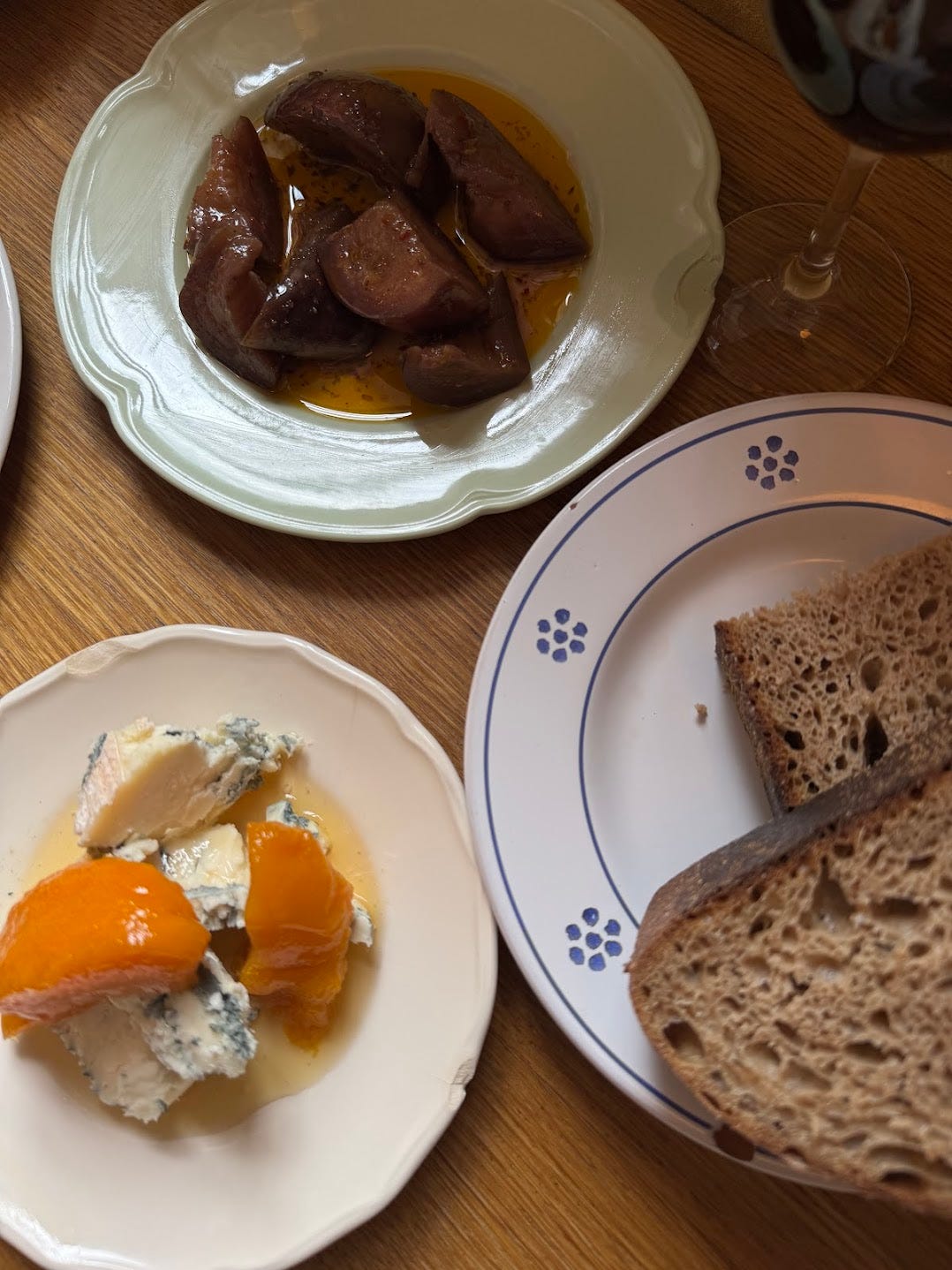
Evaluating the atmosphere
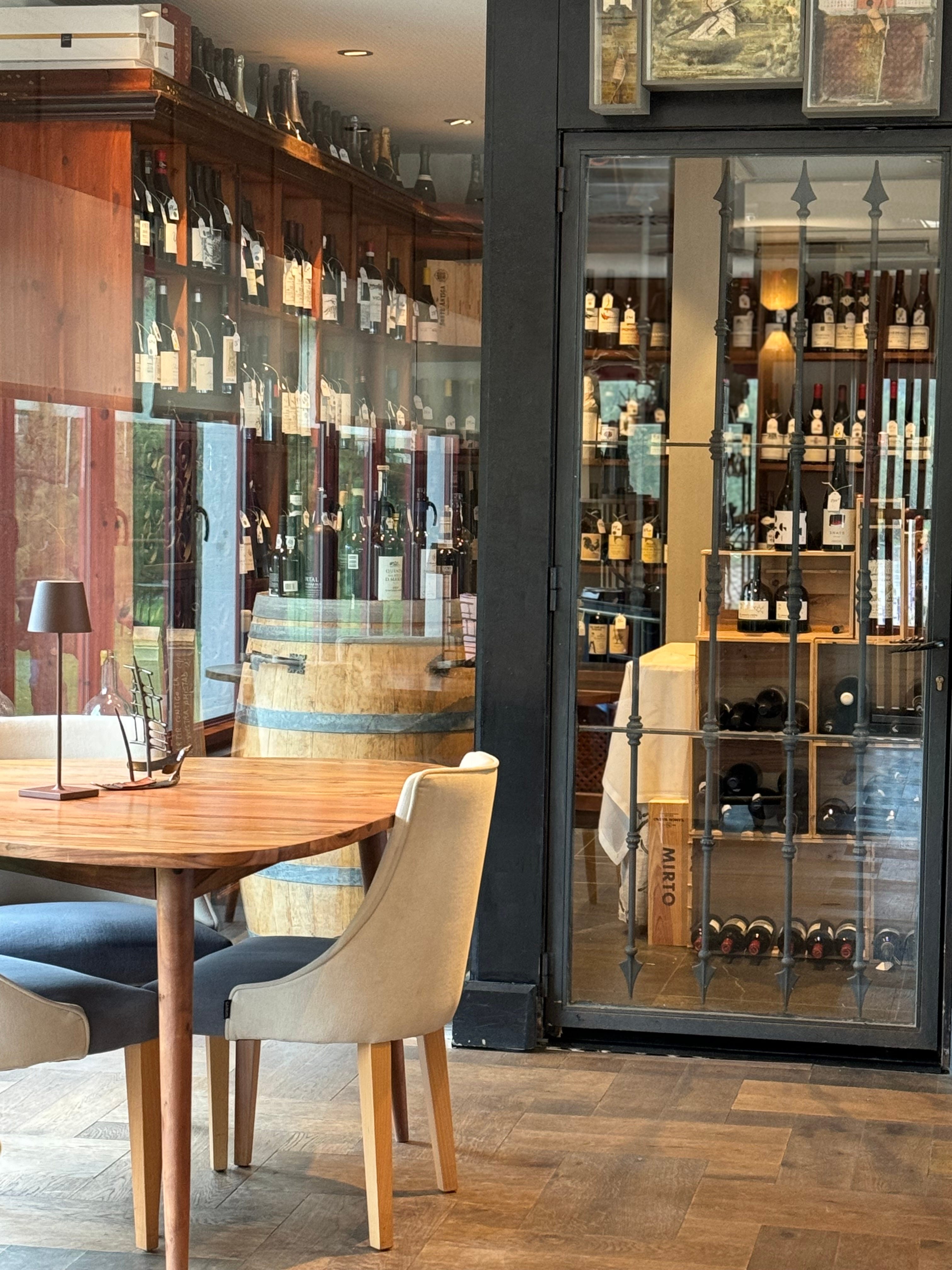
Good food is just part of the story.
One of my favourite restaurants is Gerald’s Bar in San Sebastián. My husband and I stumbled across it the weekend we got engaged, on a cold evening in early March. From the outside the restaurant was glowing, warm light spilling through the windows onto the street. To our delight we managed to get seats at the bar. The room was candlelit and intimate, and the energy matched perfectly the excitement and buzz of the weekend. We’ve been back every trip to San Sebastián since, and when we got married there, it was the first restaurant we sent our friends and family who visited for the weekend. Gerald’s Bar has become our benchmark, when we’re trying to articulate the atmosphere of a restaurant, we find ourselves saying “it has a Gerald’s Bar kind of feeling.” Great atmosphere does that; it amplifies the emotions of a great evening, especially when you’re celebrating.
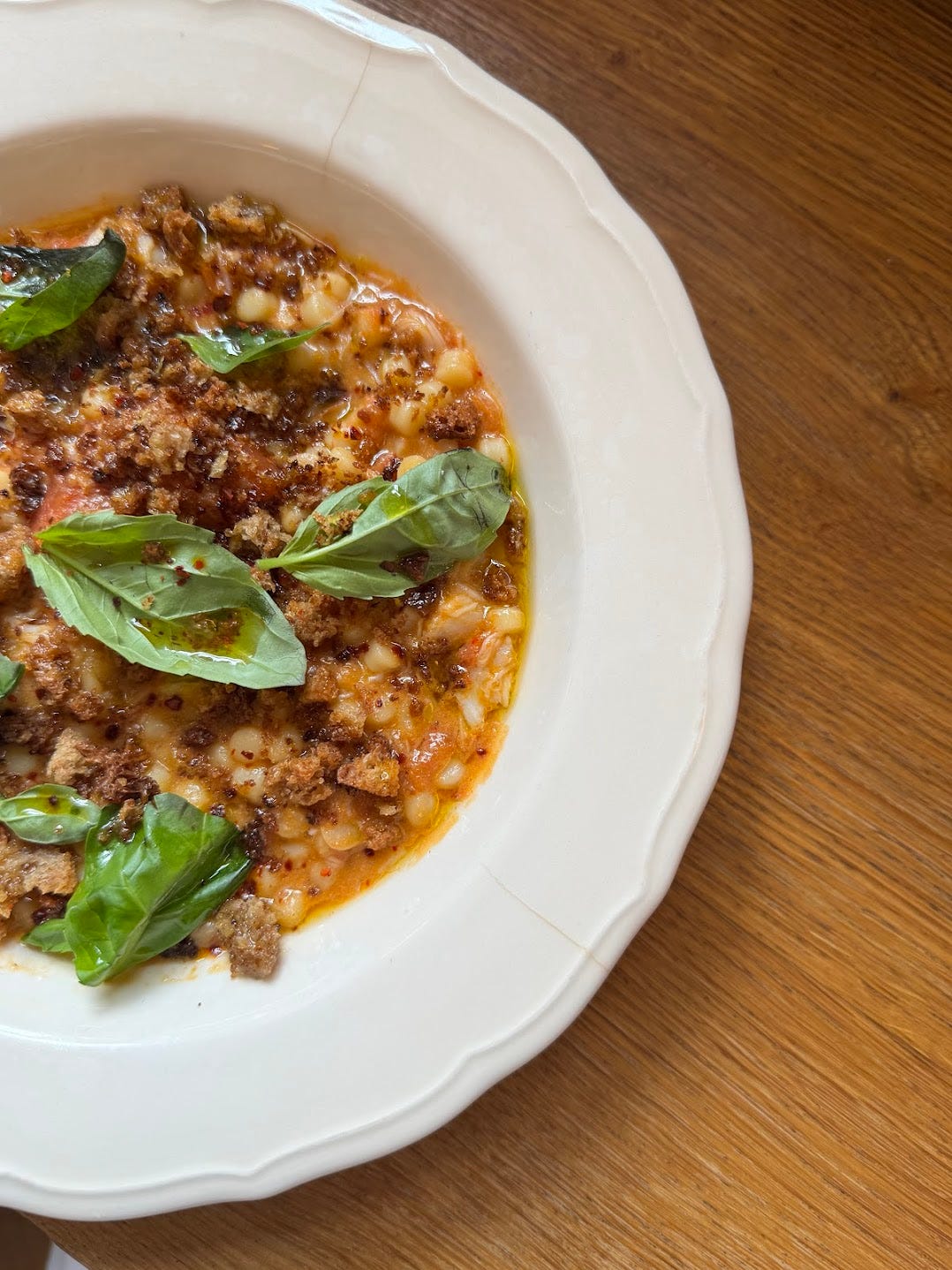
Atmosphere is also scored on the 5 evaluation criteria mentioned above. Similarly each earns one point or zero points, with no in between. These criteria for great atmosphere is:
The energy. The right crowd reads the room. They’ve come for the food and for a great night, and they’ve dressed for the occasion. There’s a hum when you walk in, chatter, laughter, something you can immediately feed off. A great restaurant has a sound to it before you’ve even sat down.
The lighting. The perfect lighting is the kind where everybody looks a little more glowy. Warm, dim, flattering. You know it immediately when it’s right and you feel it when it isn’t.
The interiors. Great atmosphere starts with a room that was designed with intention. Think Dorian: marble counters, tiled floors, leather bar stools, table lamps. Every detail considered. You can feel the difference between a restaurant that thought about every inch of the room and one that didn’t.
The soul. A great dining room has a reason to exist beyond looking good. It’s there to serve a great meal and a great experience, where guests are there for the connection and the atmosphere, not because the reservation is a status symbol. I really hate being in a room that’s performing.
The service. Great service doesn’t announce itself. The staff are warm and hospitable, they remember details, they’re present without hovering, and above all they’re not rushing you out of the door. The best service makes you feel like the restaurant genuinely wants your night to be a great one.
A note on value for money
There are enough reviews out there telling you what something costs and whether it’s worth it. That’s not what Table for Two is for. I evaluate for food and experience. If both are there, you can assume it’s good value for money. If they’re not, it won’t make this Substack regardless of the price point.
The restaurant evaluation matrix
I wanted a way to capture everything that matters about a restaurant in a single glance, capturing the full evaluation of the food and the atmosphere. Every restaurant I write about falls somewhere on this grid. Use it to decide what you're in the mood for before you even open a menu.
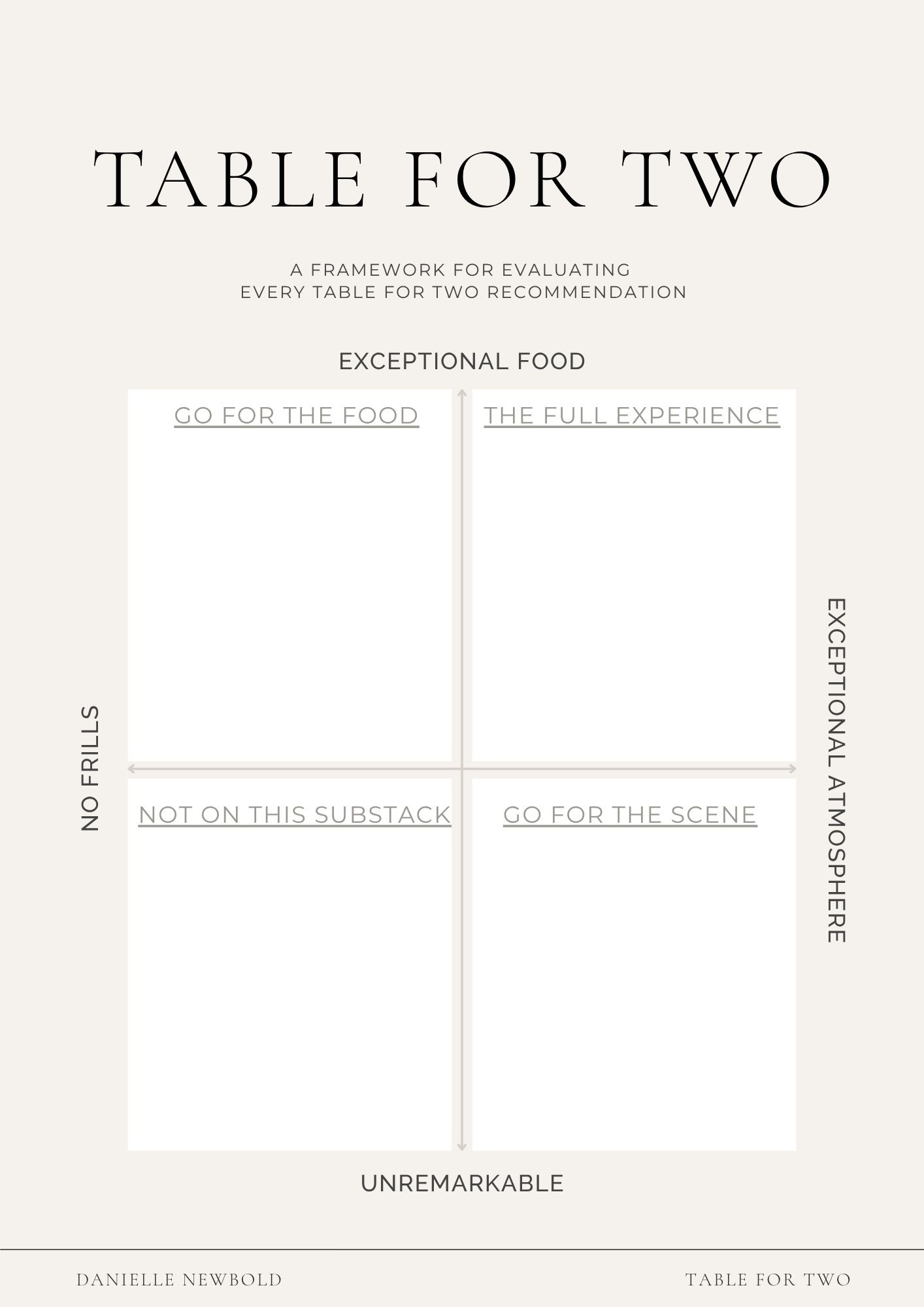
Here’s how to read it:
Top Right: The Full Experience. Exceptional food and exceptional atmosphere. This is where most of my recommendations live. If something makes it onto Table for Two it almost always sits here.
Top Left: Go for the Food. Exceptional food, understated atmosphere. These are the restaurants that put everything into the cooking to the point where the simplicity becomes its own kind of vibe. Think of a pintxos bar in San Sebastián, or a dim sum spot in London’s Chinatown. The room isn’t the point and the restaurant wasn’t designed for you to linger for hours. The restaurant’s sole purpose is to serve exceptional food.
Bottom Right: Go for the Scene. The atmosphere is there but the food doesn’t quite match it. You won’t find many of these on Table for Two however there are a handful of exceptions I’ll share at some point where the details and the room are so specific and so good that it earns its place regardless.
Bottom Left: Not on this Substack. No atmosphere, unremarkable food. You won’t find anything here. Ever.
A note on what we review
Table for Two only reviews restaurants that are twelve months old or less at the time of writing. We’re not here to repeat what’s already been said. We want to add genuine value and that means getting there early, eating well, and telling you honestly whether it’s worth setting an alarm for a booking. The classic London restaurants live in our lists, not our reviews.
Every review I write is filtered through this lens. When you see a Table for Two recommendation, you’ll know exactly what it means and why it earned its place.
And if you ever want to know where a specific restaurant sits on the matrix, just ask. That’s what the comments are for.
Genuinely excited to see what’s to come here… and also secretly love that any restaurants with no frills or unremarkable food are “Not on this Substack”. 👏🏼