


Humo lost its Michelin star in February 2026. Two months later the same room, the same four metre grill and the same refusal of gas or electricity in the kitchen, reopened as Igni. It reopened under Chef Theo Clench, who took a star at Cycene within six months of opening and held Portland's for two years, and who has said plainly that he intends to win one for Igni.
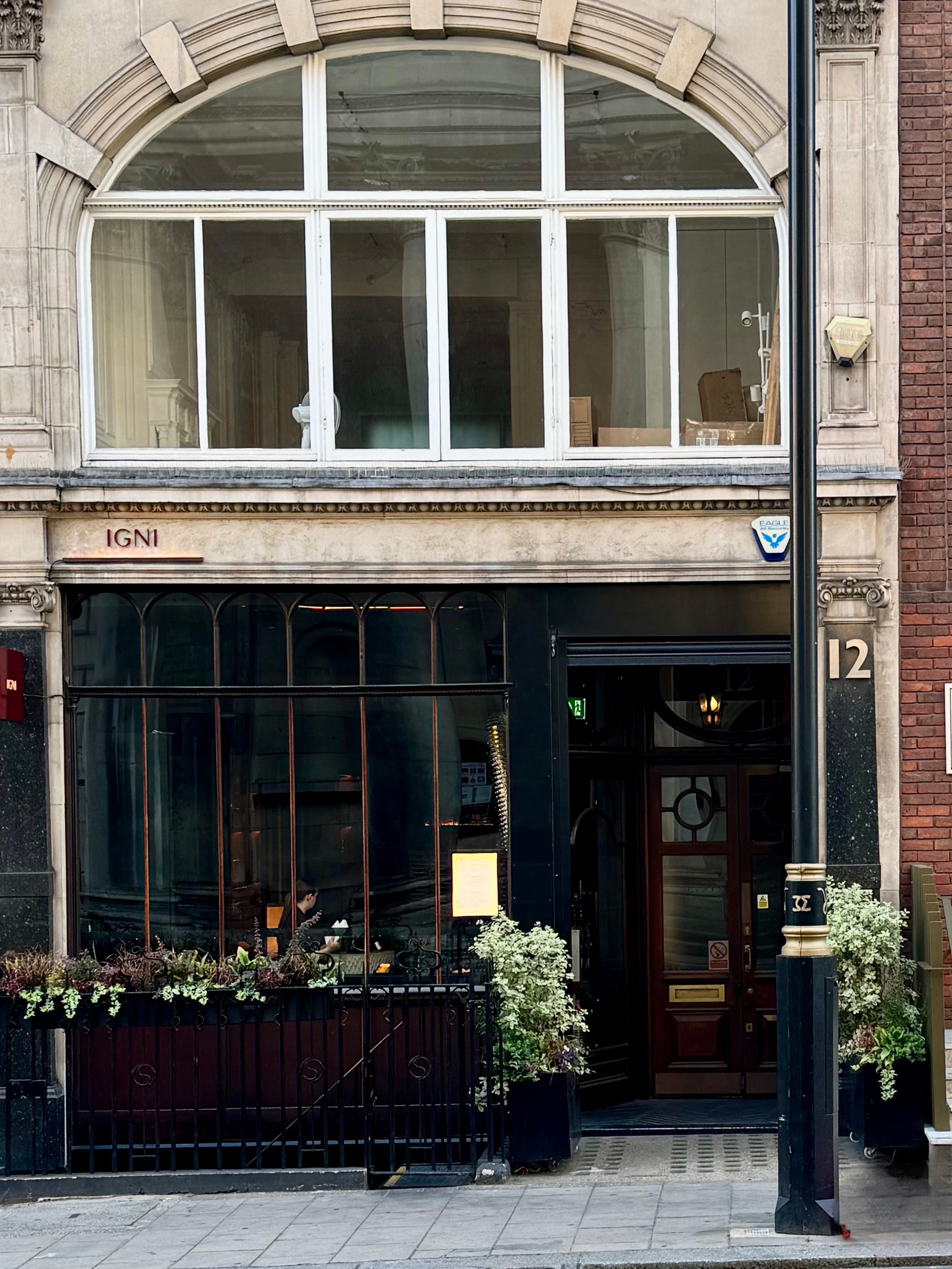
So you arrive with a question you cannot put down throughout the meal, is Igni worthy of a star?
Igni was one of eight new 2026 openings I named using my framework for predicting first year stars, Clench is the pedigree signal, Igni is tasting menu only, which is the format favoured by inspectors, and its part of the Creative Restaurant Groups which has another Michelin star restaurant in its portfolio. On paper it’s one of the most eligible candidates in London.
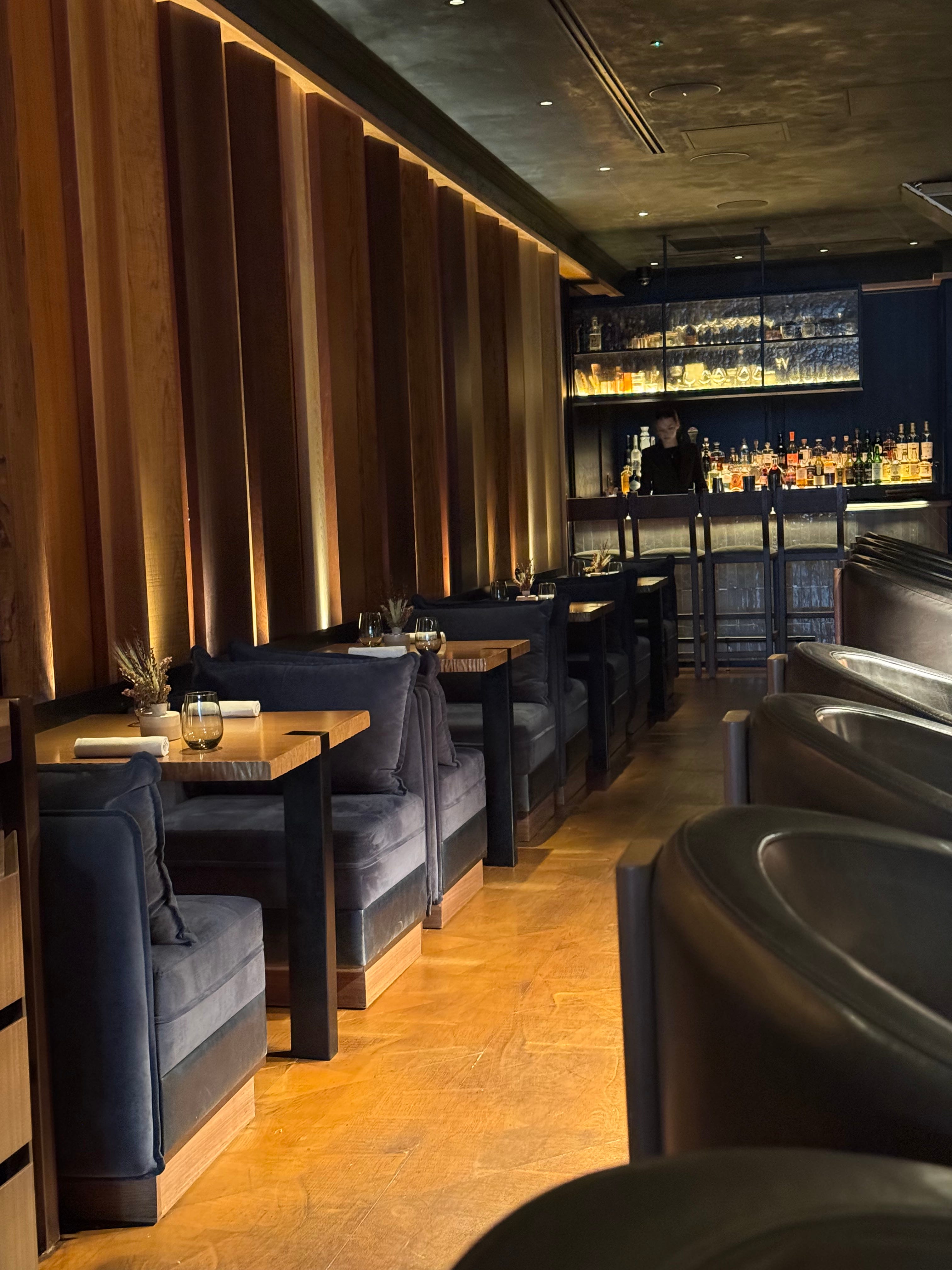
The room was unchanged from Humo, but what had changed was how the fire was used. Miller Prada’s Humo was theatrical… the grill was used as a a spectacle, an à la carte running alongside the tasting menu, a kitchen that was the main focal point of dinner. Clench has kept the grill and stripped everything else back. Tasting menu only, seafood led, and much more delicate.
I went with my friend Ally, who gets as excited as I do about restaurants and the culture around them. Igni offers three, six and nine courses. We took the nine. Excessive for a Wednesday evening, yes, but the dishes it adds are the ones Clench has been trialing since before he opened: the scallop, the turbot, and a tuna course served three ways.
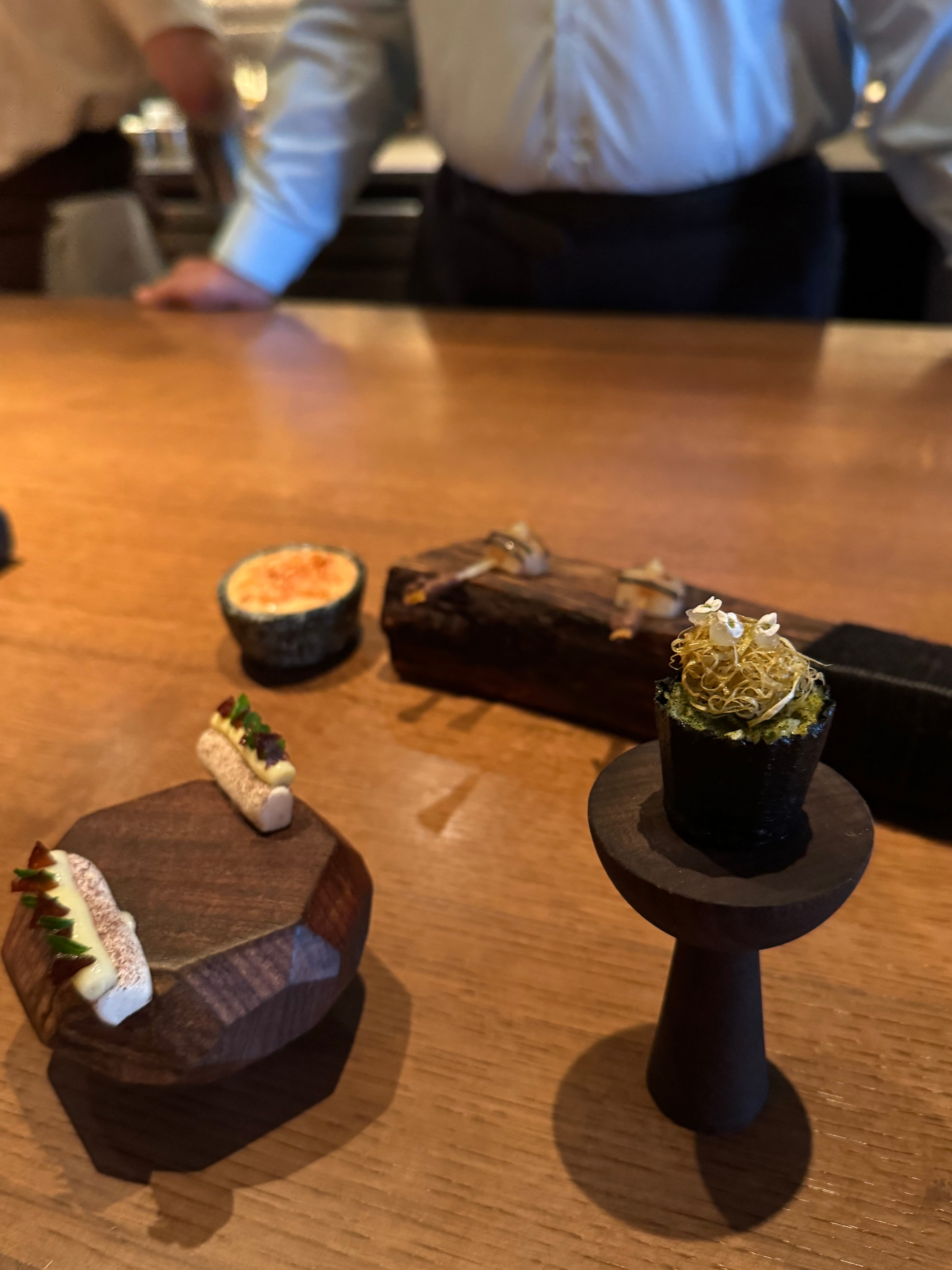
Snacks arrived first. A smoked eel meringue with black tea and yuzu ponzu, which we had to eat fast; London was in the high twenties and it was going soft at the edges. A yellowtail skewer with burnt pear and a roasted soybean dip. And a charcoal pastry of Devon crab with dashi and Granny Smith apple.
What you noticed, three bites in, was the smoke. It was in everything, and it was a good precursor for what followed.
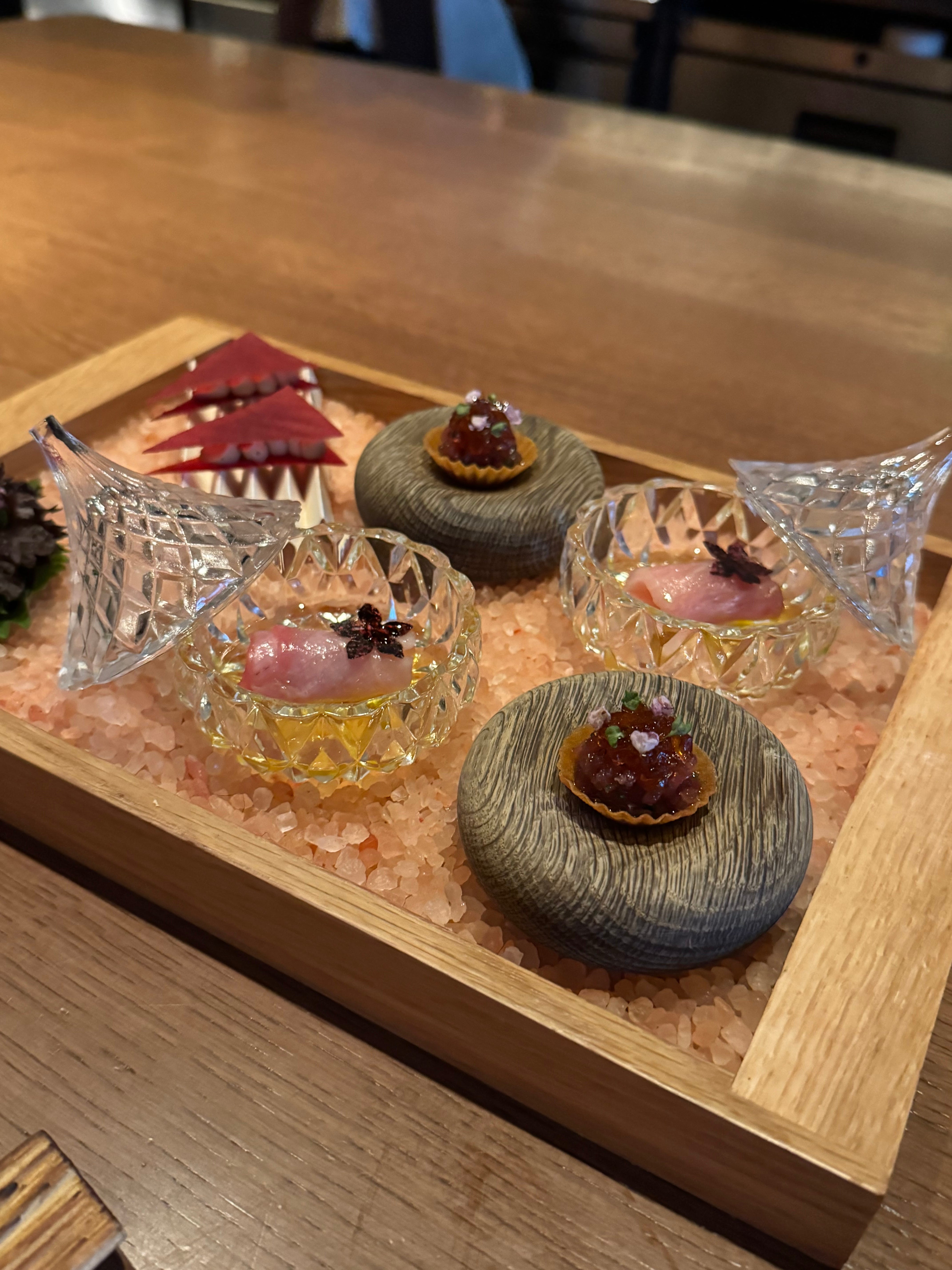
The highlight of the first few courses was the bluefin tuna. One fish, three cuts: belly aged for two weeks, an akami tartlet, and the bloodline served as a parfait beneath a thin red pepper wafer. I always love tasting the same fish cut three ways, and back to back they painted a picture of how differently one animal can read.
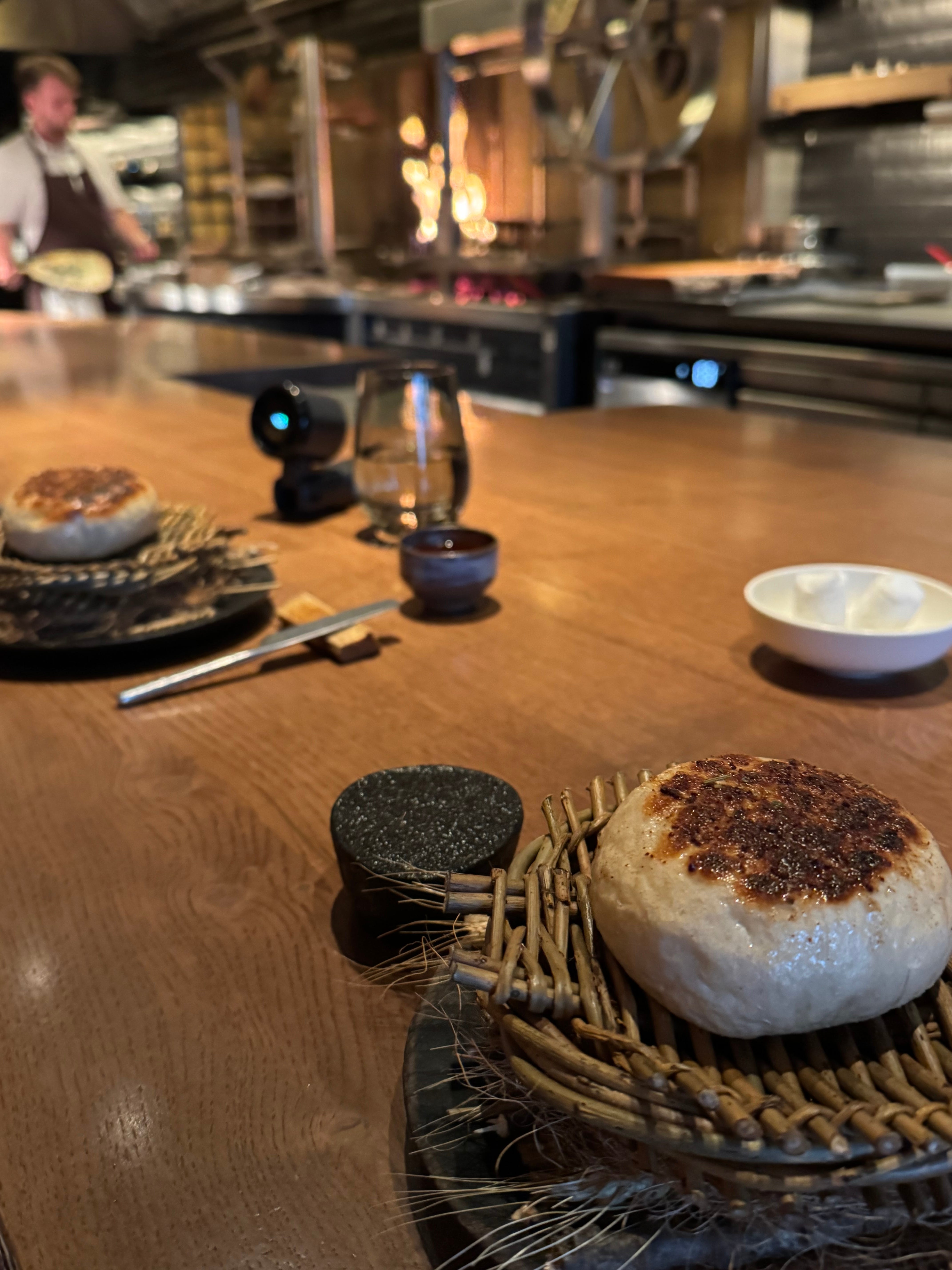
I must also mention the Yukon Gold potato bread, inspired by a Taiwanese bao, finished over the fire with dried miso and served with a vadouvan butter. It was a bread course with a point of view, and one that was representative of the rest of the menu.
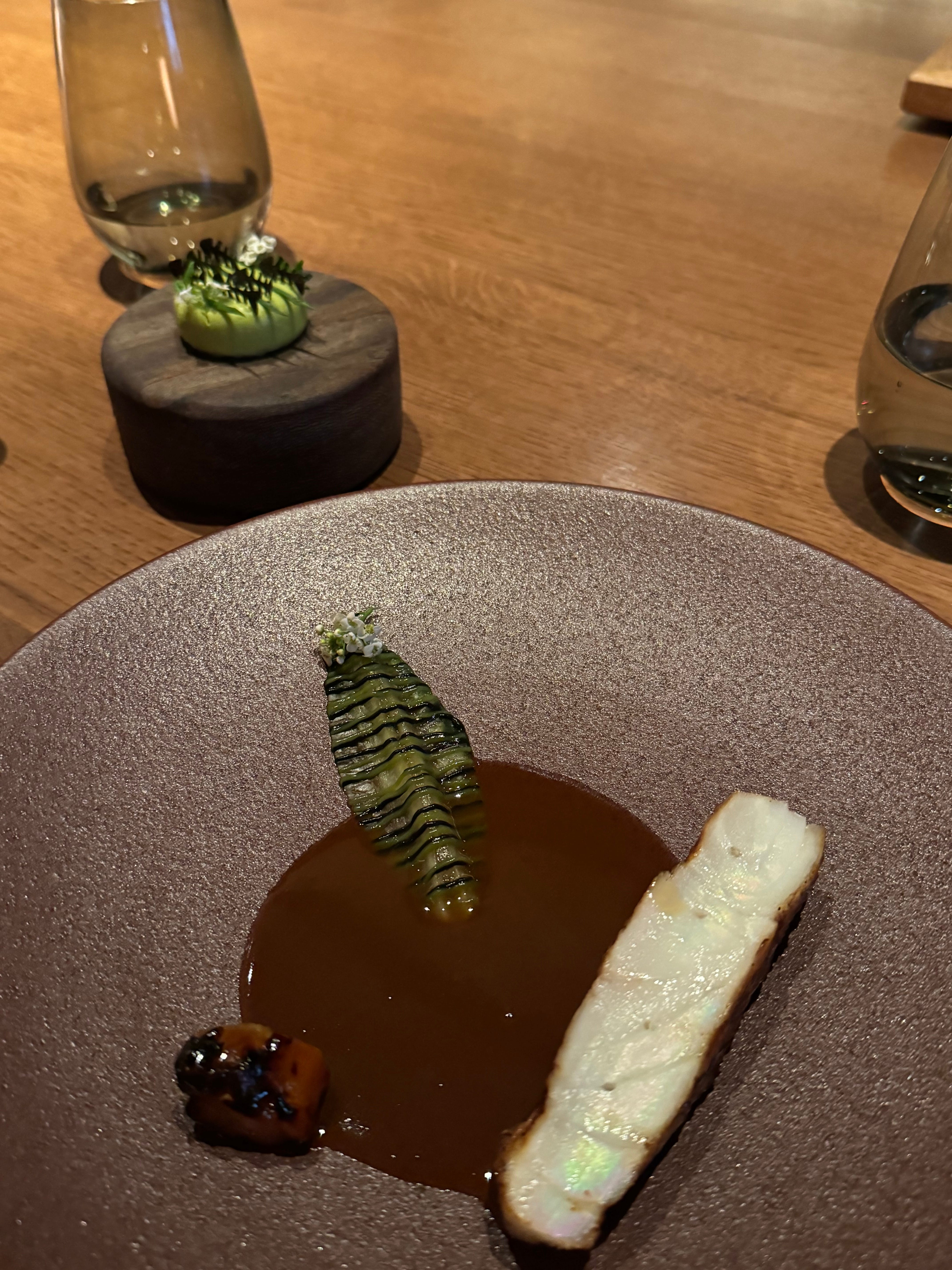
The first main, the turbot, was where the meal stalled. It arrived as a thick white cut with one edge caught brown over the fire, in a pool of dark sauce, to be eaten with a whipped lettuce. Turbot is a fish that carries a sweet, faintly mineral flavour, and I found neither the fish nor the sauce delivered it. Clench said Igni would be delicate. This dish was too delicate, and frankly a bit bland.
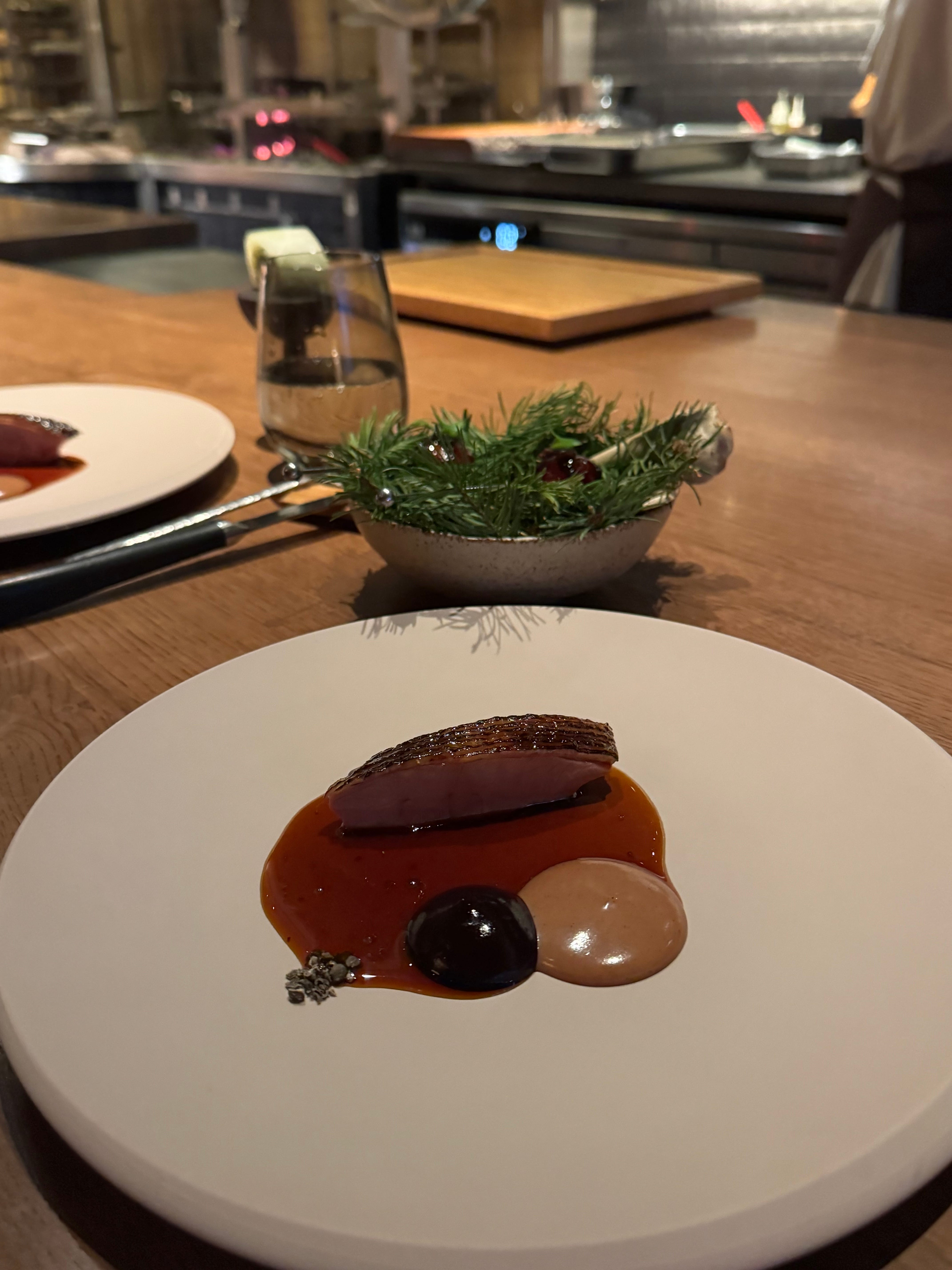
The duck came without ceremony. We enjoyed it more than the turbot, but by then the mains had flattened the evening, and it passed without leaving much behind.
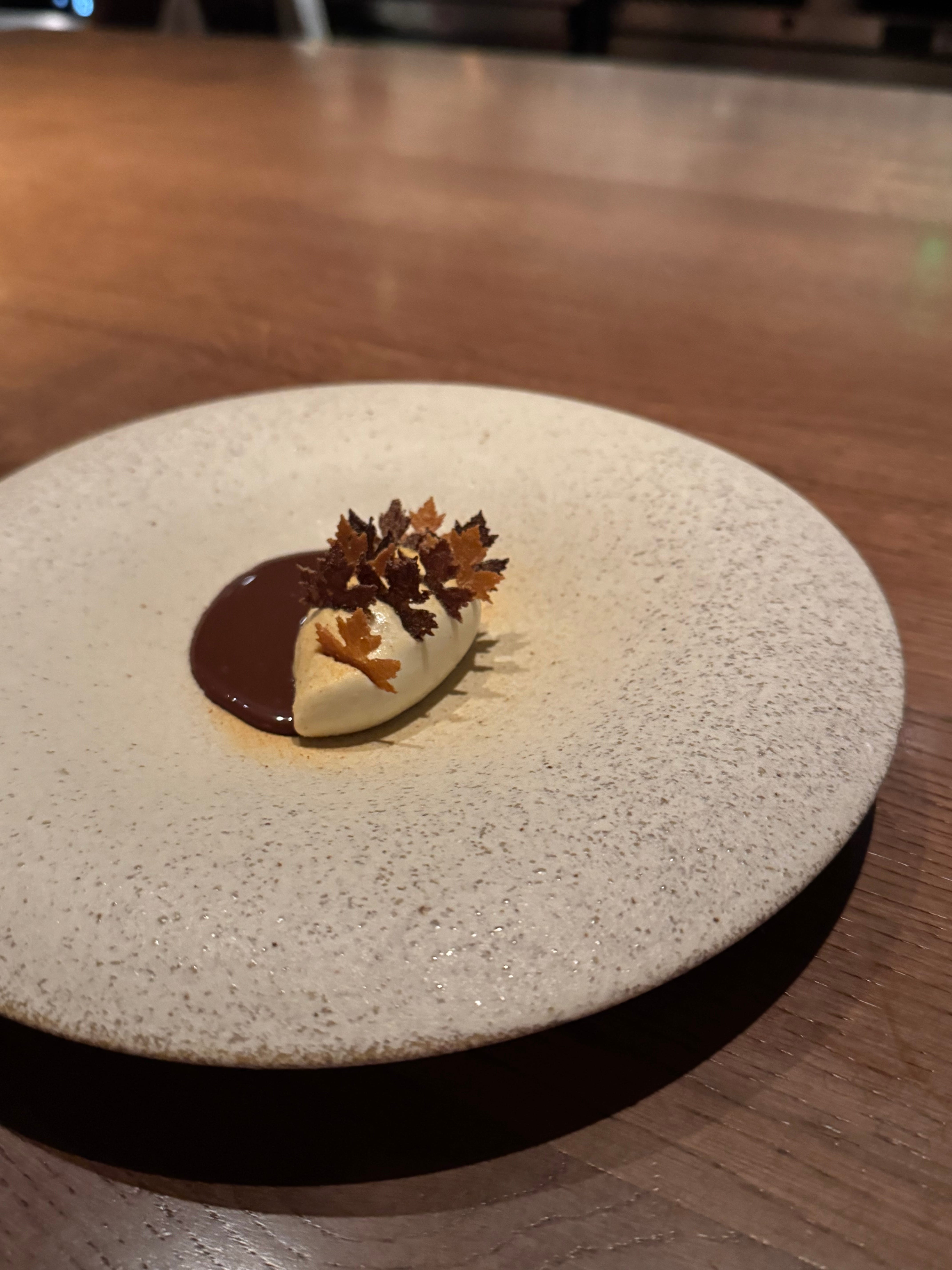
Things picked up with the desserts, the final course was a tofu ice cream, koji toasted and served with chocolate, and it carried a smokiness that had nothing to do with the grill.
Which brings us back to our initial question. Will Igni win a star?
On the first five dishes, absolutely. But the mains make me hesitate. It’s possible we caught an off night. Consistency, though, is one of Michelin’s stated criteria, and on this night, the mains did not deliver.
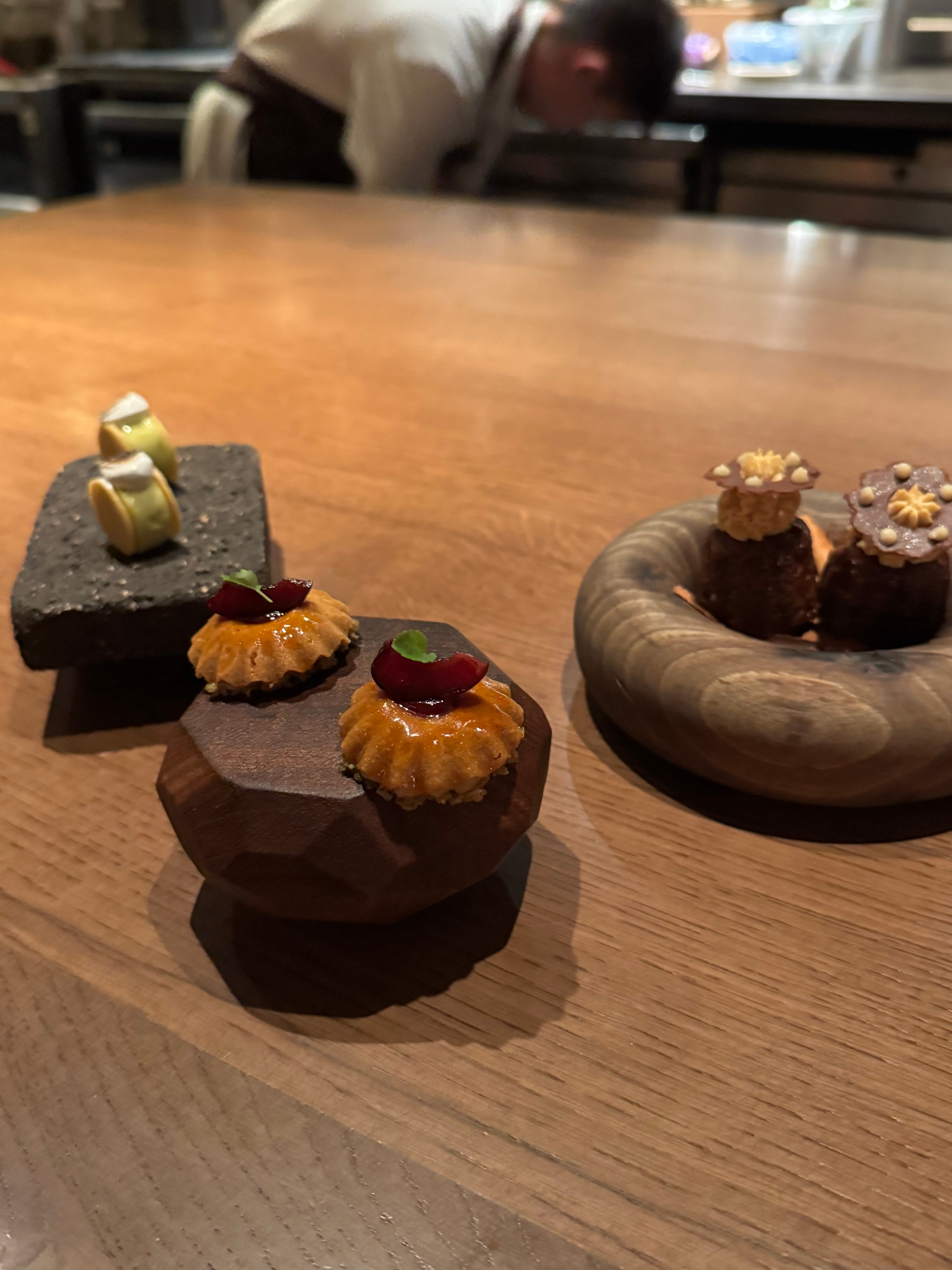
Table for Two lives at the intersection of food and culture, not simply recommendations, but a considered point of view on why dining matters, and where to find the best of London's table culture. If this piece resonated, please support us by subscribing.
Spot on review! Happy to accompany my new favourite food critic anywhere, anytime
Appreciate your review - been thinking to visit Igni!!