


A practical guide to understanding the London dining ecosystem. Use it before you book, after a great meal, or whenever you find yourself wondering: where did this restaurant come from?
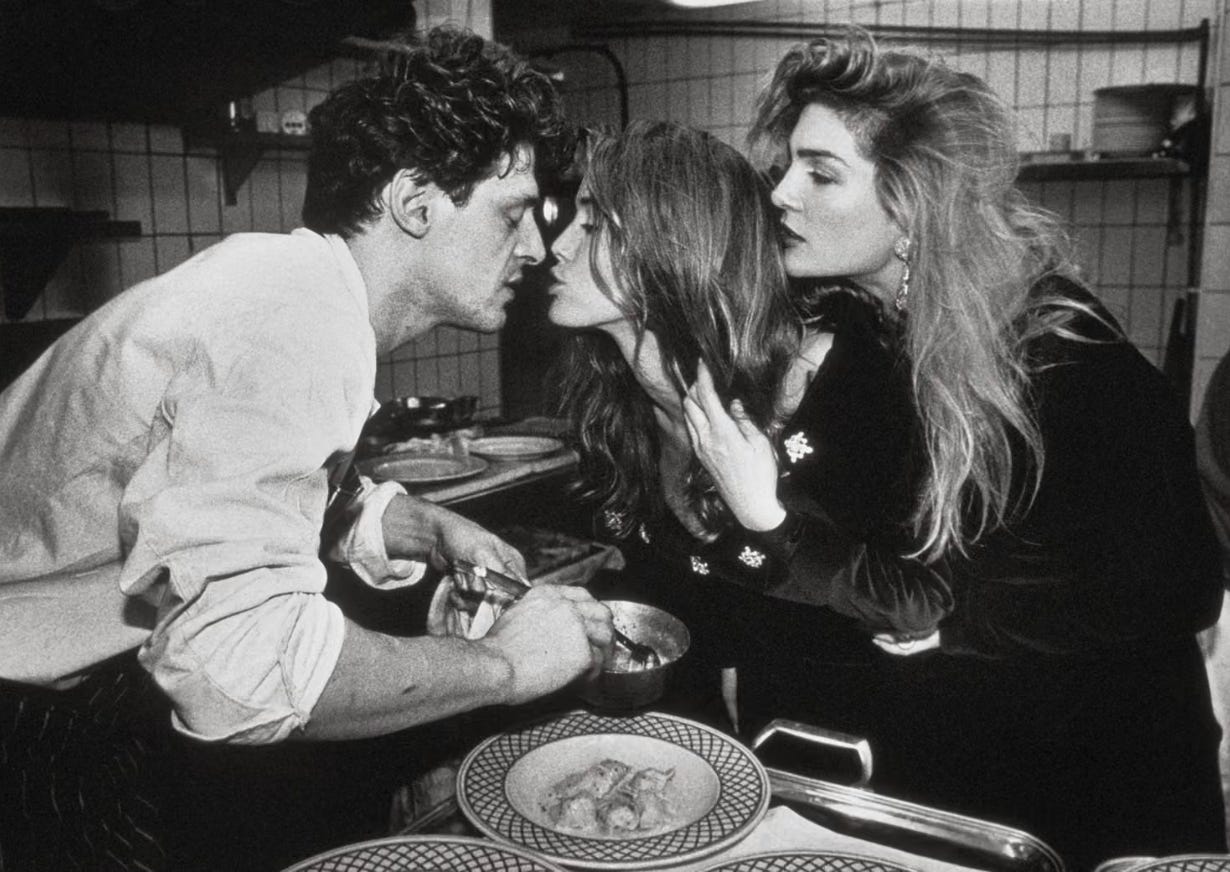
It was 2017, a full year before I’d move to London. I was visiting my best friend Ally, who’d relocated a few months earlier. It was a Saturday night and she booked us dinner at Social Eating House, a Jason Atherton restaurant in Soho. Back then the name Jason Atherton meant nothing to me. I was a snobby New Yorker, thoroughly convinced that New York was the greatest food city in the world.
I didn’t realise it at the time, but the meal I was about to eat was the direct product of a lineage of chefs that had changed the way London eats today.
Nearly ten years have passed since that dinner. I’ve eaten my way through hundreds, perhaps thousands, of London restaurants, and found myself more than a few times deep in a rabbit hole trying to understand the city’s enormous ecosystem.
London has expanded my food horizons more than any other city. A sweetbread taco at The Fat Badger opened my mind to a new cut of meat. A guacamole at Kol made without a single avocado, built entirely from British ingredients, was more interesting than any conventional alternative. The explosive West African flavours at Akoko exposed my palate to spices and combinations I had no framework for.
How did London become the culturally diverse, creative and innovative city it is today?
This is my attempt to answer that question, and to turn it into a practical guide you can actually use. Dining out is of course about the food, but it’s also about London’s culture. Understanding the context behind the meal, the chef’s point of view, the lineage behind the kitchen, it’s like developing an eye for art. Once you have it, every good meal becomes more interesting.
How to use this guide:
Each section below covers one of six movements that genuinely changed the way London eats.
01 The Fine Dining Lineage · 1967 - present
02 The Ingredient-Led Restaurant · 1987 - present
03 The British Identity · 1991 - present
04 The Asian Century · 1992 - present
05 The Counter Revolution · 2007 - present
06 The New Guard · 2010 - present
For each you’ll find the context, the key chefs, the restaurants that drove it, and where you can feel the influence today.
A note before we begin. These six movements are not a complete history of London dining, instead they’re a framework for understanding how the city eats today. It covers the movements that matter most for understanding why London’s best restaurants look and feel and cook the way they do.
Start anywhere and return whenever you need to. And next time you sit down somewhere great in this city, see if you can place it. Many of the best restaurants in the city were influenced by one or more of these movements.
01. The Fine Dining Lineage · 1967
The first restaurants to build London’s culinary reputation.
Before the late 1960s, the extent of London’s dining reputation internationally was beige food and soulless hotel restaurants. That all changed in 1967 when two brothers, Albert & Michel Roux, opened their restaurant La Gravoche in Mayfair.
La Gavroche, Albert & Michel Roux
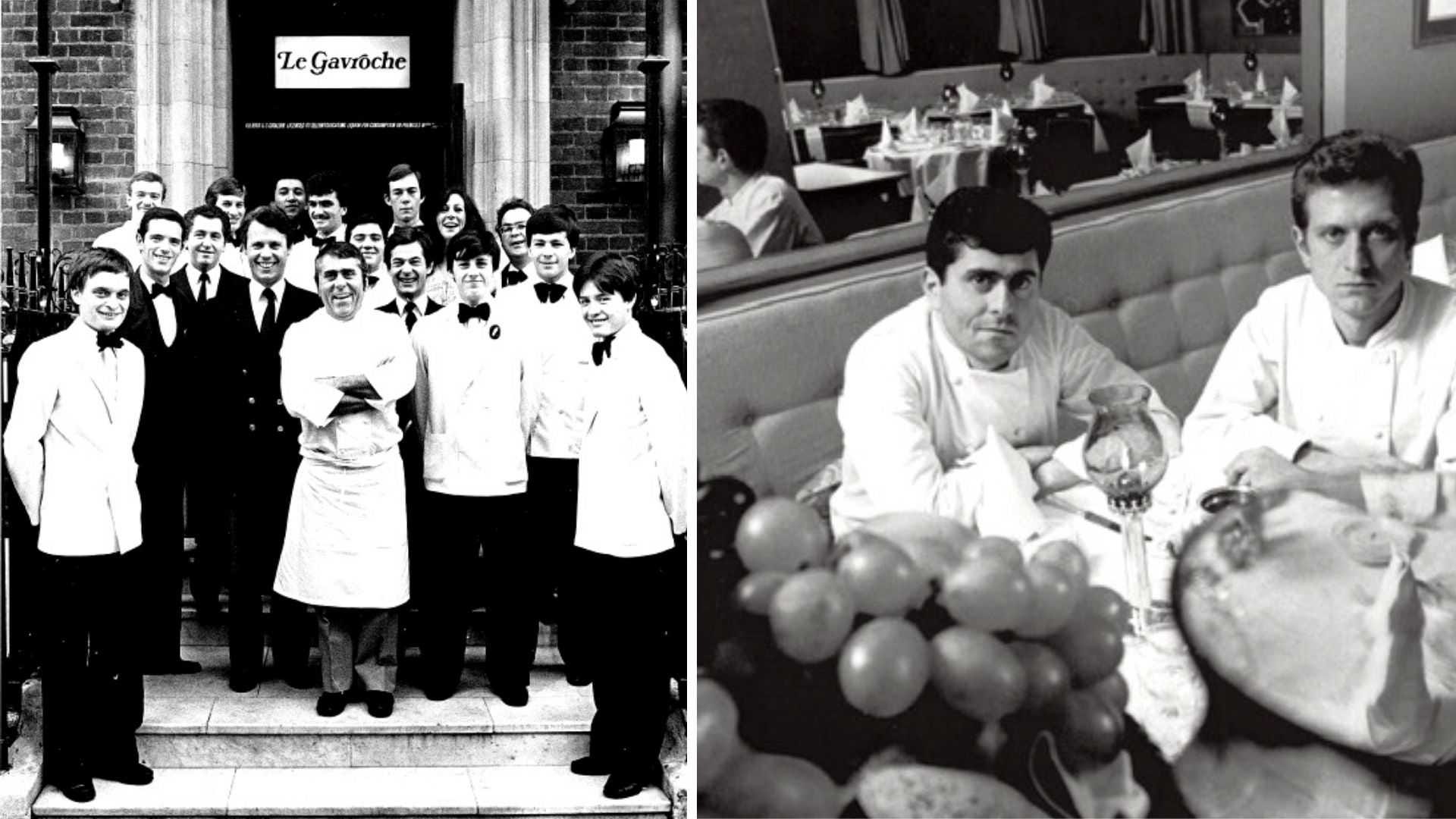
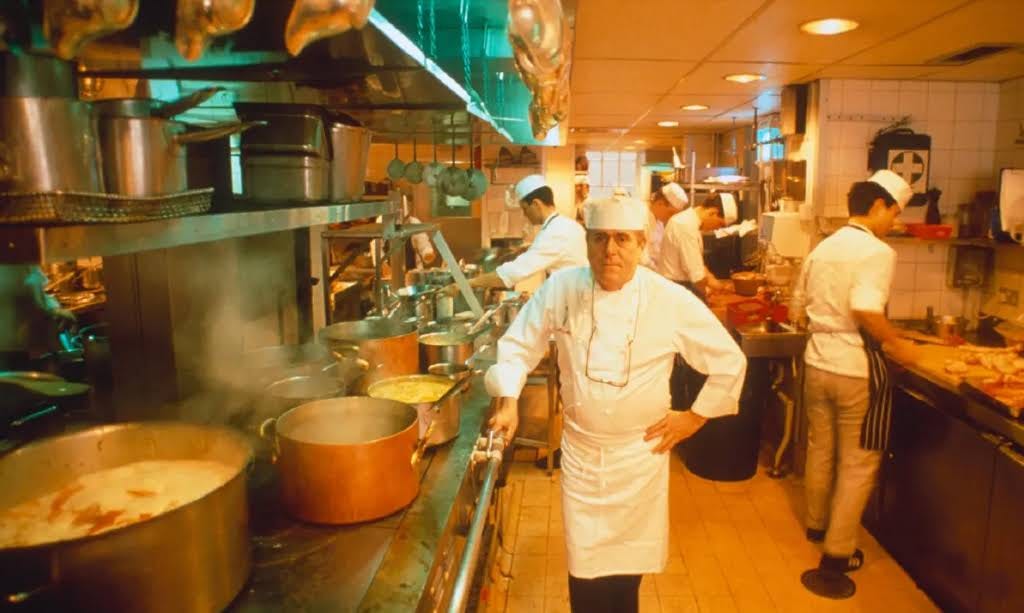
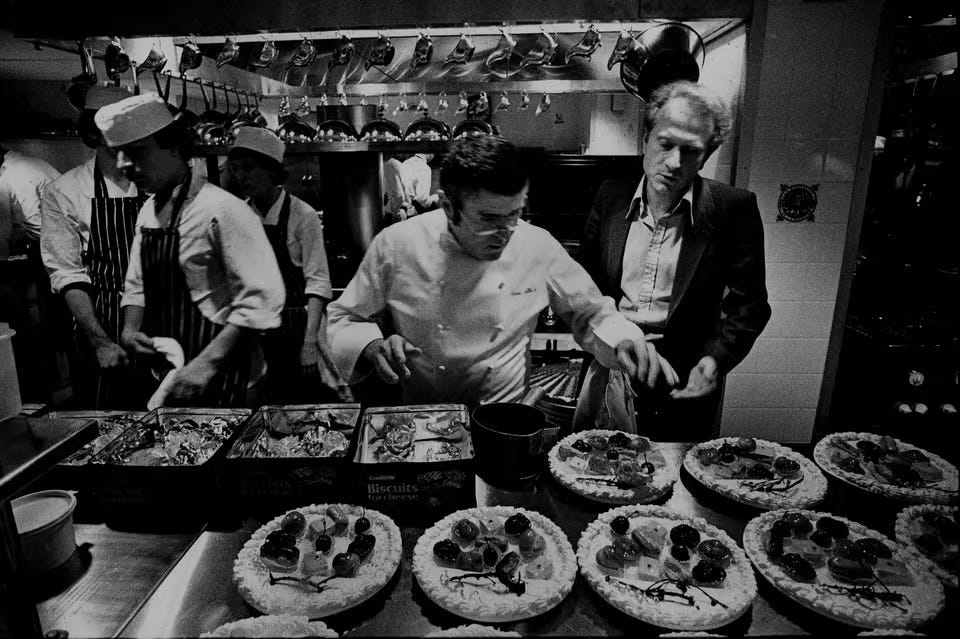
When Mayfair’s La Gavroche was awarded the UK’s first Michelin Star, then its second…and then its third, it changed the London dining culture forever. The Roux brothers left their imprint on the London dining scene by introducing serious French technique to the city, but their most lasting contribution to London dining was the lineage of chefs that we still get to experience and enjoy today.
When La Gavroche closed its doors, The Michelin Guide called it the restaurant without which the London dining scene of today would not have been possible. It closed after 56 years in January 2024. Gordon Ramsay now has the lease on the site, and backed Matt Abé to open his first solo restaurant in La Gavroche’s old location (it gained 2 stars upon opening).
Harvey’s, Marco Pierre White
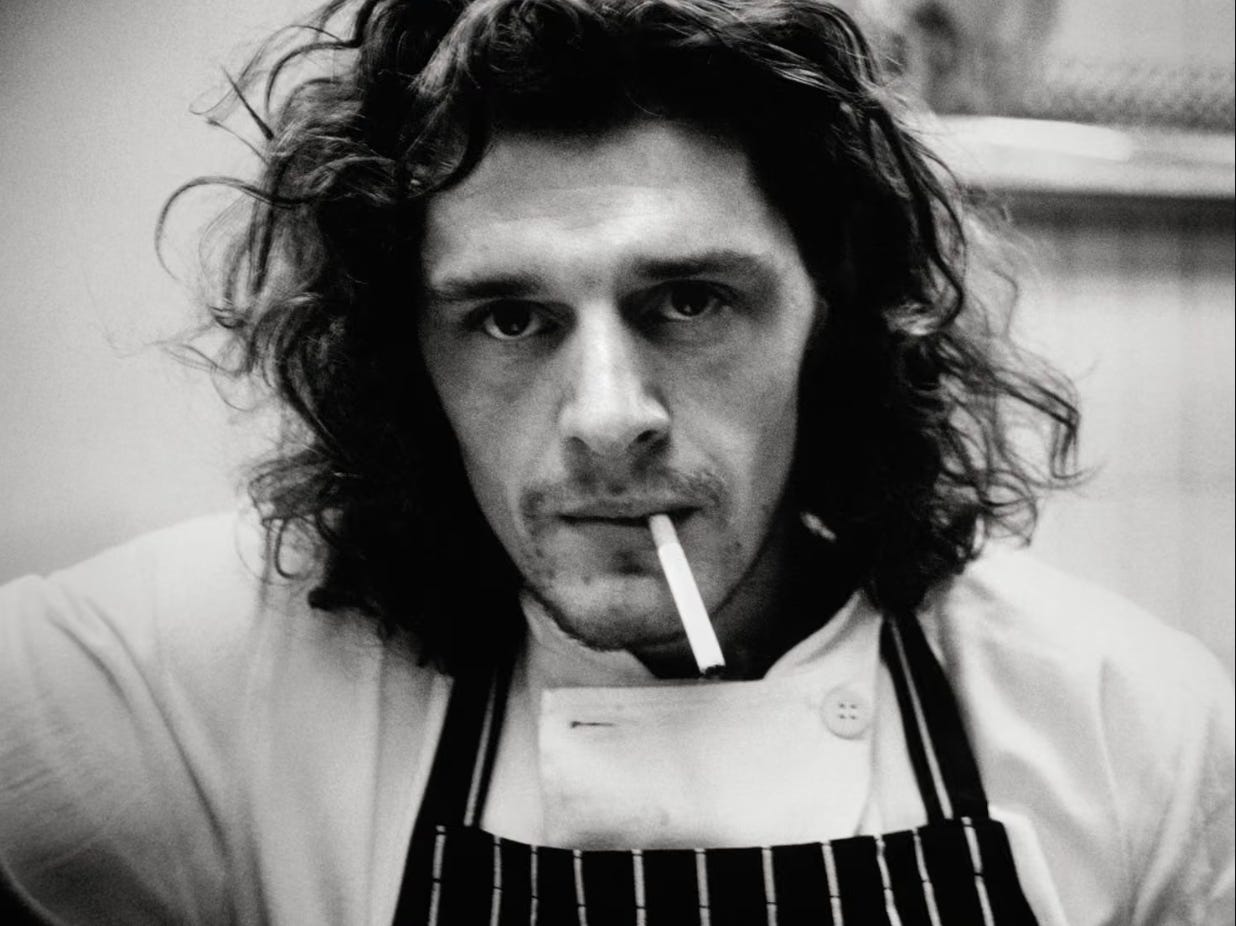
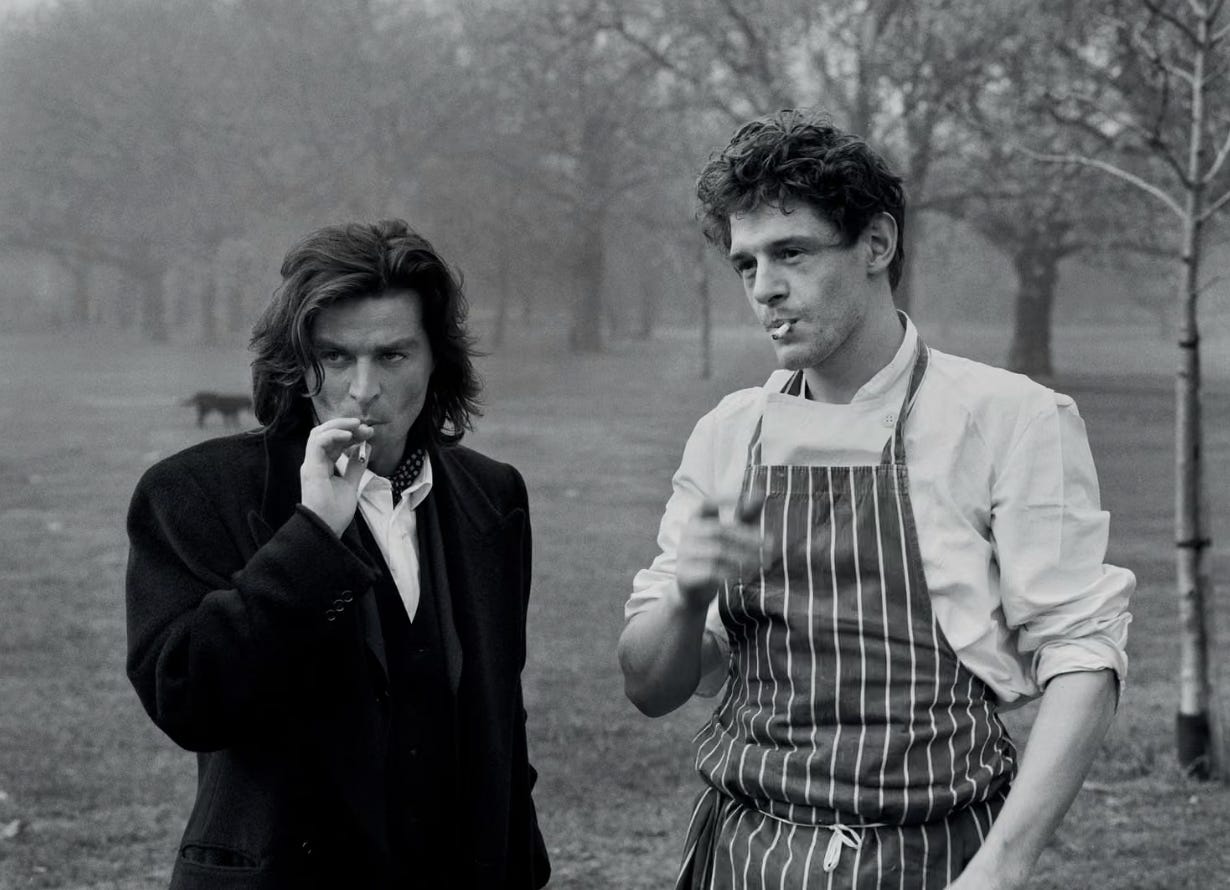
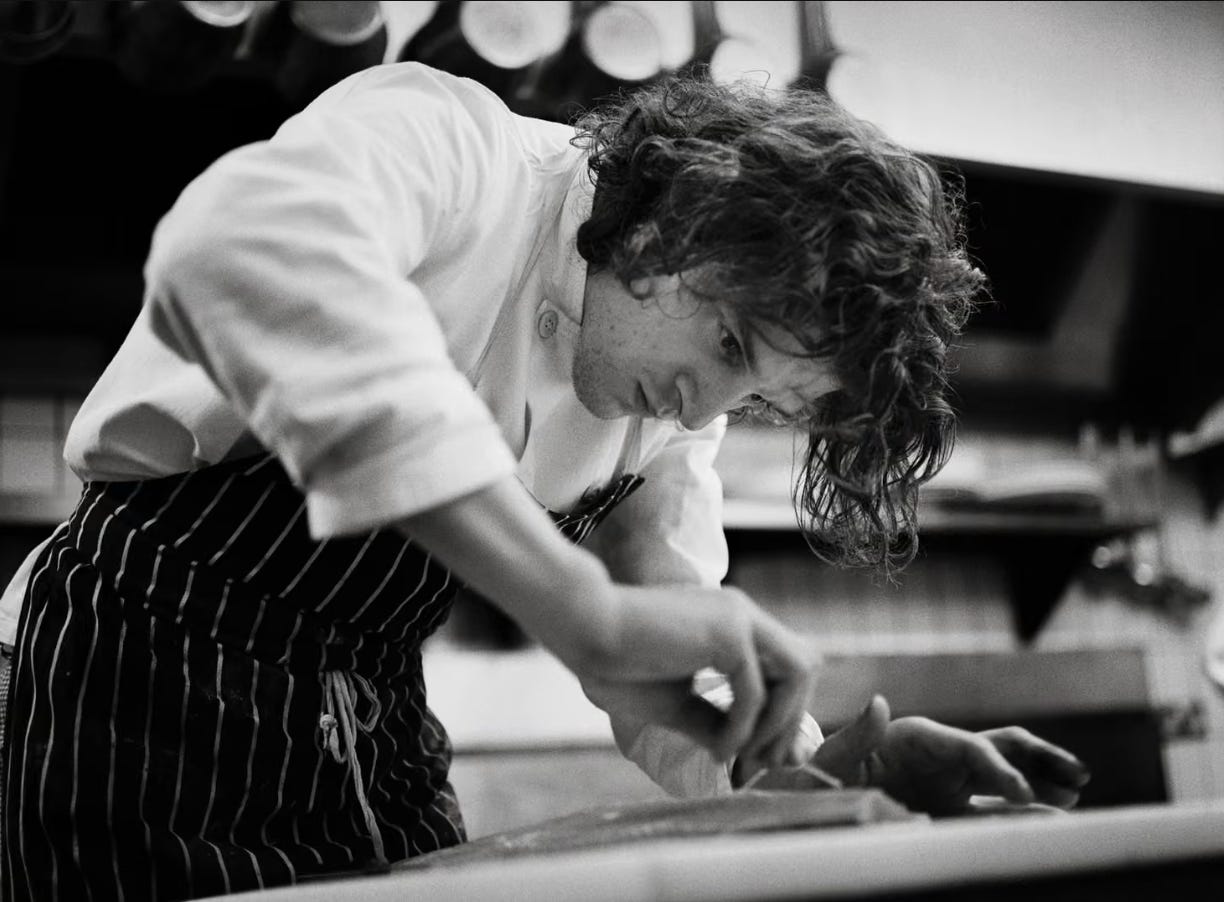
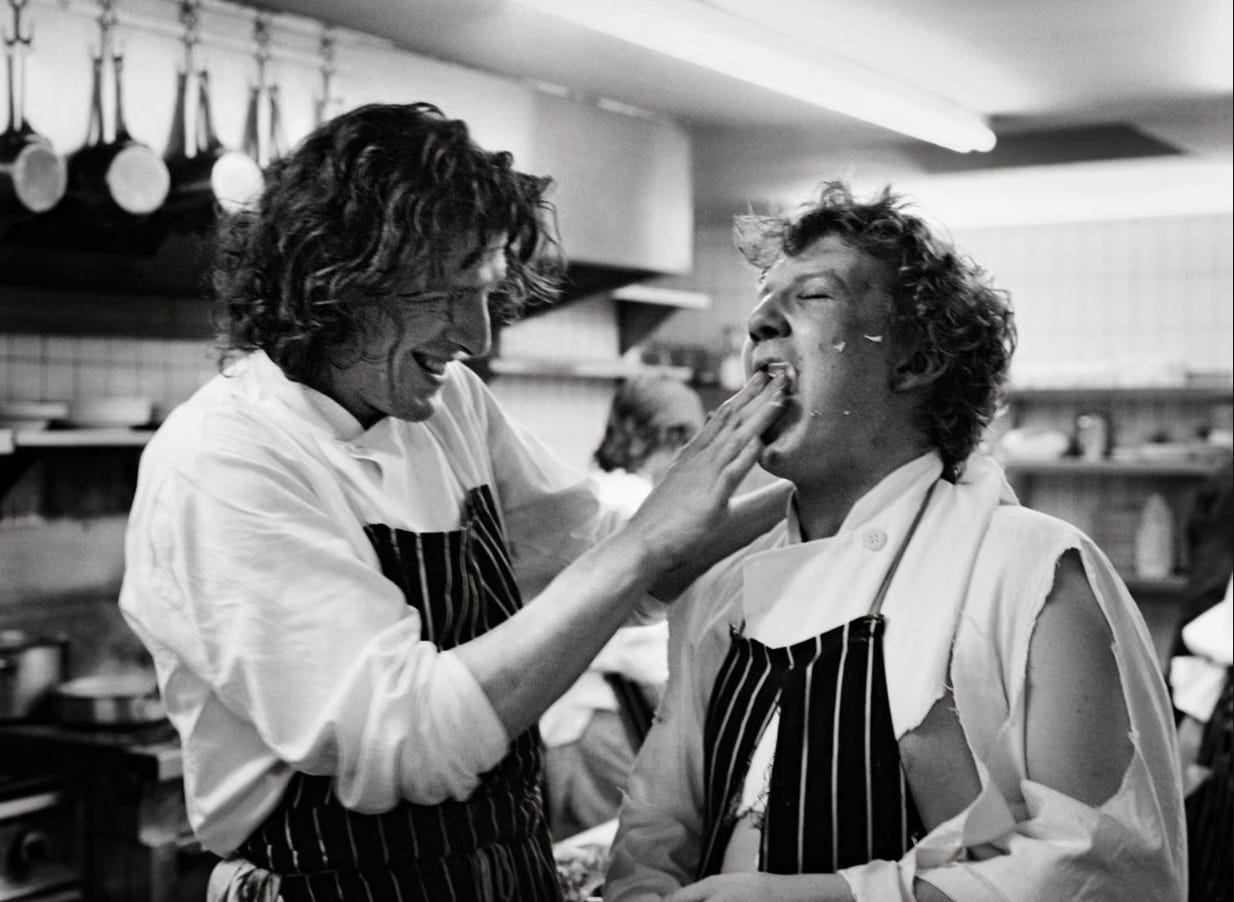
“He was savage on the line, and the very first to be become famous for treating his team with a humiliating lack of respect. But it worked in his case. His food was sublime, out of the box, and above all, delicious… He was the toughest and meanest person I had ever worked for… in the end, after a few years of not talking, I love him like a brother.” -Mario Batali
One of the most influential chefs to come from La Gavroche’s kitchen was Marco Pierre White. When he left La Gavroche he opened his own restaurant Harvey’s in 1987, where he was the youngest chef at 33 to be awarded three Michelin stars.
White didn’t just cook well, he made cooking visceral and exciting. His kitchens were notoriously charged and controversial. He was that chef who’d throw out a customer asking for salt. He also proved that the chef could be a cultural figure.
He then trained Gordon Ramsay, handed him the torch, and retired from cooking entirely.
Restaurant Gordon Ramsay, Gordon Ramsay
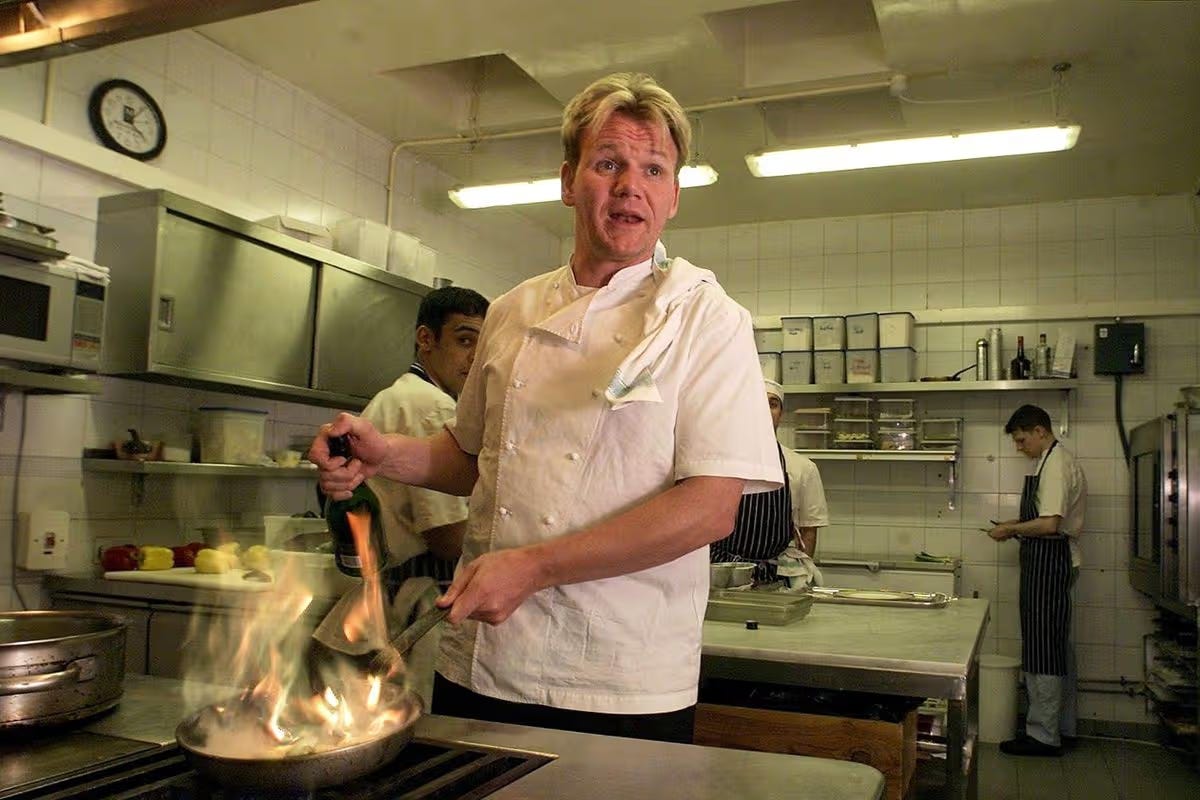
Gordon Ramsay opened Restaurant Gordon Ramsay in Chelsea in 1998, earned three Michelin stars by 2001, and has held them for 25 unbroken years. More importantly, his kitchens became the finishing school for the next generation: Clare Smyth, Jason Atherton, Matt Abé. These three chefs have eight stars between them.
Core, Clare Smyth
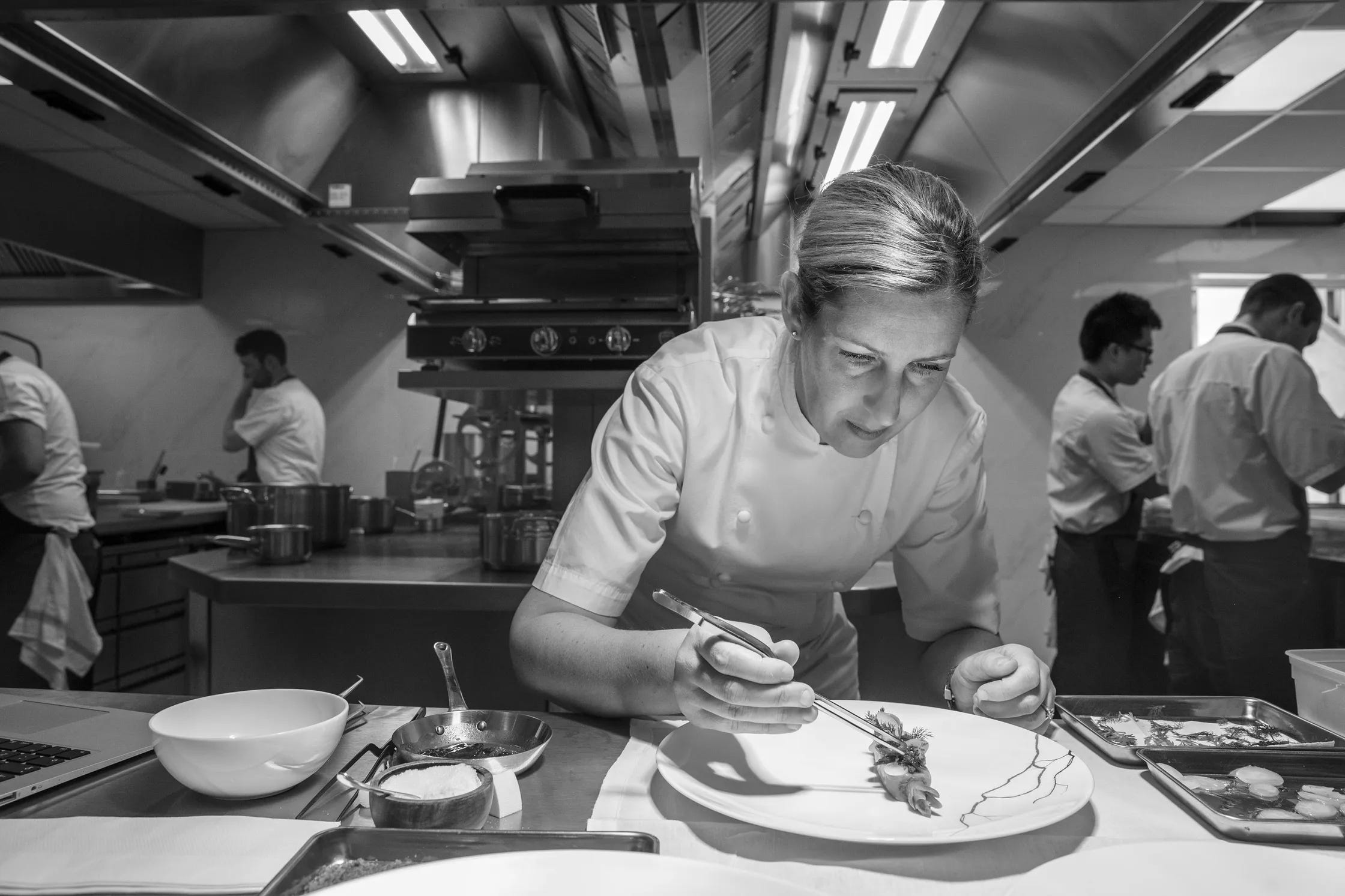
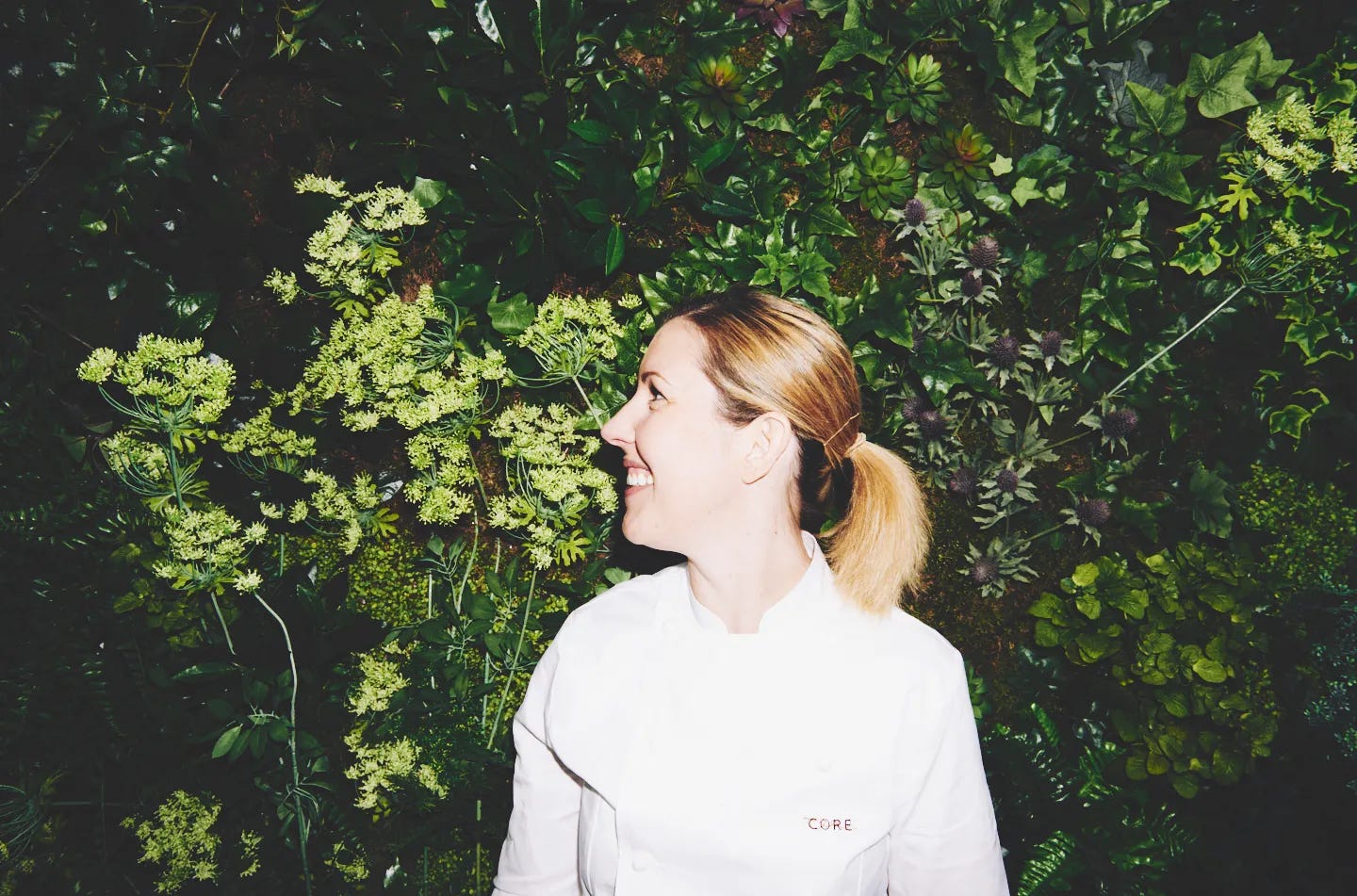
Clare Smyth trained under Ramsay and ran Restaurant Gordon Ramsay as chef patron. In 2016 she left that post to open Core in Notting Hill and by 2021 Core held three Michelin stars making Smyth the first British woman to independently earn that honour. Corenucopia in Belgravia just earned its first star. She is now building a multi-site starred portfolio without a corporate group, or a celebrity brand.
The Fine Dining Lineage Recap
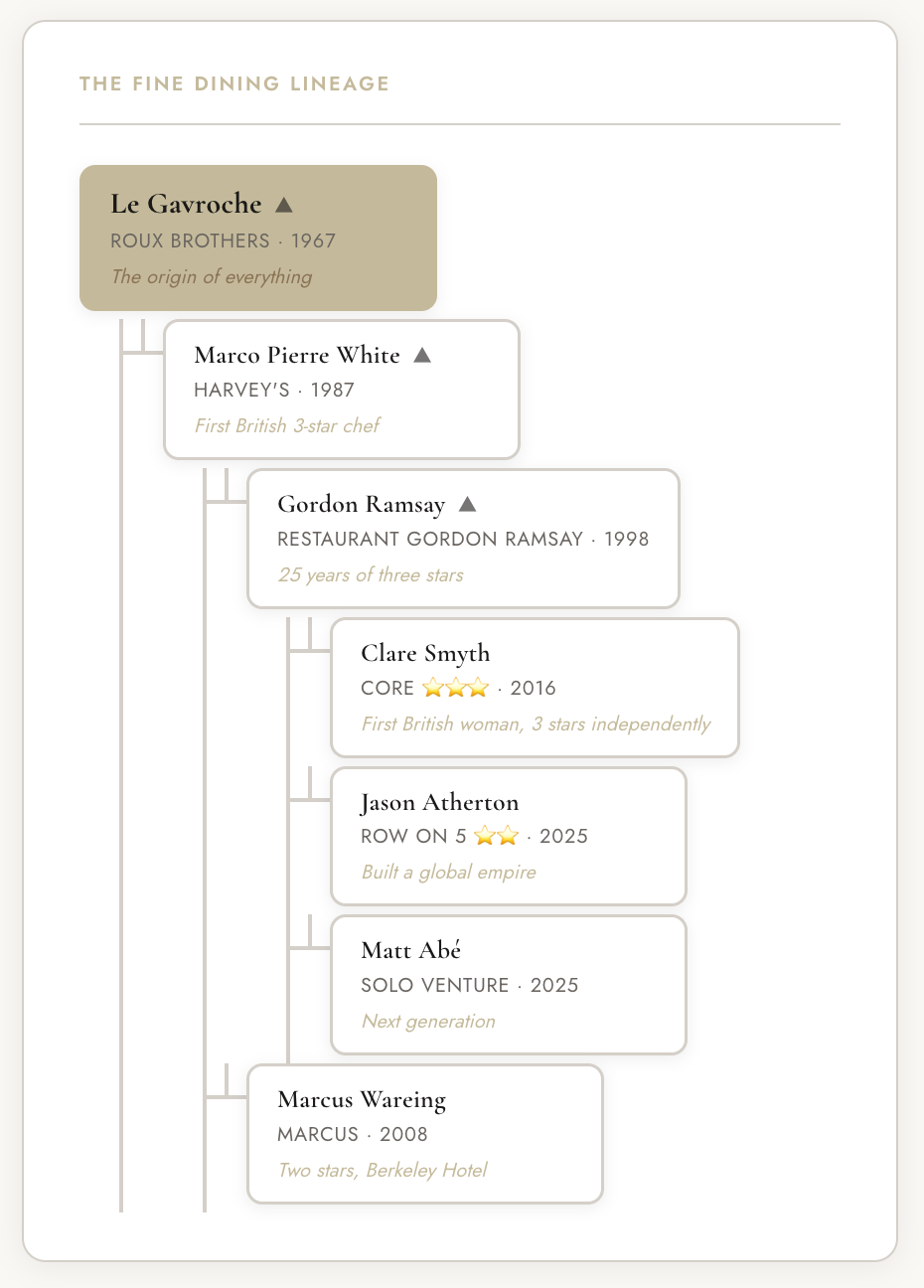
THE RESTAURANTS THAT DROVE THE MOVEMENT
Le Gavroche, Mayfair · Harvey’s, Wandsworth · Restaurant Gordon Ramsay, Chelsea · Core by Clare Smyth, Notting Hill
WHERE YOU CAN FEEL THE FINE DINING LINEAGE INFLUENCE TODAY
Core by Clare Smyth, Notting Hill - the purest living expression of the entire lineage. Three stars built entirely on one chef’s conviction.
Corenucopia, Belgravia - Clare Smyth’s second site. Earned its first Michelin star in 2026. Book before everyone else does.
Row on 5, Mayfair - Jason Atherton’s latest. Two stars from opening. A direct product of the Ramsay kitchen.
Restaurant Gordon Ramsay, Chelsea - 25 years of three stars. Go once to understand what this lineage produced at its most sustained.
The Ritz Restaurant - Spencer Metzger, another Ramsay alumnus, now holding two stars independently.
Bonheur by Matt Abé - After nearly two decades as the quiet force behind Restaurant Gordon Ramsay's three stars, Abé finally stepped out with his own restaurant on the site of Le Gavroche. The restaurant opened in Nov 2025 and by spring 2026, it had already earned two Michelin stars.
02. THE INGREDIENT-LED REVOLUTION · 1987
Two restaurants, one conviction: let the ingredient do the work.
In 1987, while Marco Pierre White was making cooking controversial and exciting in Wandsworth, something quieter and more far-reaching was happening in Hammersmith. There were no heavy sauces, no classical techniques, just the best seasonal ingredients, treated with complete attention and restraint. This type of cooking was designed to reveal ingredients, not to obscure them.
The River Café, Ruth Rogers
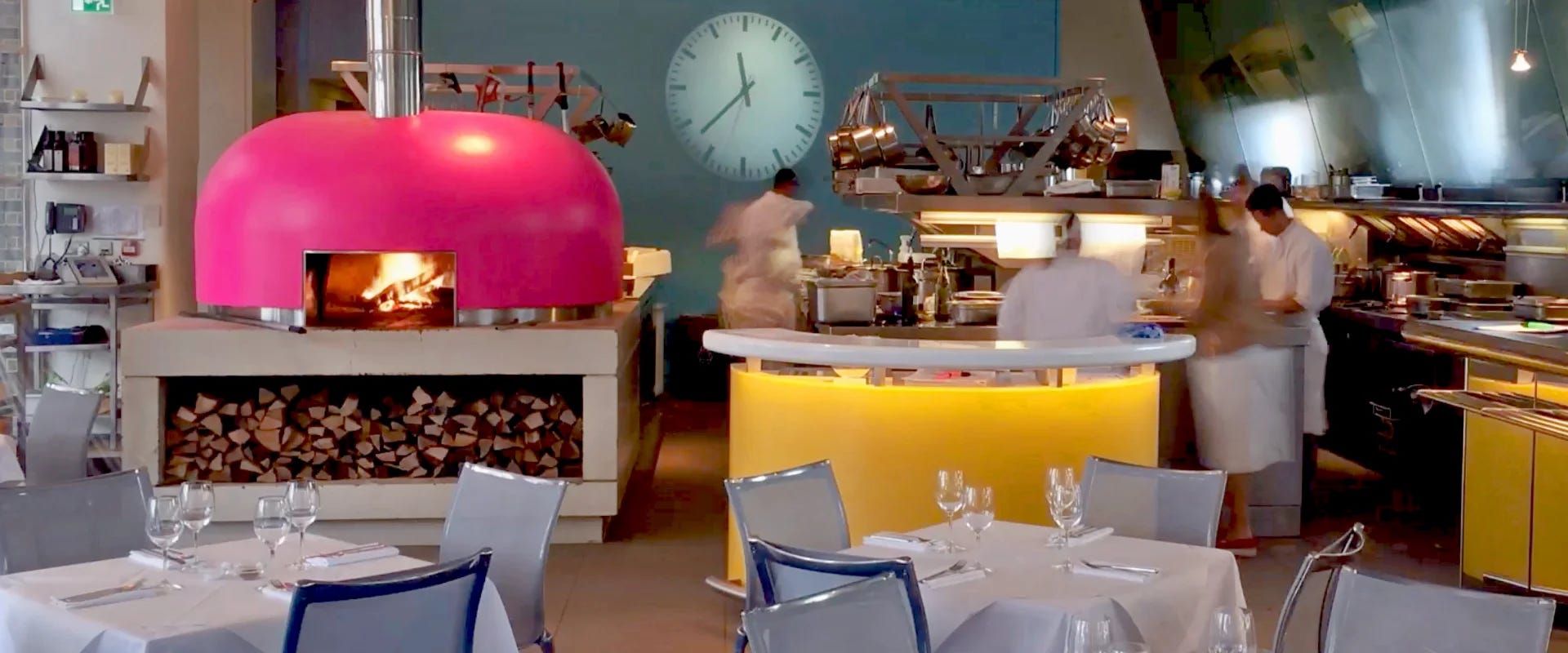
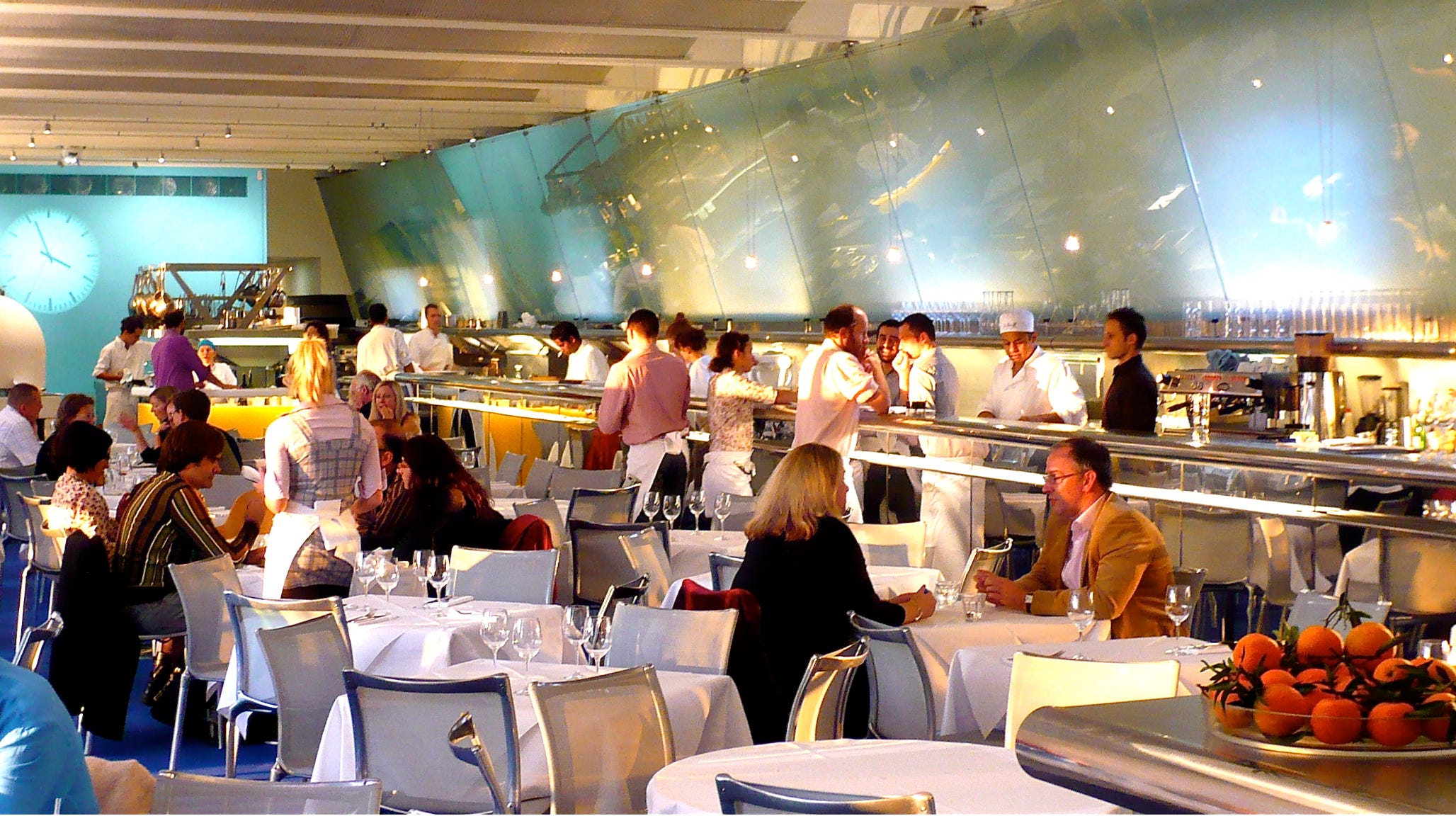
One of the most universally beloved restaurants for nearly 4 decades, The River Cafe, opened by Ruth Rogers and Rose Gray in Hammersmith in 1987. It started not as a restaurant, but as a staff canteen for the Richard Rogers Partnership, the architectural practice founded by Ruth’s husband Richard Rogers, the architect behind Heathrow Terminal 5 and the Pompidou Centre in Paris.
The kitchen ran differently, it was more collaborative, nurturing, the opposite of the aggressive French kitchens of the era. Not only has The River Cafe introduced a new type of cooking to London’s dining scene, their alumni changed British food culture permanently: Jamie Oliver, Theo Randall, Hugh Fearnley-Whittingstall all trained there. The River Cafe is still open and still holds its Michelin star.
St. John, Ferguson Henderson
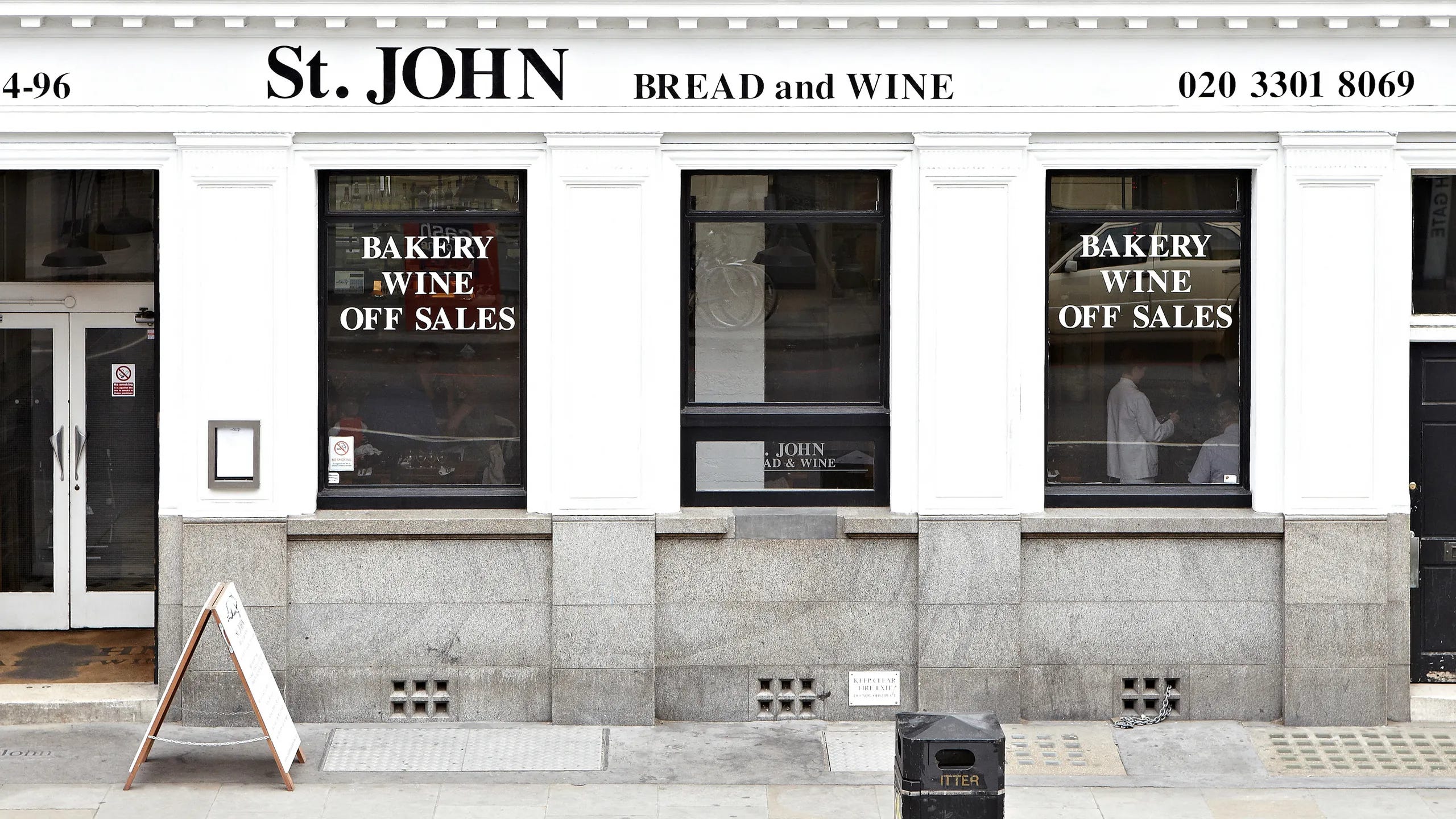
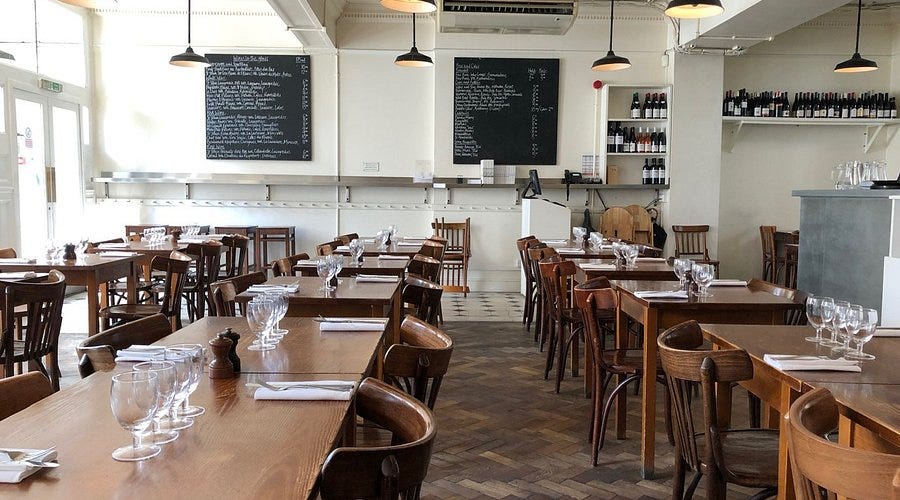
Opened by Ferguson Henderson in a former smokehouse near Smithfield meat market in Clerkenwell in 1994, St, John made the same argument from a completely different angle. Where The River Cafe looked to Italy, St. John looked inward to British ingredients, forgotten cuts, nose-to-tail eating, the conviction that bone marrow or a pig’s ear could be as interesting as any fillet if handled with skill and respect. Anthony Bourdain called it his favourite restaurant in the world. The bone marrow and parsley salad has been on the menu since 1994 and has never once come off.
The Ingredient Led Revolution Recap
THE RESTAURANTS THAT DROVE IT
The River Cafe, Hammersmith · St. John, Smithfield
WHERE YOU CAN FEEL THE INFLUENCE TODAY
The River Cafe, Hammersmith - still open, still the benchmark. Go for lunch. Order whatever is seasonal.
St. John, Smithfield - order the bone marrow and parsley salad. The most important dish in London’s culinary history.
Brat, Shoreditch - wood fire cooking built entirely around ingredient quality. The turbot over fire is a direct descendant of River Cafe thinking.
Mountain, Soho - same philosophy, different expression. World’s 50 Best #94.
Rochelle Canteen, Shoreditch - seasonal, stripped back, completely itself. The St. John school at its most relaxed.
Quality Chop House, Clerkenwell - British produce taken seriously
Ducksoup, Soho - the wine bar expression of the same conviction. Weekly changing menu, nothing unnecessary.
Ottolenghi - the ingredient-first philosophy applied to Middle Eastern cooking, and changed how an entire generation cooks at home.
03 THE BRITISH IDENTITY · 1991
When British food became part of the culinary conversation.
The fine dining lineage had built London’s international reputation largely through French technique. The ingredient-led revolution had begun to change what chefs thought about produce. But neither had answered a simpler and more important question: what does it mean to cook British food and be proud of it?
The Eagle, Michael Belben and David Eyre
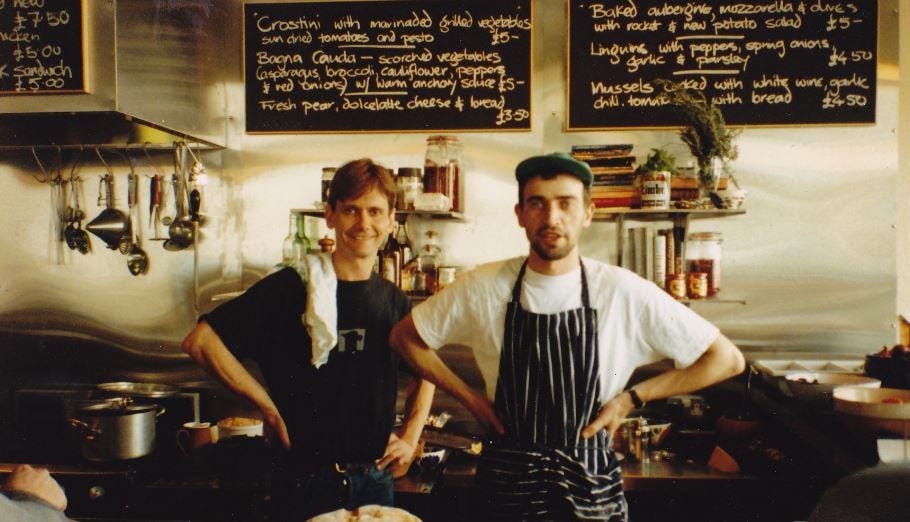
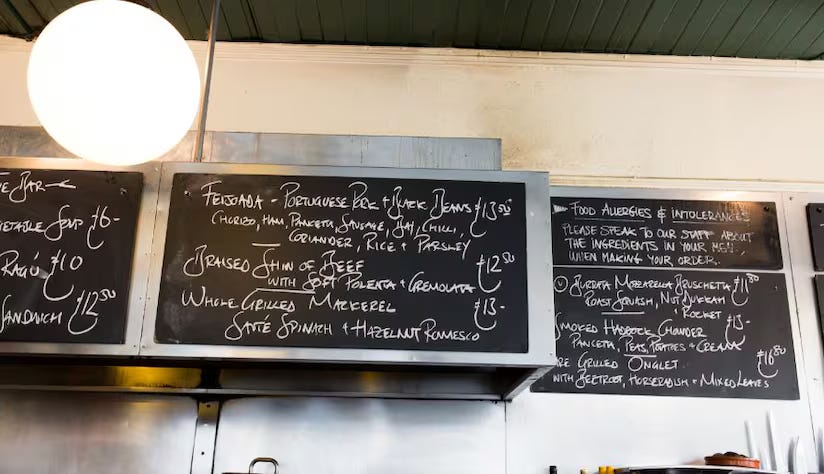
The Eagle on Farringdon Road in Clerkenwell in 1991, answered that question without trying to. A small pub with a blackboard menu, a bar you ordered from, and food that was genuinely good. There was no dress code and you didn’t have to make a reservations. The London gastropub was born. Every pub restaurant traces back to this room.
What followed over the thirty years since The Eagle opened was a slow revolution in how London thought about neighbourhood cooking. Not in Michelin starred dining rooms, but in pubs on residential streets, in neighborhood restaurants that feel like living rooms, in the kind of places we now go on Sunday afternoons.
The British Identity Recap
THE RESTAURANTS THAT DROVE IT
The Eagle, Farringdon
WHERE YOU CAN FEEL THE INFLUENCE TODAY
The Eagle, Farringdon — still open, still doing exactly what it always did. Go to understand where it all started.
The Anchor & Hope, Waterloo — no reservations, blackboard menu, serious cooking. The direct heir to The Eagle.
The Harwood Arms, Fulham — the only pub in London with a Michelin star. British produce, game, unfussy execution.
The Pelican, Notting Hill — named London’s best pub 2025. The gastropub movement’s most culturally relevant current expression.
The Fat Badger, Marylebone — the most creative cooking in the Public House Group.
04. THE ASIAN CENTURY · 1992
How London became the most exciting city in the world for Asian dining outside of Asia.
London’s relationship with Asian food is unlike any other city’s. It began with the curry houses that fed generations of Britons after the war, important, beloved, but rarely taken seriously as fine dining. That all changed in the 90s.
Hakkasan, Alan Yau
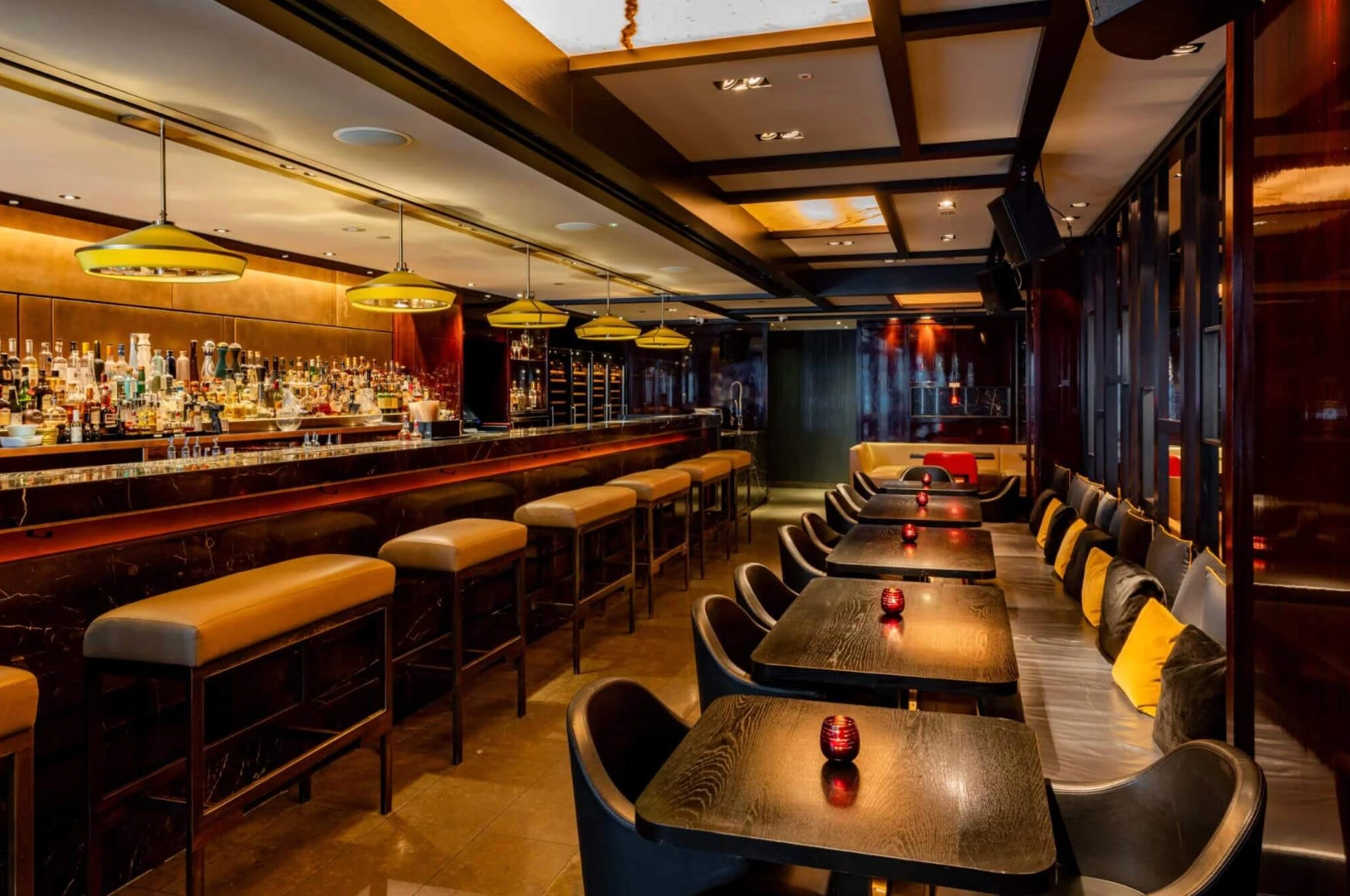
Alan Yau opened Wagamama in 1992, introducing a generation of Londoners to a new kind of casual eating: bench seating, electronic ordering, accessible noodles at a time when that format simply didn’t exist in London. Then in 2001 he opened Hakkasan in a Soho basement and made Chinese food glamorous, Michelin-starred and globally covetable for the first time. The combination of outstanding Cantonese cooking with serious design and nightlife energy was completely new and it was copied everywhere.
Dishoom, Shamim & Kavo Thaler
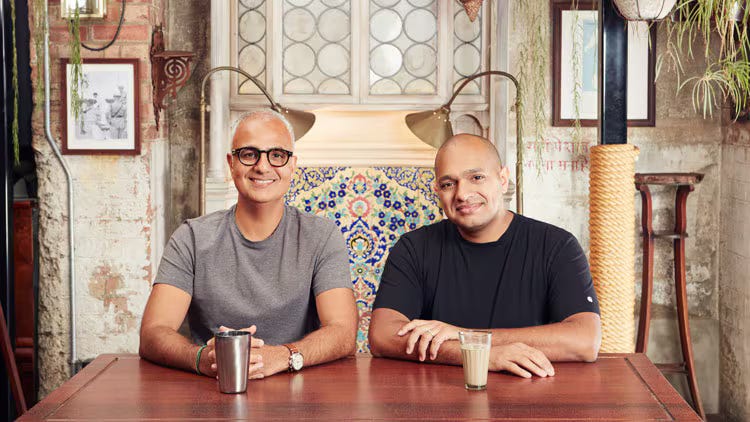
Founded by Shamil and Kavi Thakrar in 2010, reframed Indian dining entirely. Not a curry house, not fine dining: a Bombay café built around storytelling, extraordinary hospitality, and dishes that became part of London’s shared food vocabulary. Between the beloved bacon naan roll and the house black daal (my personal favourite) Dishoom created a new category and showed the city that Indian food could be a complete cultural experience, not just a meal.
JKS Restaurants, Jyotin, Karam and Sunaina Sethi
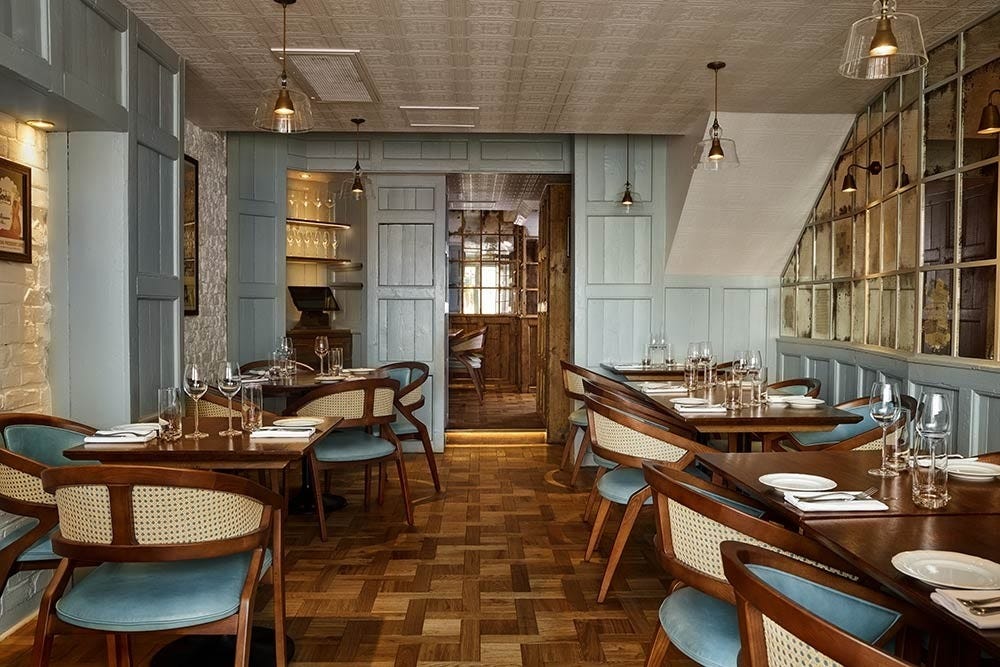
Siblings Jyotin, Karam and Sunaina Sethi, opened Trishna in Marylebone in 2008 as the first restuarant in the JKS Restaurants group. Then they opened Gymkhana in Mayfair in 2013 which went on to earn two Michelin stars in 2015, becoming the first classic Indian restaurant in the world to do so, it didn’t just change London. It changed the global conversation about what Indian cuisine could be. JKS then built the city’s greatest hospitality incubator, backing BAO, Hoppers, Berenjak and Plaza Pastor, proving that the most interesting food in the world is diverse, and that London is the best place on earth to make that argument.
What this movement unlocked was bigger than Asian food alone. By proving that cuisines outside the European fine dining canon deserved the same critical rigour, it paved the way for an explosion of new cuisines being taken seriously at the highest level. West African cooking arrived with Akoko and Chishuru in Fitzrovia, each earning a Michelin star. Mexican food found its most ambitious London expression at Kol. Greek food is having its moment at Oma. The Asian Century didn’t just change how London eats, it changed which types of cuisines get to be taken seriously.
The Asian Century Recap
THE RESTAURANTS THAT DROVE IT
Wagamama · Hakkasan, Mayfair · Yauatcha, Soho · Trishna, Marylebone · Dishoom · Gymkhana, Mayfair
WHERE YOU CAN FEEL THE INFLUENCE TODAY
Gymkhana, Mayfair - two stars, the restaurant that changed the global conversation about Indian fine dining.
Ambassadors Clubhouse, Mayfair - JKS’s latest starred opening. More casual than Gymkhana, equally considered.
BAO, Soho - the pork bun, the horlicks ice cream. One of the best value meals in London. Backed by JKS.
Hoppers, Soho - Sri Lankan food taken seriously for the first time in London. Backed by JKS.
Berenjak, Soho - Persian food, the argument extended further still. Backed by JKS.
Akoko, Fitzrovia - West African fine dining. The Asian Century’s argument now being made for African cuisine.
Kol, Marylebone - Mexican food built from British ingredients. The argument extended to Latin America.
Hakkasan, Mayfair - still the benchmark for Chinese fine dining in London. Alan Yau’s most lasting contribution.
05. THE COUNTER REVOLUTION · 2007
Fourteen seats on Frith Street that changed how London eats.
The best seat in any restaurant is at the bar. You’re closer to the kitchen, closer to the action, and the meal feels less like a transaction. London took a while to figure this out, and when it did, it was because of one restaurant.
Barrafina, Sam and Eddie Hart
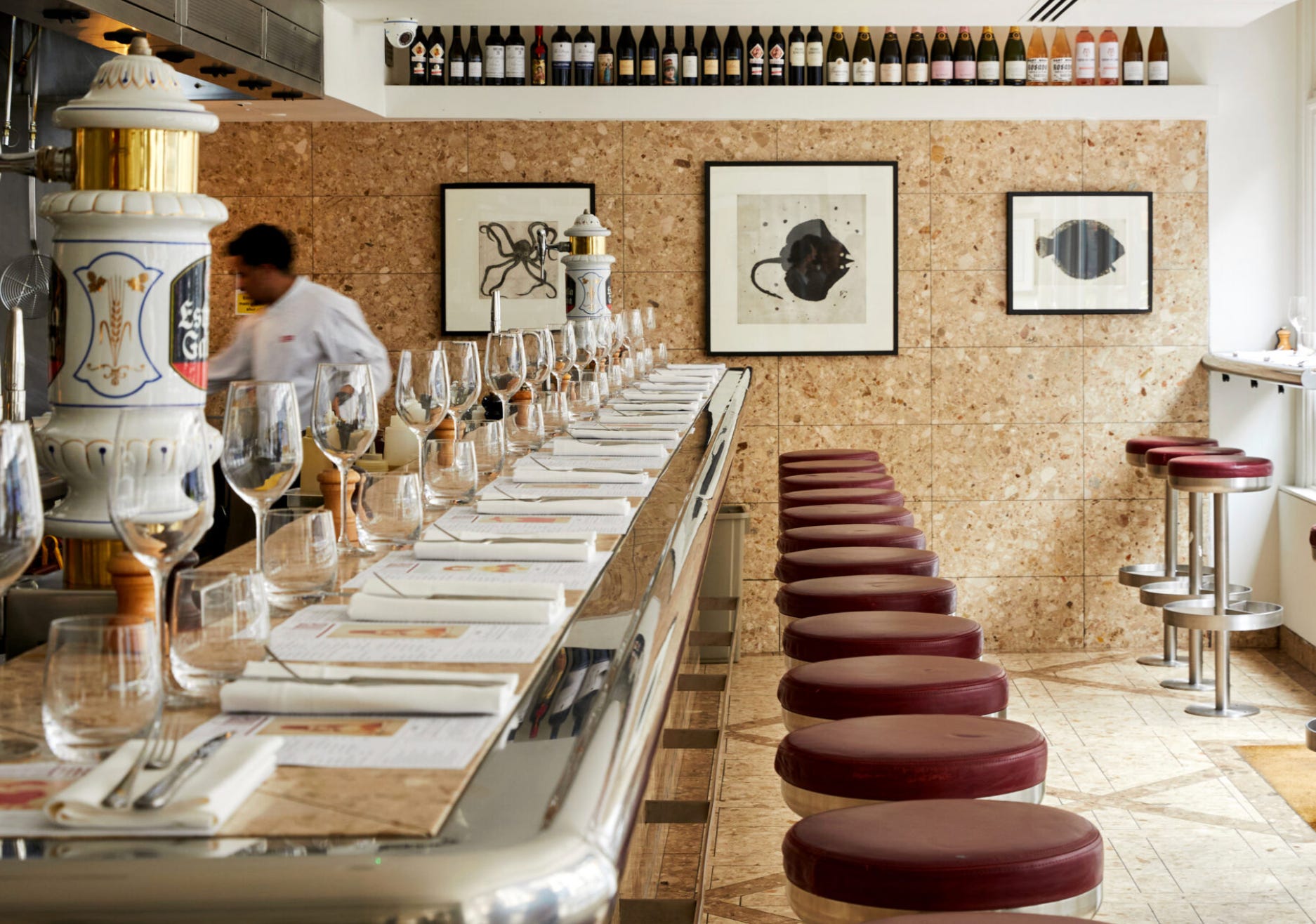
Barrafina opened by Sam and Eddie Hart on Frith Street in Soho in 2007 with fourteen seats at a marble counter, no reservations, the best Spanish food in London served at eye level with the kitchen. The queue around the block was its own marketing tool. Barrafina proved that proximity to the kitchen adds something, that watching a chef work while you eat changes the feeling of the meal entirely, and that a queue, can make you feel like you’ve earned your meal.
The counter revolution it triggered was the prototype for London’s best casual dining. Open kitchens, counter seating and no reservations was a format that barely existed before 2007 are now so embedded in the city’s dining culture that it’s easy to forget someone had to invent them. All of it traces back to fourteen seats on Frith Street.
The Counter Revolution Recap
THE RESTAURANTS THAT DROVE IT
Barrafina, Frith Street, Soho · 2007
WHERE YOU CAN FEEL THE INFLUENCE TODAY
Barrafina, multiple sites - Frith Street for the original. Sit at the counter. Order the tortilla.
Padella, Borough Market - handmade pasta, no reservations, queue around the block. Barrafina’s most direct heir.
Brat, Shoreditch - counter seating, open kitchen, wood fire. The format at its most dramatic and most delicious.
Kiln, Soho - standing counter, completely open kitchen, charcoal cooking. No ceremony whatsoever.
Smoking Goat, Shoreditch - Counter, open kitchen, the chef is part of the experience.
Ducksoup, Soho - bar seating as the best seat in the room. The counter revolution applied to a natural wine bar.
06 THE NEW GUARD · 2010
In a city this loud, the only thing that cuts through is a point of view.
The previous movements were defined by individual restaurants and chefs with a singular conviction. This era is defined by operators who, in collaboration with the most promising chef talent, have built a model and applied it across multiple sites without losing the idea that made the first one worth going to. In a city as loud and competitive as London, strong conviction and point of view is what cuts through online, and by word of mouth
The groups leading the way:
Super 8 - backs chefs with a specific point of view and gives them the time to develop it.
Portfolio restaurants: Smoking Goat, Kiln, Brat, Mountain.
dcco. - David Carter builds something with complete conviction, then starts again from scratch. Each concept more interesting than the last.
Portfolio restaurants: SMOKESTAK, Manteca, Oma, Agora
Public House Group - the pub as a community living room. Their pubs and restaurants are some of the cosiest in the city!
Portfolio: The Pelican, The Bull, The Hero, Fat Badger, The Hart, CeCe’s
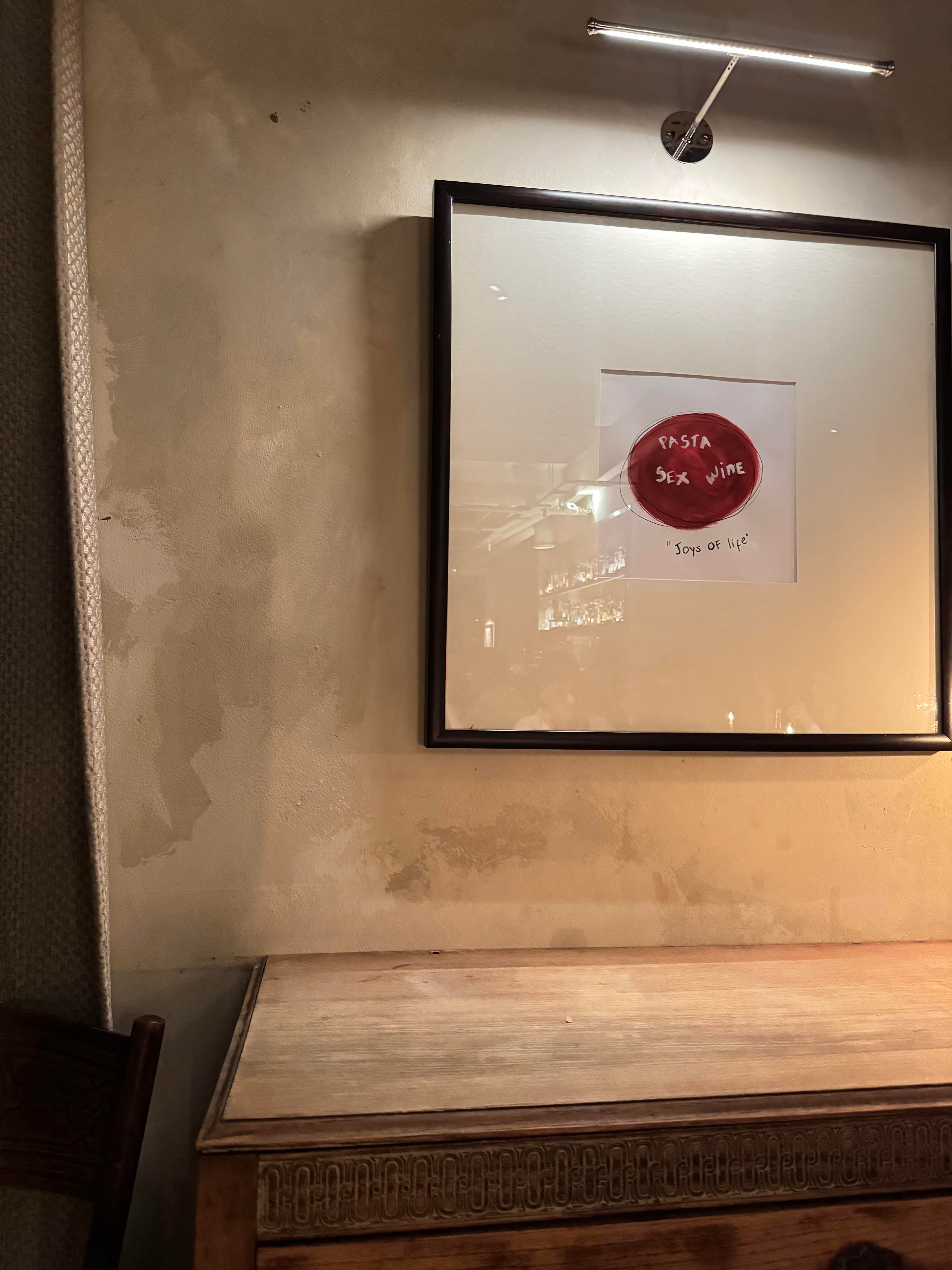
The Pachamama Group - design-led restaurants where the concept is the experience and the art on the walls does as much work as the food.
Portfolio: Zēphyr, Bottarga, Nina, Lagana
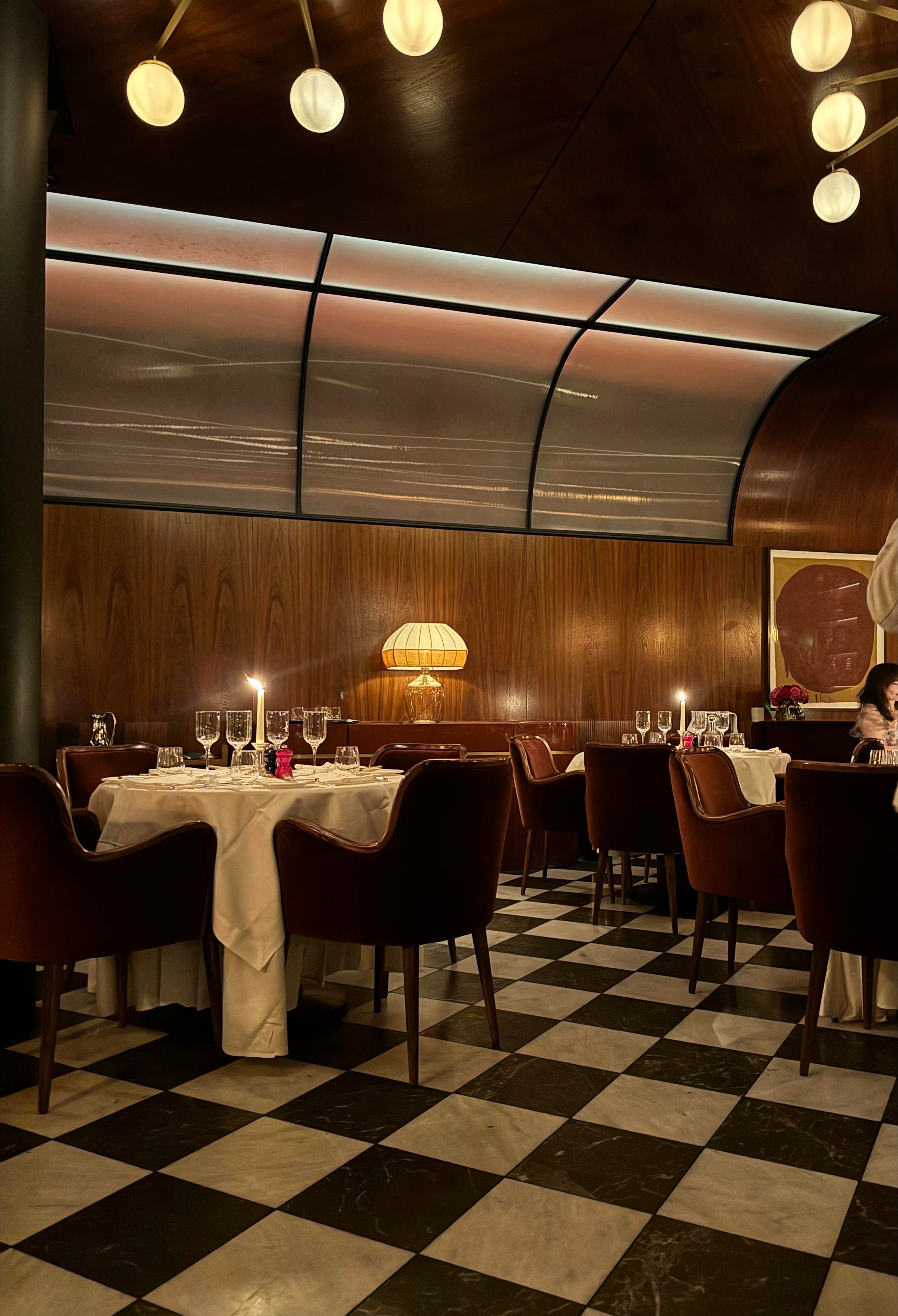
Difficult Name - New York Italian in stunning spaces. Zero PR, word of mouth only.
Portfolio: The Dover, Dover Street Counter, Martinos
THE CHEFS TO KNOW
Tomas Parry - Brat & Mountain
Meedu Saad - Impala, Kiln
Jorge Paredes - Oma (previously executive chef at Sabor)
Chris Leach - Manteca
George Williams - The Fat Badger (previously at Dorian and the River Cafe)
Max Coen - Dorian (previously at Ikoyi and Kitchen Table)
THE RESTAURANTS THAT DROVE IT
SMOKESTAK, Shoreditch · Kiln, Soho · Brat, Shoreditch · The Pelican, Notting Hill · Mount St, Mayfair
WHERE YOU CAN FEEL THE INFLUENCE TODAY
Brat, Shoreditch - World’s 50 Best #65. The argument for craft over hype proven at the highest level. Order the turbot.
Mountain, Soho - World’s 50 Best #94. Super 8’s model working exactly as intended.
Manteca, Shoreditch - The conviction-led model proven over time.
Oma, Borough Market - Greek food at a level London hadn’t seen before. Upstairs for the full experience.
Mount St, Mayfair - 200 artworks, steak tartare next to a Warhol. The argument that dining is culture made physical.
The Fat Badger, Marylebone - the New Guard neighbourhood model at its best.
Dorian, Notting Hill - the next generation of the New Guard. One star, conviction-led, building slowly.
Noble Rot, Bloomsbury - wine culture and serious cooking without pretension. The New Guard instinct applied to the wine bar.
London dining today
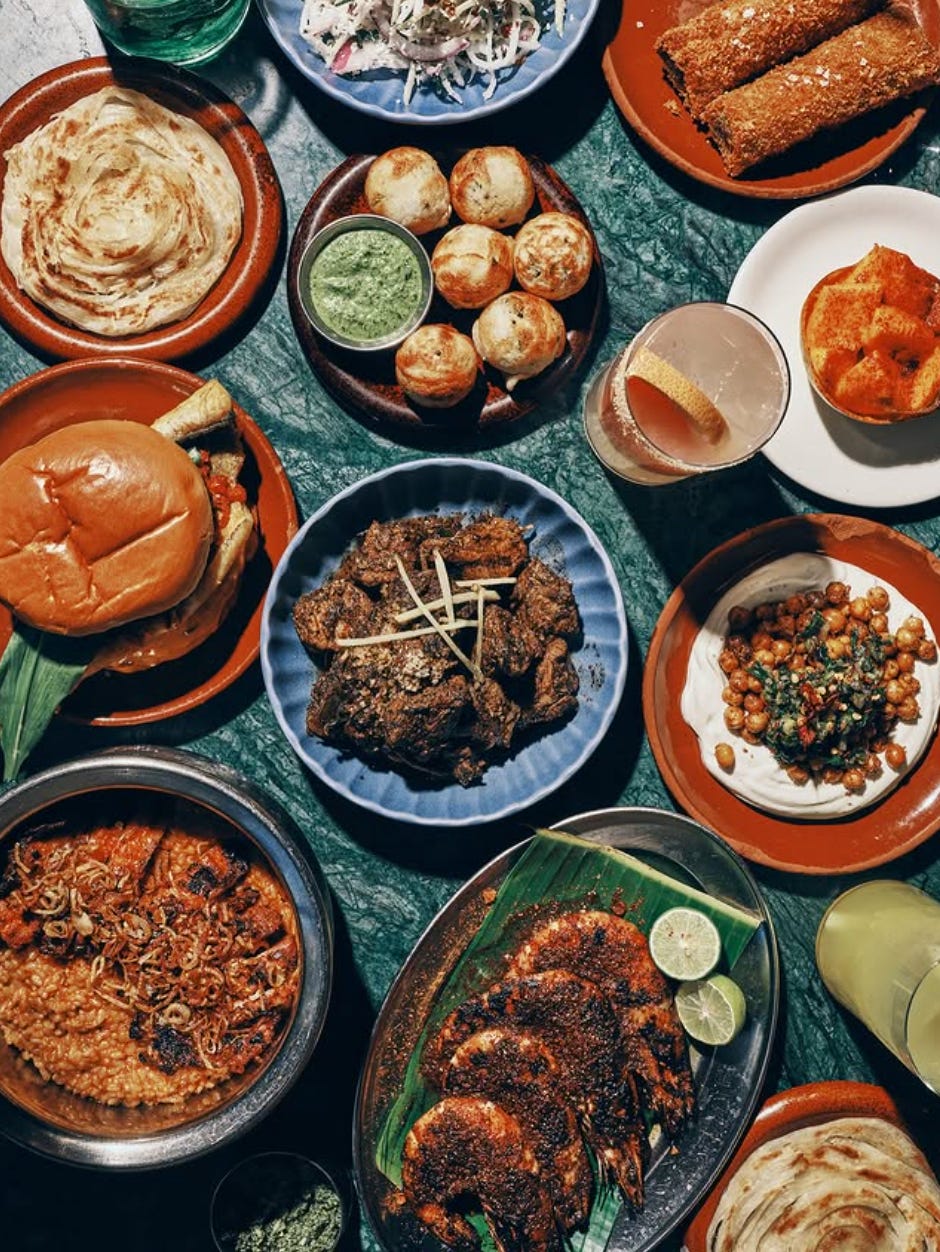
Today London is one of the most exciting, most diverse, most creatively ambitious food cities in the world.
That transformation didn’t happen by accident. It happened because of Le Gavroche’s uncompromising standards passing through Marco Pierre White to Gordon Ramsay and Clare Smyth. Because Ruth Rogers and Rose Gray proved that simplicity was a form of rigour. Because Fergus Henderson put bone marrow on a menu and never took it off. Because The Eagle showed that serious food didn’t need a dress code. Because Barrafina made you queue and then made dining feel communal. Because JKS Restaurants asked why Indian cuisine wasn’t taken as seriously as French, and then answered that question with two Michelin stars and a generation of restaurants that changed the conversation.
Dining is culture. Not adjacent to it. Not inspired by it. The table is where life happens. London, more than almost any other city, has understood that. And the restaurants it has built in the last fifty years are the proof.
Table for Two lives at the intersection of food and culture, not simply recommendations, but a considered point of view on why dining matters, and where to find the best of London's table culture. If this piece resonated, please support us by subscribing.
A great read! Super handy to know given I'll be spending some time in London later this year. Saving for later.
Also absolutely loved this!! What a splendid read😁